
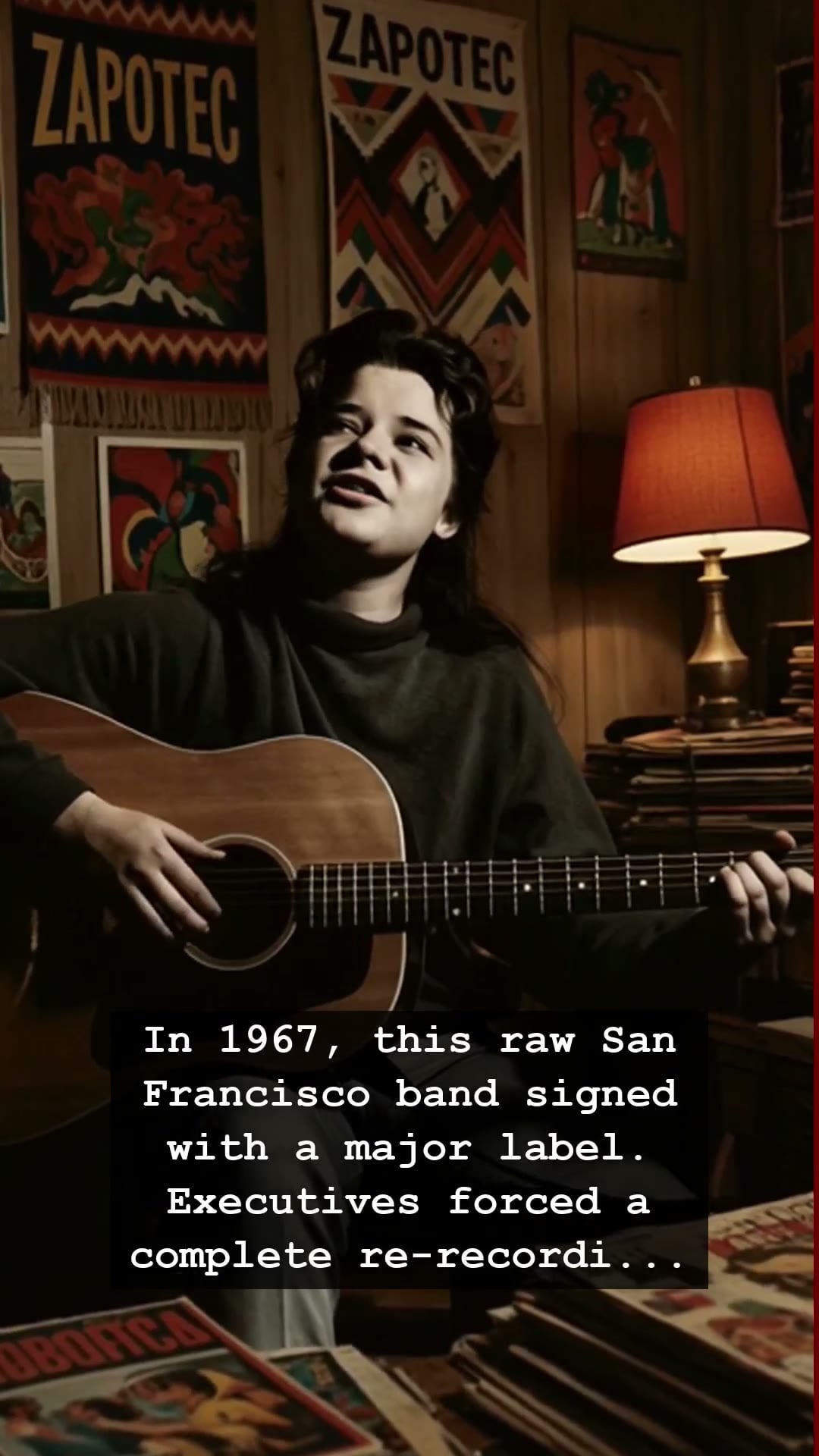
The year was 1967, and the air in San Francisco was thick with the scent of patchouli, rebellion, and a new kind of electric energy. In the heart of the Haight-Ashbury scene, a raw, unpolished, and fiercely independent band known as Big Brother and the Holding Company was carving out a legend. They were the sonic heartbeat of the counterculture, characterized by feedback-drenched guitars and a lead singer whose voice could shatter stone. But when the major label suits at Mainstream Records finally took notice, they did not see a cultural revolution. They saw a messy project that needed a corporate facelift, triggering an artistic showdown that would define the band’s legacy forever.
Stepping into a professional studio for the first time was supposed to be the dream, but for Big Brother and the Holding Company, it felt more like an interrogation. The executives were horrified by the band’s visceral, live-wire approach. They demanded a complete re-recording of the sessions, insisting that the band scrub away their rough edges and conform to the polished soundscape of the era. It was a classic collision between the raw authenticity of the underground psychedelic movement and the rigid, profit-driven structures of the music industry. The band members, feeling their artistic integrity slipping away, fought back against the pressure to homogenize their sound.
This clash was not merely about tempo or pitch; it was about the soul of an era. Big Brother and the Holding Company refused to become just another manufactured product of the late sixties. Their sound was born from the smoky, cramped clubs where the walls vibrated with the kinetic tension of a generation on the brink. When they were forced to compromise, the resulting tension created a sound that was at once fractured and undeniably powerful. It captured that specific, fleeting magic of the Summer of Love—a period where music was the primary language of change, and every note played was a manifesto against the status quo.
Looking back, the struggle of Big Brother and the Holding Company remains a poignant reminder of the price of fame. Their story is a visceral look into how major labels often trampled over the genuine artistic expressions of the underground to fit a commercially viable mold. They were musicians caught in the gears of a machine that did not understand the alchemy of their sound. Despite the corporate interference, they left behind an indelible mark on rock history, proving that even the most heavily curated studio sessions could not fully silence their explosive, chaotic, and beautiful musical spirit.
Decades later, the recordings still carry the heat of that 1967 confrontation. They resonate with anyone who has ever felt the pull of creative freedom against the crushing weight of expectation. Whether you remember the hum of a jukebox playing their hits or discovered them through the analog hiss of a thrift-store vinyl, their music remains a defiant monument to the era. We invite you to dust off your records, turn up the volume, and revisit the beautiful, complicated history of a band that dared to scream at the machine.