
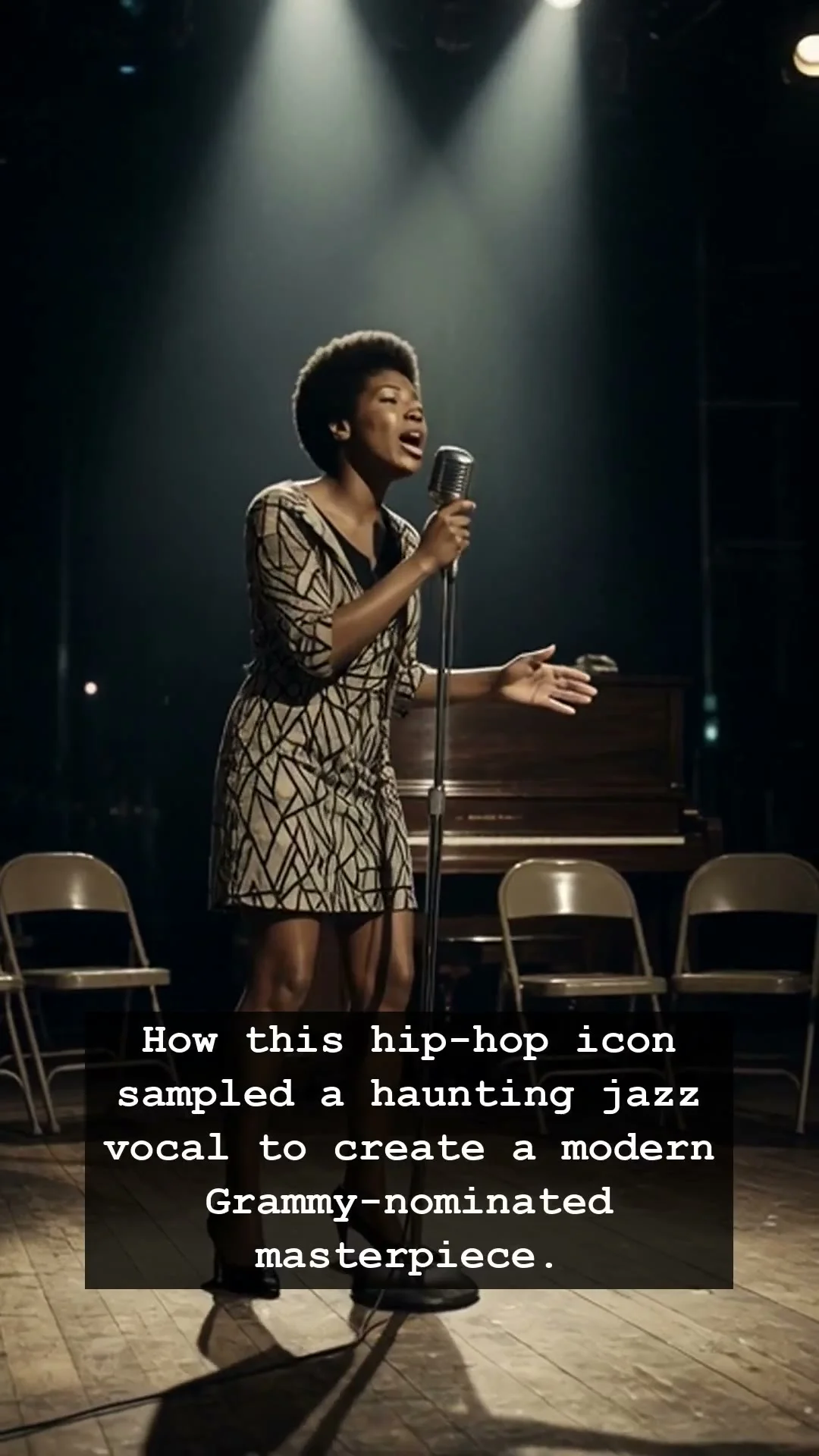
It is a rare alchemy when the past speaks directly to the future through the crackle of a vinyl groove. In 2017, the world of modern hip-hop stopped to listen as a Grammy-nominated masterpiece emerged, anchored entirely by a voice that had been silenced decades prior. This was not merely a sample; it was a ghost resurrected, a haunting jazz vocal from the legendary Nina Simone. For those who remember the smoky, candlelit clubs of the 1960s where the Jukebox played the blues, hearing Nina Simone woven into a modern rhythm felt like a bridge built across time, connecting the civil rights struggle of a previous generation to the rhythmic pulse of today.
The song in question breathed new life into the deep, sorrowful ache that Nina Simone mastered during her prime. Long before the era of digital streaming or the sleek, compressed sound of contemporary production, Nina Simone was the High Priestess of Soul. Her music was never just entertainment; it was a confrontation. Whether she was pouring her soul into a piano ballad or challenging the status quo with her unflinching lyrics, she carried the weight of a nation in her voice. When this modern hip-hop track sampled her, it didn’t just borrow a melody; it borrowed her resilience, her grit, and that unmistakable, chilling depth that defined the American experience from the post-war era to the dawn of the new millennium.
There is something inherently dramatic about how these sounds collide. Nina Simone lived a life defined by personal turmoil and artistic brilliance, often finding herself at odds with the industry gatekeepers of her day. She was a woman who commanded the stage like a force of nature, yet her inner life was plagued by the shadows of fame and the exhaustion of being a voice for the voiceless. Decades later, to hear her voice being honored in a massive, chart-topping hit serves as a testament to the fact that true genius never fades. It lingers in the air like the scent of old velvet and tobacco in a long-shuttered studio.
When we listen to the track, we are not just hearing a producer’s craft; we are hearing a conversation between two eras. It reminds us of a time when music felt dangerous, tactile, and raw—the same energy that radiated from the stages of Woodstock or the crowded floors of Studio 54. This masterful sampling proves that the spirit of Nina Simone remains a cultural monolith. Her ability to articulate pain and triumph in a single breath continues to influence artists who were born long after her peak years, proving that her legacy is not just archival, but constantly evolving.
Ultimately, this bridge between the jazz age and the hip-hop generation invites us to revisit the original records. It encourages us to dust off our turntables and sit with the haunting, complex narrative that was Nina Simone. While the production techniques have shifted from the analog warmth of tape machines to the crisp precision of modern digital audio, the soul remains the same. As the needle drops on a Nina Simone record today, we are reminded that some voices are simply too powerful to ever truly fall silent.