
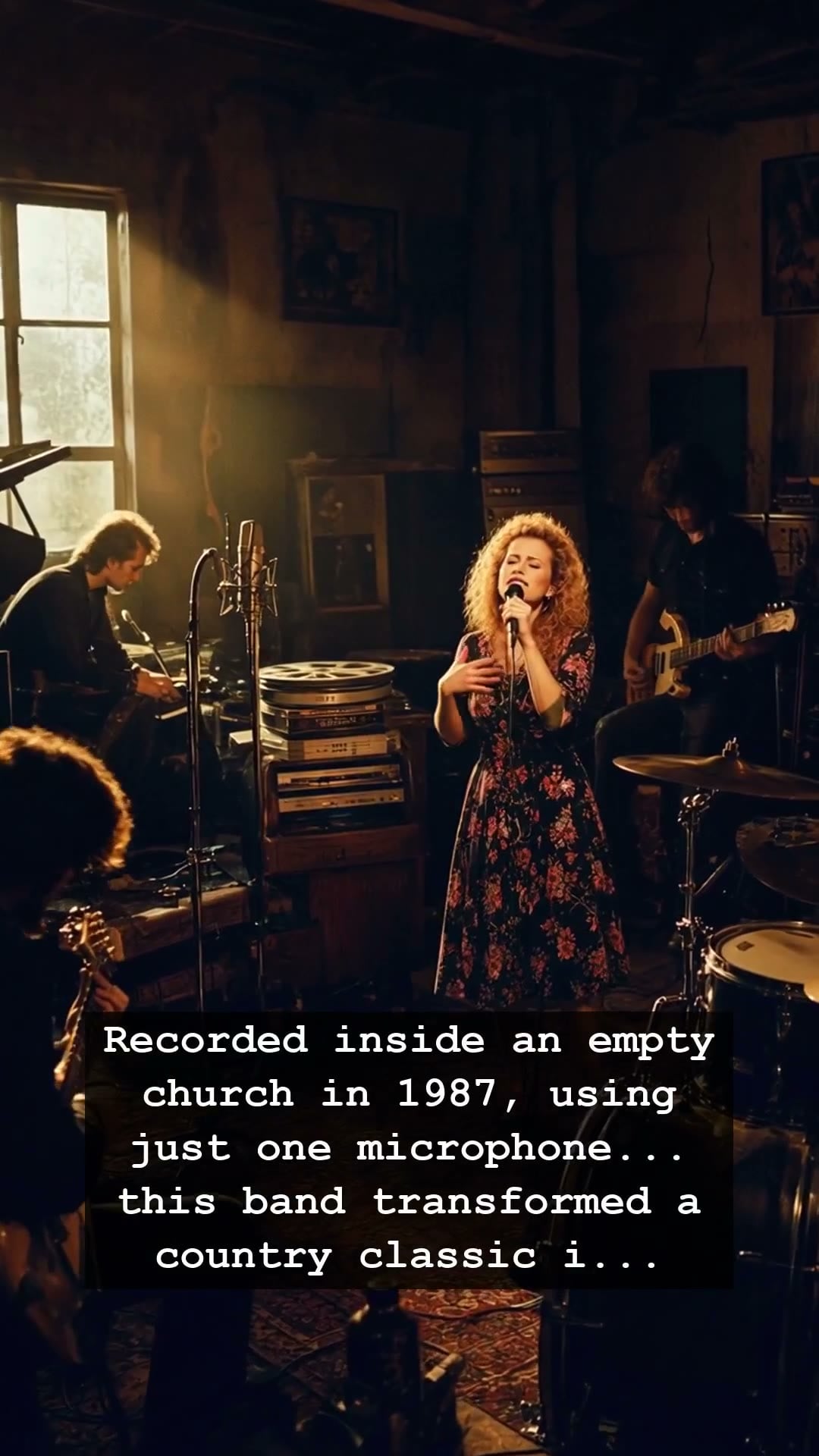
The year was 1987, and the music industry was obsessed with the polished, neon-drenched sounds of synth-pop and the aggressive ambition of stadium rock. While MTV was busy selling the image of perfection, a small band known as the Cowboy Junkies found themselves in an empty, cold stone church in Toronto. They didn’t arrive with a mountain of expensive recording equipment or a roster of studio engineers. Instead, they brought a single, solitary microphone and a sense of profound, lonely atmosphere that would soon change the landscape of alternative country music forever.
As they set up in the Church of the Holy Trinity, the air was heavy with the weight of the unknown. The Cowboy Junkies were not seeking a radio hit; they were chasing a ghost. With the microphone placed strategically in the center of the room, they began to record what would become their seminal album, The Trinity Session. When they decided to strip down the Patsy Cline classic, Sweet Dreams, they weren’t just covering a song; they were performing an autopsy on heartache. The result was not the jaunty country tune people remembered, but a chilling, slow-motion descent into melancholic bliss.
The genius of the Cowboy Junkies lay in their radical minimalism. In an era defined by the excess of Studio 54 and the glossy production of major labels, this record felt like a forbidden secret. The natural reverb of the church walls turned their performance into a cathedral of sound, capturing every intake of breath and the faint rustle of clothing. It was an intimate, raw, and almost voyeuristic experience that bridged the gap between the soulful grit of the past and the emerging independent spirit of the late eighties. For those of us who grew up with the static of a jukebox or the hum of a Walkman, hearing this record for the first time felt like discovering a long-lost diary entry.
There is a specific, haunting stillness that defines the Cowboy Junkies, a quality that keeps their music relevant even as decades pass. The drama of their recording process was not found in backstage brawls or tabloid scandals, but in the intense, disciplined silence they demanded from themselves. By rejecting the era’s demand for high-decibel performance, the Cowboy Junkies created a sanctuary of sound that remains perfectly preserved in time. It stands as a testament to the power of artistic restraint in a world that is far too often screaming for attention.
Today, the legacy of that Toronto church session continues to resonate with those who crave authenticity over artifice. The Cowboy Junkies reminded us that sometimes, you do not need a studio filled with synthesizers to capture the human condition. You only need a quiet space, a single point of truth, and the courage to let the silence do the talking. Whenever I put on that record, I am instantly transported back to that cold, wooden pew, where the shadows of 1987 still dance in the dim light of a memory that refuses to fade.