
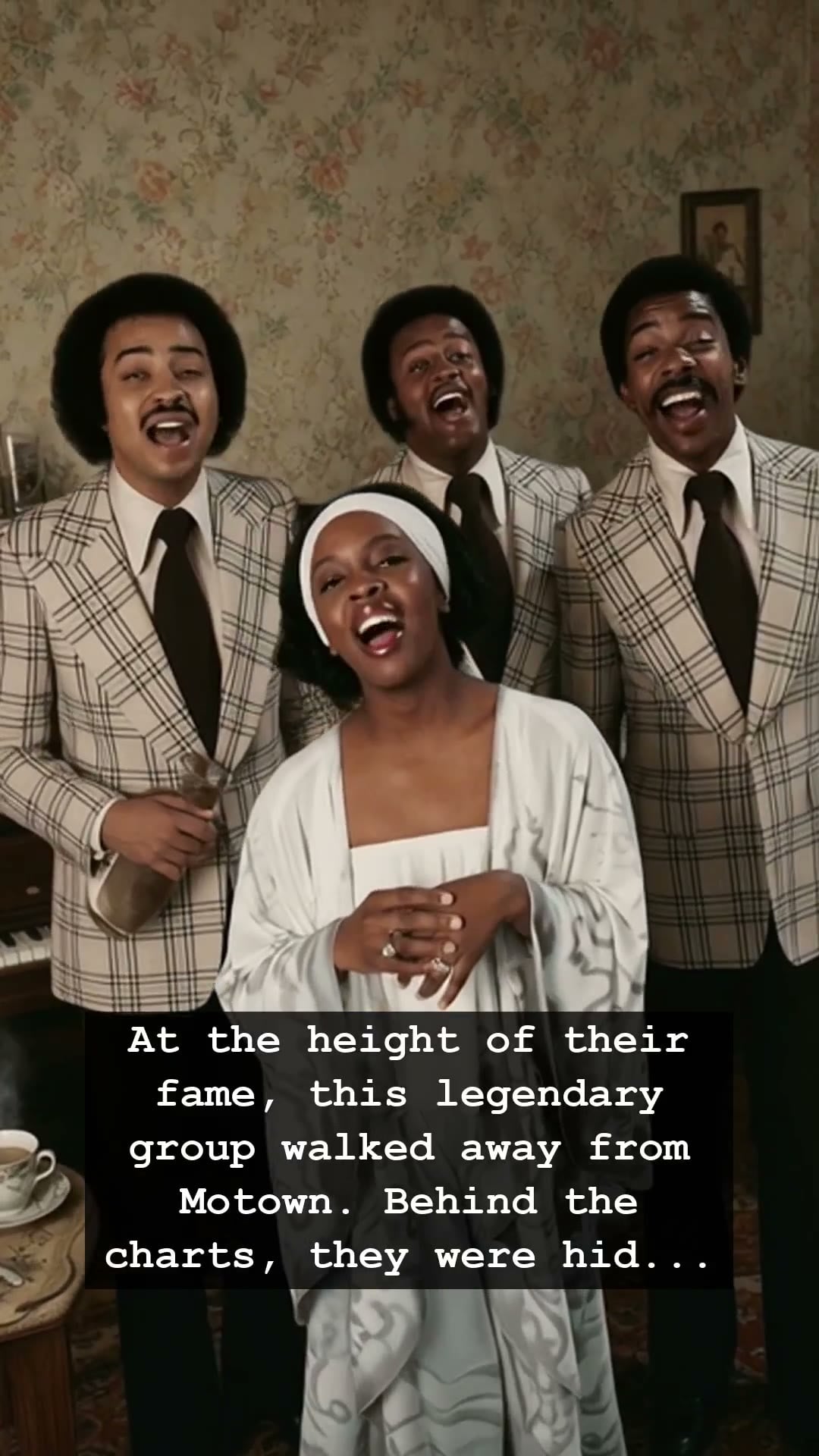
The year was 1973. The sound of American soul was vibrating through the walls of every jukebox and record shop, with the glitter of Motown Records serving as the industry’s golden throne. Yet, at the very peak of their fame, a legendary group did the unthinkable: they walked away. Gladys Knight and the Pips, the vocal powerhouse that defined the soul era, chose to leave the most successful label in history. Behind the shimmering success of hits like Midnight Train to Georgia, a bitter, heartbreaking truth was beginning to suffocate the artists who built the house that Berry Gordy had constructed.
The reality of life under the Motown umbrella was far less glamorous than the public perceived. While Gladys Knight and the Pips were delivering chart-topping soul anthems, they felt increasingly invisible within the label’s corporate machine. It was a time of immense pressure and fierce internal competition, where an artist’s personal identity was often sacrificed for the sake of a collective, label-wide branding strategy. Gladys Knight, known for her velvet-rich voice and emotional depth, realized that her group was being trapped in the shadow of the label’s golden girl, Diana Ross. The frustration of feeling like a secondary priority became too heavy to bear, leading to a decision that sent shockwaves through the music industry.
Leaving Motown was a massive risk. It was a departure from the security of a label that had defined the sound of the era, and it felt like walking into a wilderness without a map. But for Gladys Knight and the Pips, freedom was not just a luxury; it was a necessity for their artistic survival. They weren’t just walking away from a contract; they were reclaiming their narrative. The transition to Buddah Records was a pivotal moment in their career, proving that their soul-stirring talent was not a product of the label, but a testament to their own endurance and musical chemistry.
This story remains a haunting reminder of the dark side of fame during the seventies. It was an age of studio excess and relentless professional expectations, where the human element of music was often lost in the pursuit of radio dominance. The drama behind their departure wasn’t just a business dispute; it was a deeply personal struggle for recognition and respect. Gladys Knight and the Pips paved the way for future artists to demand autonomy in an industry notorious for chewing up talent and spitting out empty shells.
Decades later, the legacy of Gladys Knight and the Pips remains untarnished. Their music still resonates with that raw, authentic grit that defined the soul movement of the mid-20th century. When we listen to their records now, we aren’t just hearing a hit song; we are hearing the sound of a group that fought to keep their soul intact. As the needle drops on their classic vinyl, remember the quiet, painful struggle that made their music feel so incredibly human. Sometimes, the most beautiful music comes from the artists who had the courage to walk away from the spotlight to find themselves.