
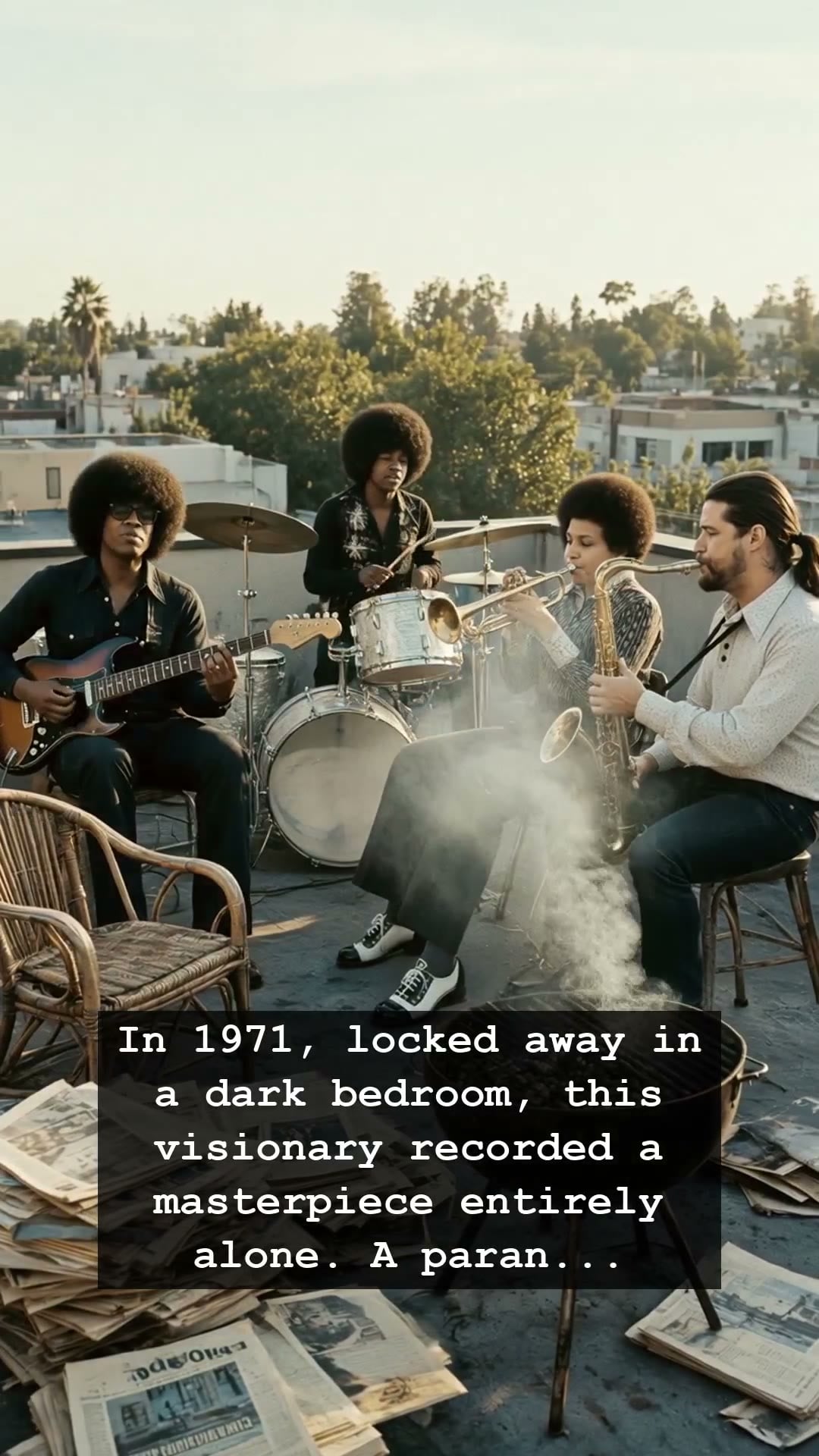
In the golden age of funk, the airwaves were dominated by the vibrant, collective energy of soul bands and the shimmering lights of the disco floor. But in 1971, the man who brought the world together with his upbeat, socially conscious anthems retreated into a haunting, singular silence. Sly Stone, the visionary frontman of Sly and the Family Stone, found himself locked away in a dark, makeshift bedroom studio, turning his back on the bustling world to create There’s a Riot Goin’ On. It was a paranoid, beautiful, and deeply unsettling descent into isolation that would forever alter the trajectory of modern rhythm history.
While the rest of the world was still dancing to the optimistic, psychedelic vibes of the late sixties, Sly Stone was staring into the abyss of his own escalating fame. The bright, sunshine-soaked melodies that defined the era were replaced by muddy, thick layers of instrumentation and a drum machine that felt more like a heartbeat of anxiety than a dance floor pulse. Locked behind closed doors, Sly Stone became obsessed with the machine, layering his voice until he sounded like a ghost haunting his own compositions. This wasn’t just another funk album; it was a psychological document of a man grappling with the heavy toll of rock stardom.
To understand the gravity of this period, one must look at the cultural context of 1971. The dream of Woodstock had faded, the Vietnam War was still raging, and the drug-fueled decadence of the era was beginning to exact a brutal price on its icons. Sly Stone, once the symbol of peace and integration, was now living in a world of locked doors and security guards. The album that emerged from this solitary confinement was intentionally murky, a stark contrast to the clean production of the Motown era. It was a raw, unvarnished look at the disillusionment felt by an entire generation who had seen their utopia crumble.
What makes the story of There’s a Riot Goin’ On so compelling is the sheer artistry born from such immense personal turmoil. Sly Stone single-handedly deconstructed the funk sound he helped build, slowing the tempo to a hypnotic, sluggish crawl. By recording most of the parts himself, he bypassed the democratic spirit of his band, creating an intimate, claustrophobic atmosphere that listeners can still feel today. The result was a masterpiece of tension, an auditory representation of the paranoia that permeated the American music scene in the early seventies.
Even decades later, the influence of this record remains staggering. It paved the way for the darker, more experimental side of soul and R&B, proving that vulnerability and darkness could coexist with rhythm. Sly Stone turned his bedroom into a fortress, but in doing so, he invited us into the most honest corners of his mind. While we often remember the bright neon of the disco era, it is this quiet, isolated work that remains one of the most important chapters in music history. The next time you put on a pair of headphones, listen closely to the rhythm, and you might just hear the echo of a genius searching for the light in the dark.