
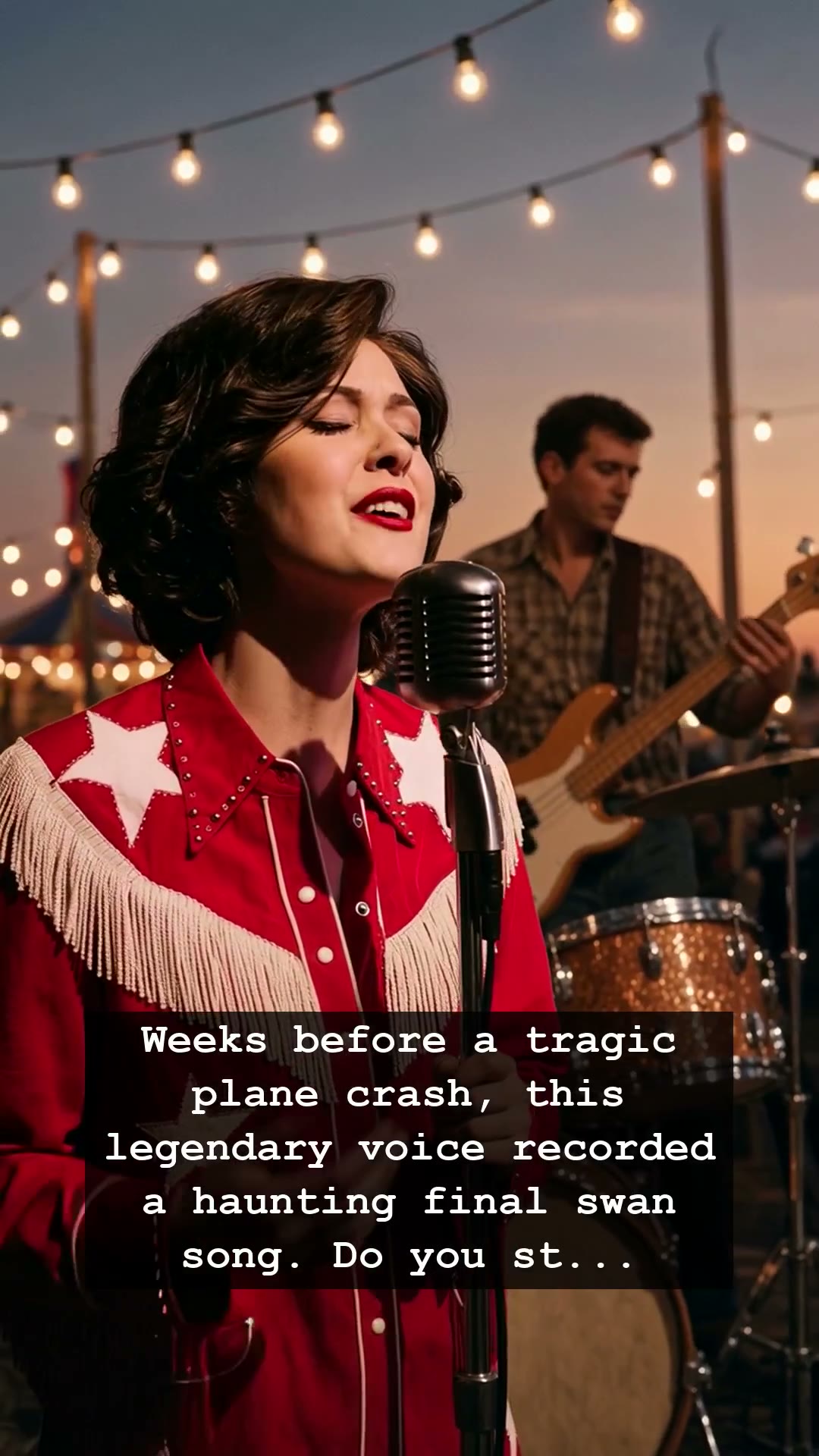
In the cold, gray February of 1963, the air in the recording studio felt different. Patsy Cline, the woman whose voice had become the bedrock of the Nashville sound, stepped up to the microphone. She was not the same artist who had belted out the upbeat, radio-friendly hits of the late fifties. Something deeper, something almost prophetic, hung in the atmosphere as she prepared to record what would become one of the most poignant farewells in music history. It was a moment of quiet, devastating clarity that seemed to strip away the gloss of stardom, leaving only the raw ache of a human soul.
Most fans remember Patsy Cline for her ability to command a room with the power of a jukebox siren. From the smooth, velvet textures of Crazy to the infectious energy of her earlier country-pop crossover tracks, she defined an era when music was still played on analog tape and heard through the crackle of a tube radio. Yet, in those final sessions, the upbeat tempo was replaced by a slow, haunting resignation. As she sang, the studio lights seemed to dim, focusing entirely on that unmistakable, emotive vibration that could make even the toughest hearts crumble. She was tapping into a well of quiet pain, unaware that it would serve as her final bow to a world that adored her.
Tragedy has a way of casting a long, dark shadow over art, and the sudden silence that followed the plane crash of March 1963 only solidified the mythos surrounding these final recordings. Just weeks after she poured her soul into those microphones, the music stopped abruptly when her private plane went down in a Tennessee forest. The news shattered the country music community, leaving a void that felt impossible to fill. Suddenly, the song she had just recorded transformed from a mere track on an upcoming album into a heartbreaking swan song—a final, chilling message delivered from a voice that had been silenced far too soon.
Even decades later, listening to these final tracks feels like stumbling upon a ghost. The crackle of the vinyl reminds us of a time when music wasn’t just digital data; it was a physical artifact of a person’s existence, captured in real-time in a room full of smoke and heavy microphones. Patsy Cline didn’t just sing songs; she lived the lyrics until they became an extension of herself. It is this authentic, raw vulnerability that keeps her legacy alive today, cutting through the modern noise of synthetic pop and disposable chart-toppers.
We often wonder what other treasures remained in the heart of this legend, or how her sound might have evolved through the psychedelic shifts of the late sixties. But perhaps the beauty lies in the tragedy. She left us at the very peak of her powers, leaving behind a map of sorrow and beauty that every generation since has had to navigate. When you listen to that final, haunting performance, you aren’t just hearing a song from the archives; you are hearing the echo of a soul who knew, perhaps better than any of us, how to turn heartbreak into an eternal, timeless melody.