
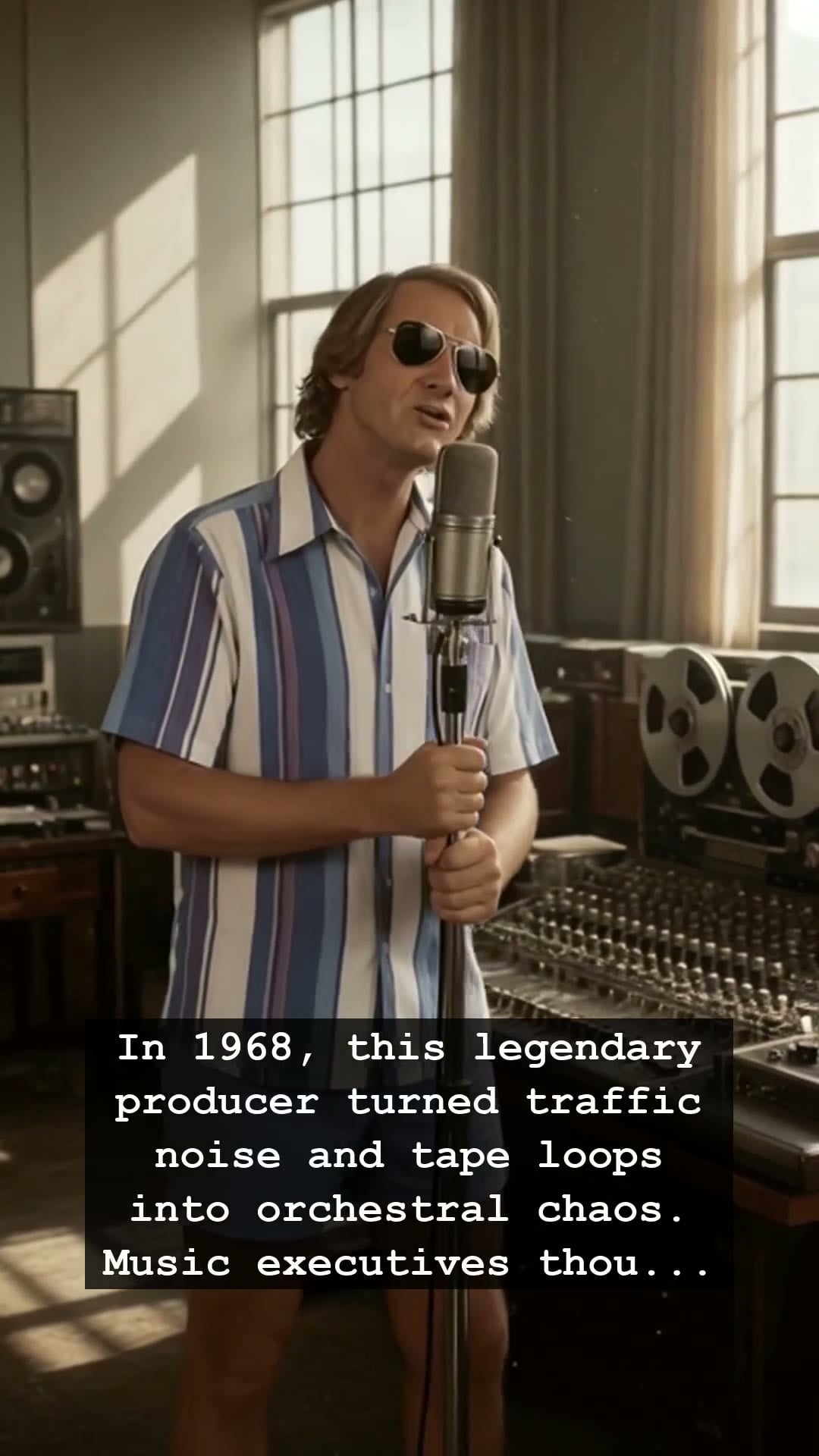
In 1968, the hallowed walls of Abbey Road Studios echoed with something that sounded less like music and more like a fever dream. While the world outside was consumed by the colorful haze of the Summer of Love, one man was busy dismantling the very architecture of pop music. George Martin, the calm, sophisticated architect behind the Fab Four, stood at the mixing console, orchestrating a cacophony of street noise, reversed tape loops, and orchestral dissonance. To the conservative music executives of the era, it looked like madness; to history, it was a revolution. This was the birth of a sound that would define the avant-garde spirit of rock forever.
At the center of this sonic storm was the experimental masterpiece Revolution 9. While John Lennon provided the raw, abrasive vision, it was George Martin who possessed the technical wizardry to manifest such chaos into a cohesive, albeit jarring, reality. Tape editors were terrified, convinced that the sheer density of the sound would damage their machines, but George Martin insisted on pushing the boundaries of what a studio could produce. By weaving together fragments of traffic, distorted voices, and surreal soundscapes, they crafted a sonic collage that challenged everything fans expected from a chart-topping band. It was a stark departure from the polished, melodic jingles that dominated the airwaves, signaling a permanent shift in how rock music could mirror the social upheaval of the late sixties.
Looking back from our digital age, it is hard to grasp the sheer audacity required for such an experiment. There were no computers to automate these loops; George Martin was literally cutting and splicing physical magnetic tape with a razor blade, a painstaking labor of love that required nerves of steel. The studio floor was littered with discarded snippets of sound, each one a relic of a process that felt more like a scientific breakthrough than a traditional recording session. For those who remember the smell of aging vinyl and the hum of a heavy Jukebox in a dimly lit diner, George Martin represents the ultimate bridge between the classical discipline of the past and the untamed experimentation of the future.
This era, defined by the transition from the innocent harmonies of the early sixties to the complex, psychedelic experimentation of the late decade, remains a cornerstone of cultural history. George Martin was not just a producer; he was the sonic alchemist who understood that to evolve, music had to be willing to break. He guided The Beatles through their most tumultuous creative conflicts, acting as the steady hand amidst the personal rifts and artistic pressures that eventually threatened to tear the band apart.
Even today, when we listen to the remnants of that chaos, we are hearing the fingerprints of a legend who refused to play it safe. George Martin taught generations of producers that the studio is not just a room for capturing a performance—it is an instrument in its own right. His influence persists in every modern artist who loops a sound or distorts a beat to capture a mood. As we look back at the archives of rock history, we find that the most enduring legacies are rarely the ones that followed the rules. The next time you put on a classic record, listen closely to the layers beneath the melody, and you might just hear the ghost of a genius who dared to turn noise into art.