
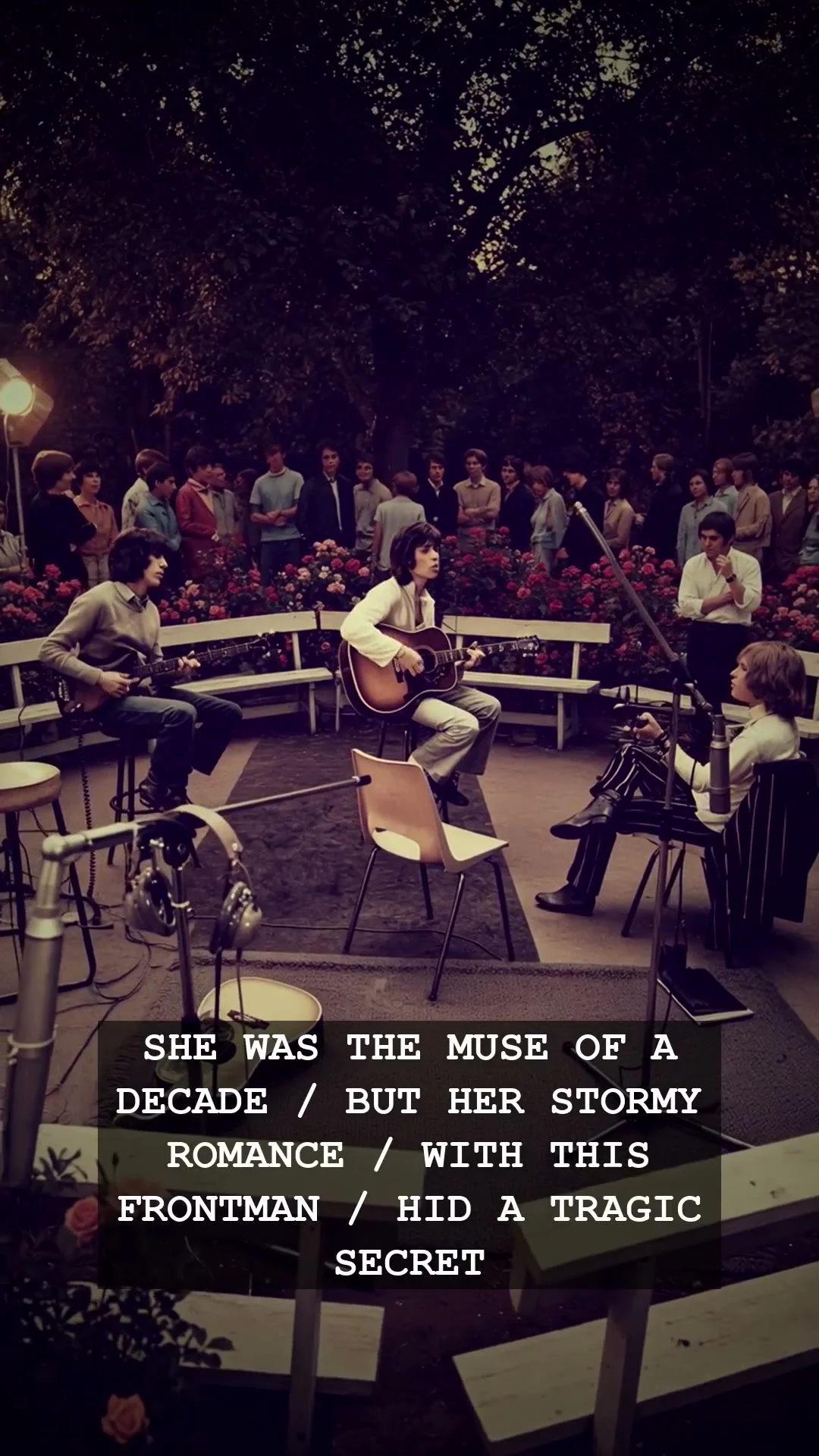
In 1964, a fragile, angelic-faced muse emerged from the London social scene, capturing the imagination of a generation on the cusp of rebellion. Marianne Faithfull was not just another pretty face in the Swinging Sixties; she was an icon of intellect and beauty. However, her life became inextricably linked with the seismic rise of The Rolling Stones, specifically through her volatile, high-profile romance with frontman Mick Jagger. Behind the glare of the flashbulbs and the roar of the crowds at sold-out stadiums, their union hid a quiet, agonizing pain that would haunt the annals of rock history for decades to come.
Their love story unfolded against a backdrop of LSD-fueled parties, iconic velvet suits, and the suffocating pressure of superstardom. Marianne Faithfull was the muse who inspired the melancholic beauty of songs like Sister Morphine, a track that laid bare the raw, jagged edges of their reality. While the world saw two beautiful people living a fairy tale, the truth inside the recording studios and their private apartments was a descent into a cycle of addiction and intense personal turmoil. This was an era where fame was a double-edged sword, and for Marianne, the weight of being the woman next to Mick Jagger began to eclipse her own identity.
The dynamic shifted dramatically during the infamous 1967 drug raid at Redlands, an event that became a cultural flashpoint for the British establishment’s war on rock and roll. It stripped away the last remnants of their innocence. Marianne Faithfull was caught in the crossfire of public scrutiny, and the media’s treatment of her was nothing short of brutal. She was often painted as the temptress, a narrative that ignored the profound psychological toll taken by the constant touring, the substance abuse, and the inevitable dissolution of their partnership. The romance was a whirlwind of creative brilliance shadowed by a profound, hollow loneliness.
Today, when we hear the distorted guitar riffs of that era emanating from an old jukebox, it is hard not to think of what was lost. Their relationship remains a quintessential tragedy of the late sixties, a cautionary tale about the intersection of raw talent and the destructive magnetism of celebrity. It was not just about the drugs or the drama; it was about two people struggling to find footing while the cultural landscape shifted beneath them at a dizzying pace. Marianne Faithfull eventually emerged from the wreckage as a survivor, carving out a respected career in her own right, but the ghost of her time with Mick Jagger never fully faded.
The story of Marianne Faithfull and Mick Jagger serves as a poignant reminder that even in the most legendary moments of music history, there are human costs that go unseen. Their saga continues to resonate because it captures the beautiful, messy, and often tragic spirit of an era that changed the world forever. Whenever we play those classic records today, we are listening to the echoes of their broken hearts. The next time you find yourself lost in the melodies of that decade, remember that the most rebellious anthems were often born from the deepest, most hidden personal sorrows.