
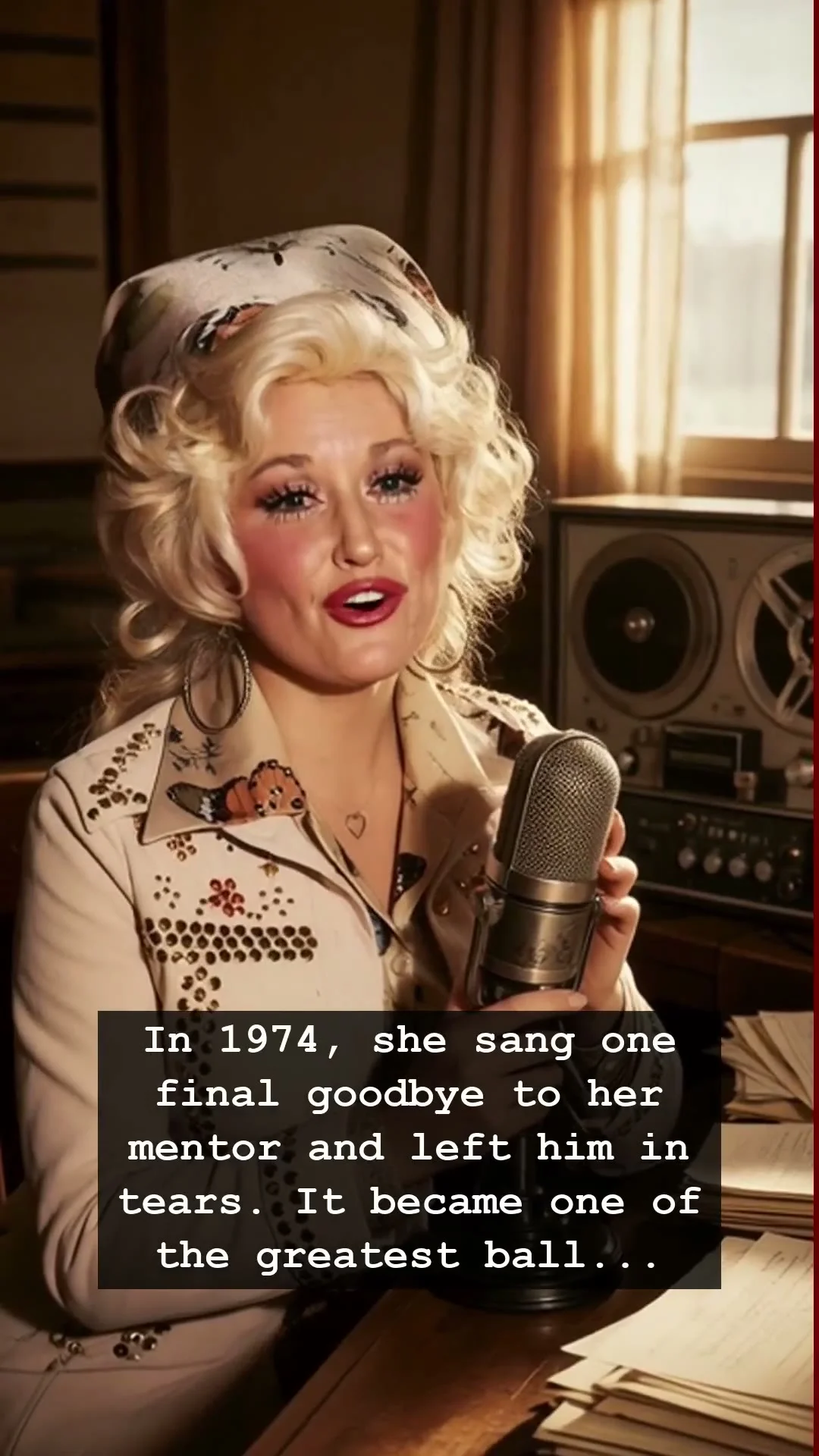
It was 1974, a year defined by the flickering glow of the television set and the soulful hum of the radio. The country music landscape was shifting, and in the heart of Nashville, a blonde powerhouse with a voice like spun gold was preparing to break free from the shadow of her mentor. For seven years, Porter Wagoner had been the gatekeeper, the partner, and the industry anchor for Dolly Parton. Their chemistry on screen was magnetic, but behind the scenes, the friction of creative growth was becoming impossible to ignore. Dolly Parton knew that to become the legend she was destined to be, she had to walk away from the man who had given her her first real break.
The tension in the studio was thick, the air heavy with the unspoken realization that an era was ending. There was no shouting, no dramatic confrontation of the tabloids; instead, there was a raw, quiet sincerity. Dolly Parton sat down and poured the entirety of her conflicting emotions into a single, hauntingly beautiful melody. She didn’t write it as a career move; she wrote it as a thank you, a peace offering, and a definitive closing of a door. When she walked into Porter Wagoner’s office and sang the song for him, the room went deathly still. By the time she finished, the man who had once been her greatest supporter was in tears. He knew, as clearly as she did, that the partnership was over.
The song, of course, was I Will Always Love You. While many today associate the tune with the soaring, cinematic heights of the 1990s, its roots are firmly planted in the soil of 1970s country music and the genuine, human struggle of outgrowing a mentor. It is a masterpiece of restraint, focusing not on the bitterness of separation, but on the grace of wishing someone well despite the pain of parting. Dolly Parton captured a universal truth: you can love someone deeply and still need to leave them behind to save your own soul.
This moment in 1974 remains one of the most poignant scenes in music history. It reminds us of a time when the Jukebox was the heartbeat of every roadside diner and the personal connection between artist and mentor was the bedrock of the Nashville sound. The success of Dolly Parton post-1974 speaks for itself, yet she never lost the vulnerability that defined this farewell. She proved that you don’t need a fiery explosion to mark a major life transition; sometimes, a quiet song, delivered with total honesty, is the most powerful thing a person can leave behind.
Today, we look back at the career of Dolly Parton as a testament to staying true to one’s vision. That final performance for Porter Wagoner serves as a beautiful, bittersweet reminder of the cost of fame and the courage it takes to pursue your own path. As you listen to those opening notes again, consider the weight behind them—a heartfelt goodbye that turned into a timeless legacy.