
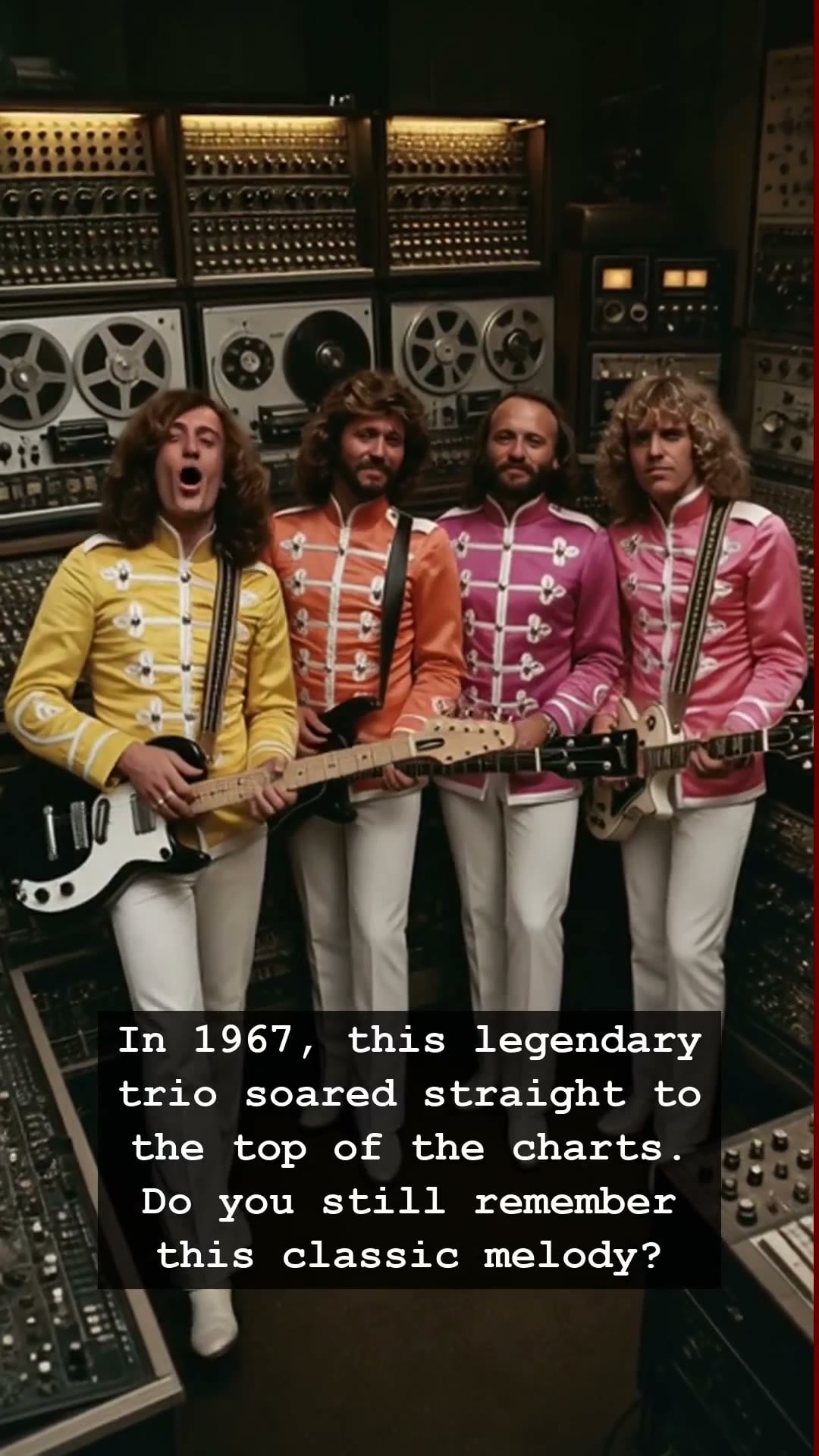
In 1967, three brothers stepped into the spotlight and sent a haunting melody straight to the top of the charts, forever altering the trajectory of pop music. While the world remembers the Bee Gees as the white-suited kings of the disco era, their origins were buried in a much more melancholic and raw landscape. Before the glitter of Studio 54 or the massive influence of the Saturday Night Fever soundtrack, the Gibb brothers were carving out a sound that felt like it was plucked directly from the ache of the human soul. Their early hits possessed a fragility and depth that mirrored the shifting tides of the late sixties, capturing the hearts of a generation just beginning to shed the innocence of the post-war era.
Behind the seamless harmonies lay a story of fierce sibling rivalry and the relentless pressure of a music industry that demanded constant reinvention. The Bee Gees were not merely pop stars; they were architects of sound who navigated the transition from baroque pop to the unstoppable groove of the seventies with an almost supernatural precision. Yet, this success came at a heavy cost. The dark side of fame, fueled by intense public scrutiny and the internal frictions of working as a family unit, often threatened to tear them apart. They experienced the crushing lows of being written off by critics, only to emerge stronger and more iconic than before, time and time again.
There is something profoundly cinematic about the rise of the Bee Gees. You can almost hear the crackle of a vinyl record on a vintage turntable as their harmonies cut through the air. They operated in an era defined by the rise of the jukebox, the introduction of the Walkman, and the cultural explosions of Woodstock and later, the polished neon lights of the disco revolution. The brothers possessed an uncanny ability to tap into the zeitgeist, crafting anthems that spoke to the lonely, the hopeful, and the heartbroken alike. Their songs became the soundtrack to millions of lives, echoing through suburban basements and crowded concert halls across the globe.
Even today, the legacy of the Bee Gees remains untouchable. Their music transcends the boundaries of time, proving that genuine emotional resonance never goes out of style. Whether it was the raw longing of their early years or the infectious, driving rhythm of their peak, the brothers crafted a sonic identity that remains etched in our collective memory. Their journey is a testament to the fact that greatness is rarely a smooth path; it is often forged in the fires of conflict, struggle, and an unyielding commitment to the craft of songwriting.
As you listen to their timeless melodies today, take a moment to look past the sparkles and the fame. Listen to the intricate vocal layering and the profound sadness that occasionally peeks through the upbeat tempo. The Bee Gees remind us that music is the ultimate time machine, capable of transporting us back to moments of innocence, growth, and change. What is your favorite Bee Gees memory, and where were you the first time you heard their harmonies fill the room?