
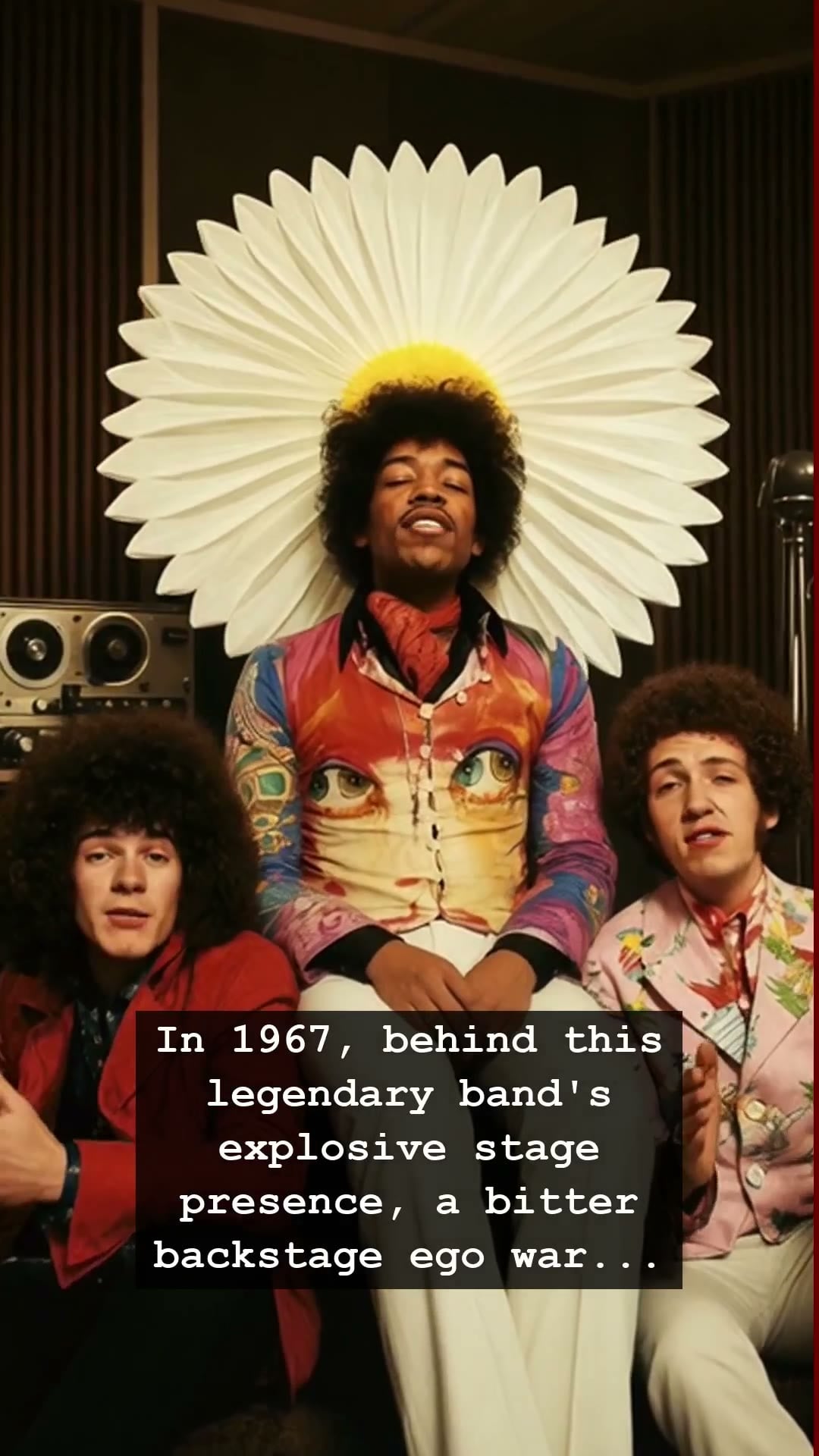
In 1967, the world was vibrating with the revolutionary sound of a new electric age. As the neon lights of London clubs hummed and the counterculture movement began to swell, a trio emerged that would redefine the boundaries of rock music: The Jimi Hendrix Experience. While audiences were mesmerized by Jimi Hendrix, Noel Redding, and Mitch Mitchell, the glossy surface of their success masked a volatile reality. Behind the amplifiers and the hypnotic stage presence, a bitter backstage ego war was brewing, fueled by creative suppression and the relentless pressure of newfound fame. No one in the front row knew that the tension would eventually tear the legendary group apart from the inside out.
To understand the magnitude of this fracture, one must look at the dynamics within The Jimi Hendrix Experience. Jimi Hendrix was a force of nature, a guitar virtuoso whose vision seemed to originate from another dimension. However, the musical genius was often stifled by the demands of the industry and the friction created by his bandmates. Noel Redding, originally a guitarist recruited for the bass, felt increasingly sidelined as Hendrix’s studio perfectionism demanded take after grueling take. What started as a collaborative exploration of psychedelic sound quickly devolved into a one-man mission, leaving the rest of the band feeling like mere supporting actors in a drama they no longer controlled.
The pressure cooker of the late sixties only exacerbated these personal conflicts. As the band toured relentlessly, navigating the haze of drugs and the intoxicating pull of stardom, the camaraderie that once defined their early sessions evaporated. The studio, once a sanctuary for musical invention, turned into a battlefield. Hendrix’s obsession with sonic perfection meant that Redding and Mitchell often found themselves standing idle for hours, waiting for the leader to satisfy a vision that only he could hear. It was a classic tale of creative isolation, where the brilliance of an artist became the very thing that alienated his closest allies.
Despite the internal rot, the music produced during this era remains immortal. Tracks like Purple Haze and The Wind Cries Mary serve as time capsules, capturing the electric energy of a generation defined by Woodstock and the rebellious spirit of the era. Yet, the tragedy of The Jimi Hendrix Experience lies in its brevity. By 1969, the ego wars had reached an unsustainable peak. The fire that had ignited the rock world with such intensity was destined to burn out, leaving behind a legacy that is as much about the beauty of the sound as it is about the fragility of human relationships under the crushing weight of fame.
Looking back, the story of Jimi Hendrix and his band serves as a poignant reminder that even the most monumental legends are human. The grit, the resentment, and the artistic obsession are all part of the tapestry that makes classic rock so enduring. Even decades later, as we spin these records on our vintage turntables, we can still hear the echoes of that internal struggle between the notes. The legend of The Jimi Hendrix Experience persists, not just because of the virtuosic guitar work, but because of the raw, unfiltered emotional truth that still resonates with every generation that discovers their sound for the first time.