
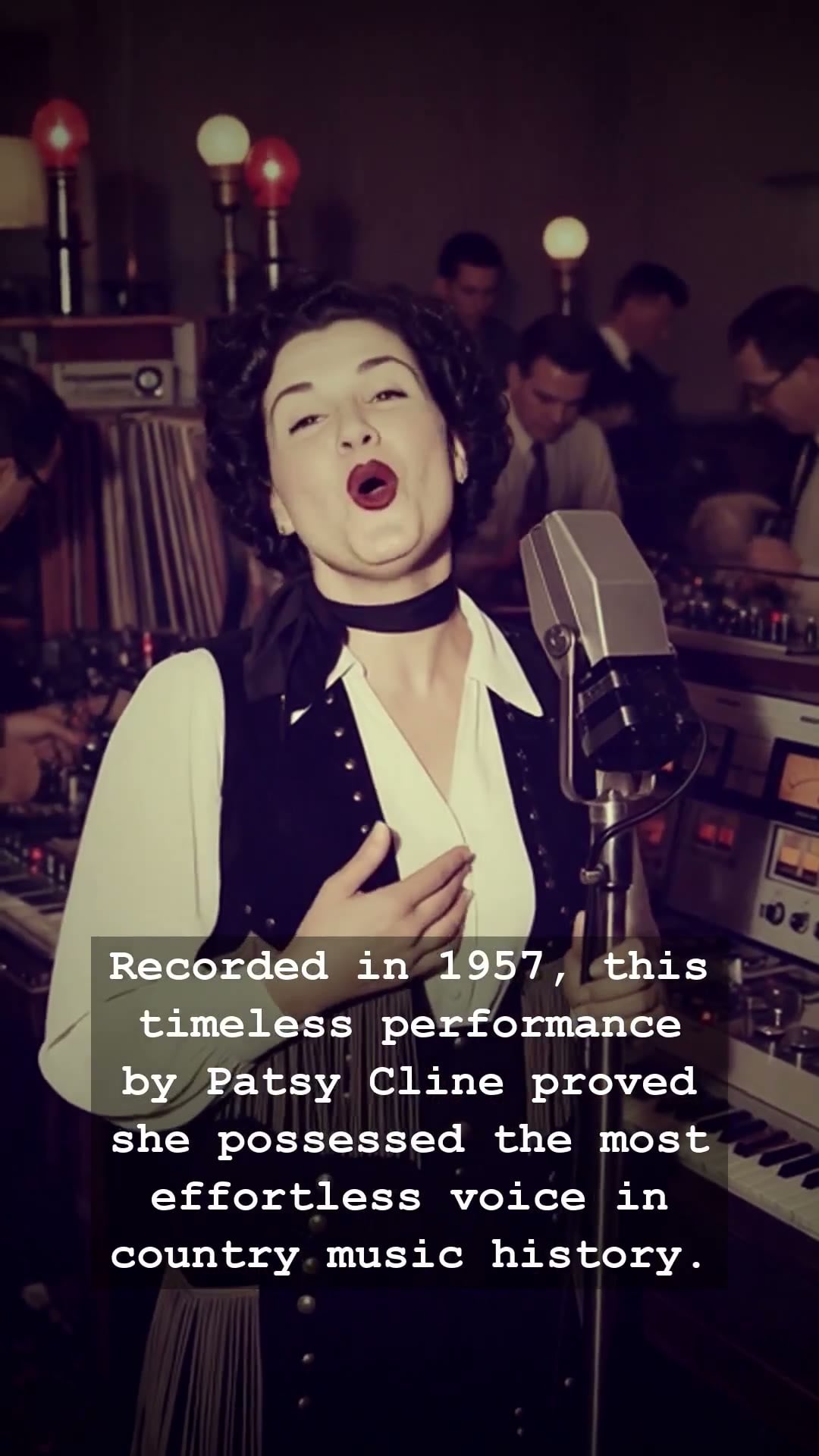
The year was 1957. A smoke-filled room, the scratchy hum of a jukebox in the corner, and a voice that seemed to bypass the ears and settle directly into the soul. When Patsy Cline stepped up to the microphone, the world of country music changed forever. It was a performance so effortless, so hauntingly pure, that it felt like magic captured on magnetic tape. For those of us who grew up with the crackle of vinyl and the warmth of analog radio, that voice represents more than just a melody; it represents a time when music was felt as much as it was heard.
Patsy Cline was not just a singer; she was a storm of raw, unfiltered emotion wrapped in velvet. Born Virginia Hensley, she clawed her way out of poverty, fueled by a ambition that was often at odds with the polished, conservative industry of the fifties. Behind the rhinestone-studded suits and the impeccably coiffed hair lay a woman whose life was a series of dramatic highs and devastating lows. Her journey was marked by fiery temperaments, a tumultuous personal life, and a constant, burning need to be heard above the noise of a male-dominated record label system.
What made her 1957 recordings so revolutionary was their vulnerability. While her contemporaries were busy perfecting the twang, Patsy Cline was busy perfecting the heartbreak. She understood the nuance of pain. Whether it was the loneliness of a late-night drive or the sharp sting of unrequited love, she sang from the deepest, darkest crevices of the human experience. Listen closely to those early tracks, and you can hear the ghosts of every struggle she ever faced. She possessed an uncanny ability to turn a simple song into a cinematic confession, drawing listeners into her world with the gravity of a supernova.
Yet, the life of a legend is rarely kind. By the time the early sixties rolled around, the pressure of fame began to take its toll. The constant touring, the relentless demands of a fickle industry, and the personal battles she fought in private often threatened to pull her under. She was a woman living on the edge, a trait that only added a palpable, nervous energy to her performances. There was always a sense that she was giving everything she had in that very moment, as if she knew, perhaps subconsciously, that her time in the spotlight would be tragically short-lived.
When we look back at the landscape of American music, we see so many artists who burned bright and vanished. But Patsy Cline is different. Her music remains a cultural anchor, a bridge to a bygone era of radio airplay and soulful storytelling. She remains the gold standard for country vocalists, a benchmark of authenticity in an increasingly digitized world. Whenever that familiar voice floats through the speakers, we are all transported back to 1957, sitting in that diner, listening to the jukebox, and remembering what it felt like to believe in a song. Do you remember the first time she stole your heart?