
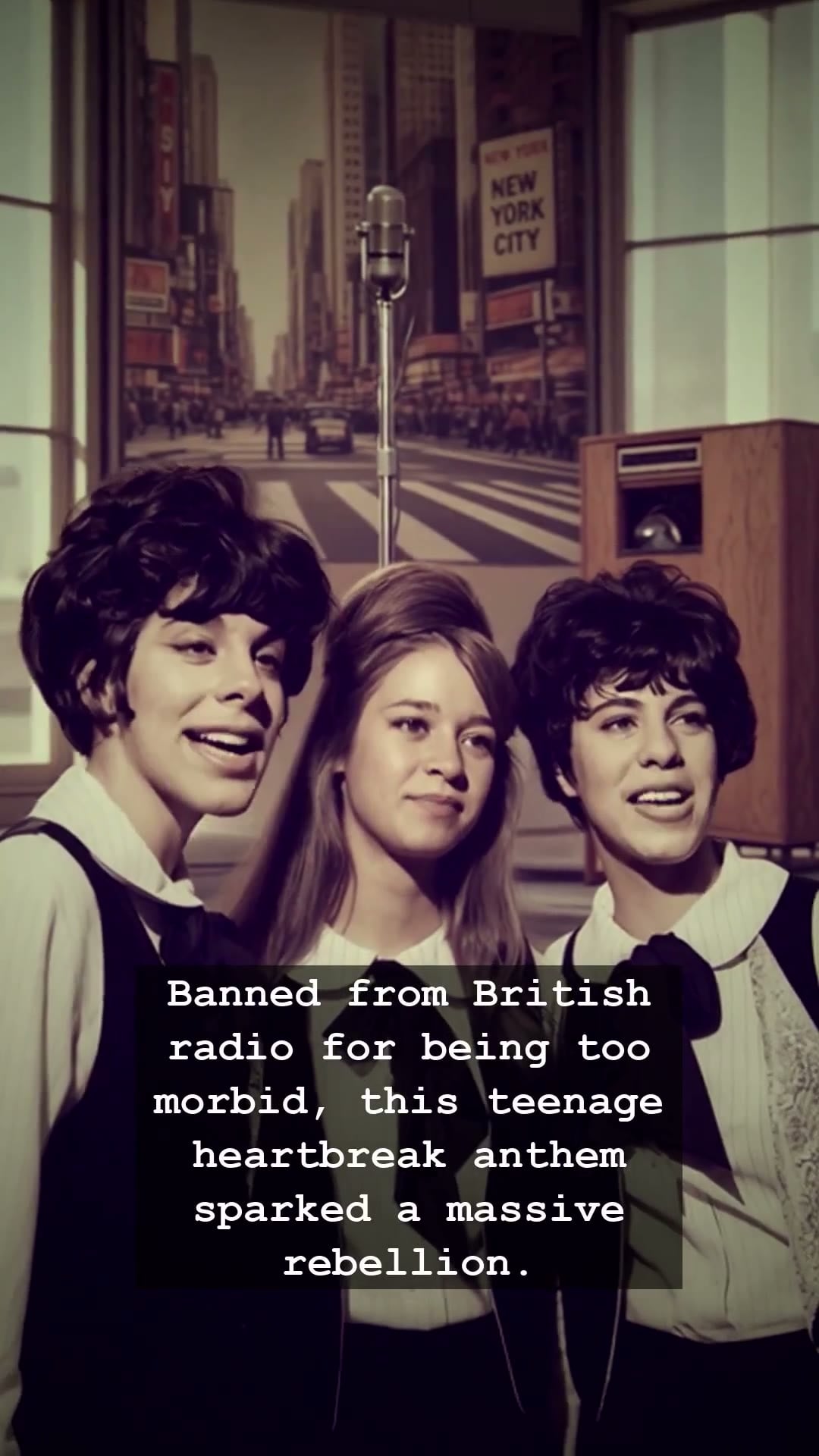
Step back to the autumn of 1964, an era when the airwaves crackled through glowing vacuum-tube radios and teenagers clutched their transistor devices in darkened bedrooms. Into this squeaky-clean world stepped The Shangri-Las, a quartet of tough-talking teenage girls from Queens who traded suburban bubblegum pop for tales of high school heartbreak, motorcycle death cults, and teenage angst. With their teased beehive hairdos, heavy eyeliner, and matching leather jackets, they looked less like traditional pop singers and more like juvenile delinquents ready to crash a high school prom. Their distinct brand of melodrama wasn’t just catchy; it was dangerous, capturing the raw, terrifying intensity of adolescent emotion before anyone else dared to touch it.
The storm broke when The Shangri-Las released their dark masterpiece Leader of the Pack, a tragic teenage soap opera set to a thundering motorcycle roar and a pounding bass drum. The song told the forbidden story of Betty, who falls for Jimmy, a misunderstood motorcycle rider from the wrong side of town, only for him to perish in a fiery midnight crash. It was pure theatrical brilliance, utilizing genuine motorcycle revs recorded right in the studio and sound effects that made listeners feel the screech of tires in their chests. Yet, conservative radio executives panicked at the sheer morbidity of the narrative, fearing it would corrupt the minds of impressionable youth across the nation.
Fearing that the song’s bleak subject matter crossed the line into psychological terror, the BBC officially banned Leader of the Las from British radio airwaves. They argued that the tragedy was far too graphic, too depressing, and entirely unsuitable for the gentle ears of post-war youth. But censorship has always been the greatest marketing tool in rock and roll history. Rather than silencing the girls, the ban achieved the exact opposite effect, turning The Shangri-Las into anti-establishment folk heroes. Across America and covertly across the Atlantic, teenagers treated the ban as a badge of honor, rushing to local record shops to spin the forbidden vinyl on their portable jukeboxes.
The real genius of The Shangri-Las lay in how they channeled the genuine alienation of mid-century youth. While groups like The Beatles were singing about holding hands, these four young women were singing about death, social ostracization, and the crushing weight of heartbreak. They lived the drama they performed, navigating the exhausting whirlwind of national tours, screaming fans, and relentless pressure from producers who wanted to exploit their gritty urban image. Behind the teased hair and dramatic eye makeup were teenagers thrust into a meat grinder of fame, battling exhaustion and the dark realities of the music industry long before the term rock tragedy became a cliché.
Decades later, the sonic footprint of The Shangri-Las echoes clearly through modern alternative music, inspiring everyone from punk rockers to goth-pop revivalists who appreciate the beauty of a good, tragic story. Leader of the Las remains a towering monument to a time when pop music possessed teeth, claws, and a willingness to bleed for its art. The banned anthem proved that teenage grief is a powerful, universal force that cannot be legislated or silenced by stuffy studio executives. Take a moment today to drop the needle on this immortal classic, turn up the volume, and let the ghostly rumble of motorcycles transport you back to an era when pop music truly lived on the edge.