
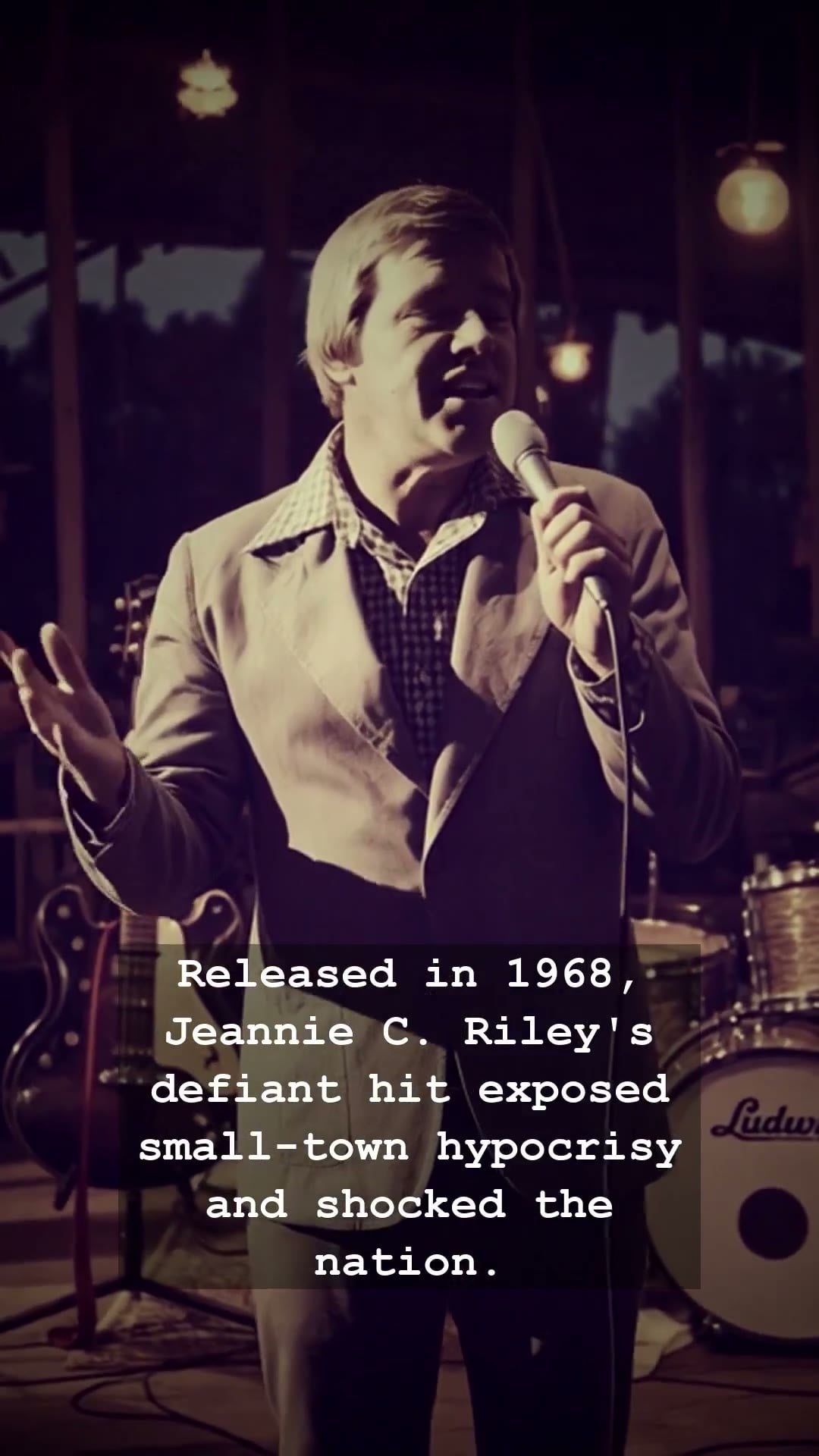
It was 1968, a year defined by societal fracture, the hum of transistor radios, and a growing rebellion against the buttoned-up morality of post-war America. Suddenly, a voice cut through the airwaves like a sharpened blade, challenging the sanctimony of every small town in the nation. Jeannie C. Riley, a former secretary from Texas, stepped behind the microphone to deliver a song that would become an instant, controversial phenomenon. Harper Valley PTA did more than just top the charts; it tore the mask off the self-righteous middle class, selling six million copies and leaving listeners stunned by its audacity.
The story of Jeannie C. Riley is one of those lightning-in-a-bottle moments that rarely happens in the music industry. Written by the enigmatic Tom T. Hall, the song told the tale of a widowed mother called out by a school committee for her supposedly scandalous lifestyle. As the narrative unfolded, the protagonist turned the tables, exposing the hypocrisy of the very people sitting in judgment. When the record dropped, it felt like a collective gasp across the country. For families gathered around their living rooms in the late sixties, the song served as a shocking, rhythmic indictment of the unspoken rules that governed their quiet communities.
At the time, Jeannie C. Riley was an unlikely revolutionary. She wasn’t an established icon of the Nashville scene, but her performance felt deeply authentic, echoing the frustrations of those who felt stifled by local gossip and rigid expectations. The song became a cultural touchstone almost overnight, eventually inspiring a film and a television series. Yet, the real magic—and the real danger—was in its simplicity. It was a narrative song in an era moving toward more experimental sounds, yet it possessed a jagged edge that resonated with the burgeoning counterculture and the fed-up housewife alike.
But fame came with a heavy price for Jeannie C. Riley. Being branded as the voice of the defiant outsider meant that the industry struggled to figure out where she truly belonged. She was thrust into the spotlight of a rapidly changing music landscape, dealing with the relentless pressures of sudden stardom and the expectations of a public that wanted her to repeat the same formula. The grit and the drama of the song began to bleed into the reality of her life, proving that the music industry, much like the PTA in her song, could be just as unforgiving once the initial shock of success wore off.
Looking back from our modern perspective, Harper Valley PTA remains a masterclass in storytelling. It captured a snapshot of an era where the Jukebox was the heartbeat of every roadside diner and the morality of the neighborhood was a high-stakes game. Jeannie C. Riley’s contribution to American music remains a testament to the power of a single, well-placed word against the establishment. Do you remember where you were when you first heard that defiant opening riff? Even decades later, the sting of that truth still feels remarkably sharp.