
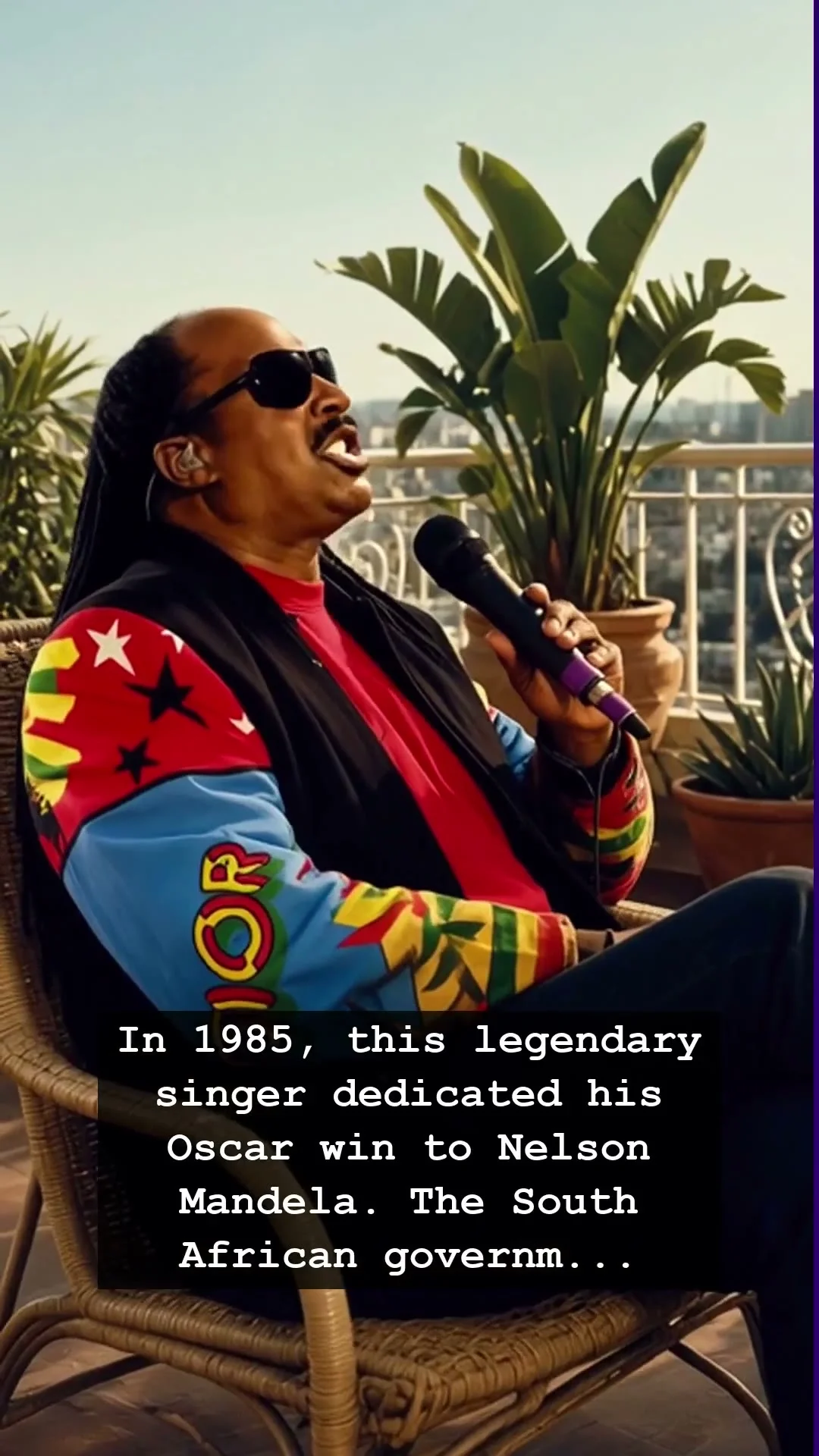
It was the golden era of the mid-eighties, a time when the world stood mesmerized by the birth of MTV and the cool hum of the Walkman. In March 1985, the glitz of the Academy Awards was at its peak. When Stevie Wonder stepped onto the stage to accept the Oscar for Best Original Song for his hit I Just Called to Say I Love You, the audience expected a standard thank-you speech. Instead, the soul icon delivered a message that sent shockwaves across continents. With a somber tone that cut through the Hollywood glamour, Stevie Wonder dedicated his award to Nelson Mandela, who was then languishing in a South African prison. It was a bold, unapologetic act of defiance against the brutal apartheid regime.
The reaction from the South African government was instantaneous and vengeful. Fearful of the power that music held over the public consciousness, they didn’t just ignore his statement—they launched an all-out assault on his artistic legacy. Within days, the authorities issued a complete, nationwide ban on the entire catalog of Stevie Wonder. From the funky, gritty rhythms of his early Motown days to the sophisticated synth-pop soundscapes that defined his eighties output, his music was effectively scrubbed from the airwaves. Radio stations were ordered to stop playing his records, and stores were forced to pull his albums from their shelves. In an attempt to silence the voice of a generation, the regime had only managed to turn the artist into a global symbol of resistance.
For those of us who grew up listening to the Jukebox classics, the idea of censoring Stevie Wonder feels like silencing a heartbeat. By 1985, his music had become the soundtrack to the lives of millions, bridging gaps between race, culture, and social class. The ban was a desperate move by a failing system, highlighting the immense cultural influence that a single musician could command. It serves as a haunting reminder of a time when the act of simply listening to a song was considered an act of political defiance. The irony was palpable: by banning him, the apartheid regime inadvertently cemented his status as a revolutionary icon, proving that his melodies had a reach far beyond the record charts.
This dramatic moment in history is a testament to the weight that music carried in the pre-internet age. During an era defined by Arena Rock spectacles and the rise of global pop stars, Stevie Wonder stood apart by refusing to separate his art from his conscience. Even in the face of state-sponsored censorship, his songs continued to circulate through underground channels and international broadcasts, reaching those who needed them most. It remains one of the most vivid examples of how art, when wielded with conviction, can shake the foundations of even the most rigid political structures.
Looking back, the 1985 ban reminds us that the music we hold dear is rarely just about the melody or the rhythm. It is about the stories, the stakes, and the courage of the people behind the microphone. The next time you find yourself listening to his timeless records, remember the man who risked his commercial standing in South Africa to speak truth to power. Stevie Wonder taught the world that while records can be banned and radio signals jammed, the impact of a truly authentic voice is something no government can ever truly silence.