
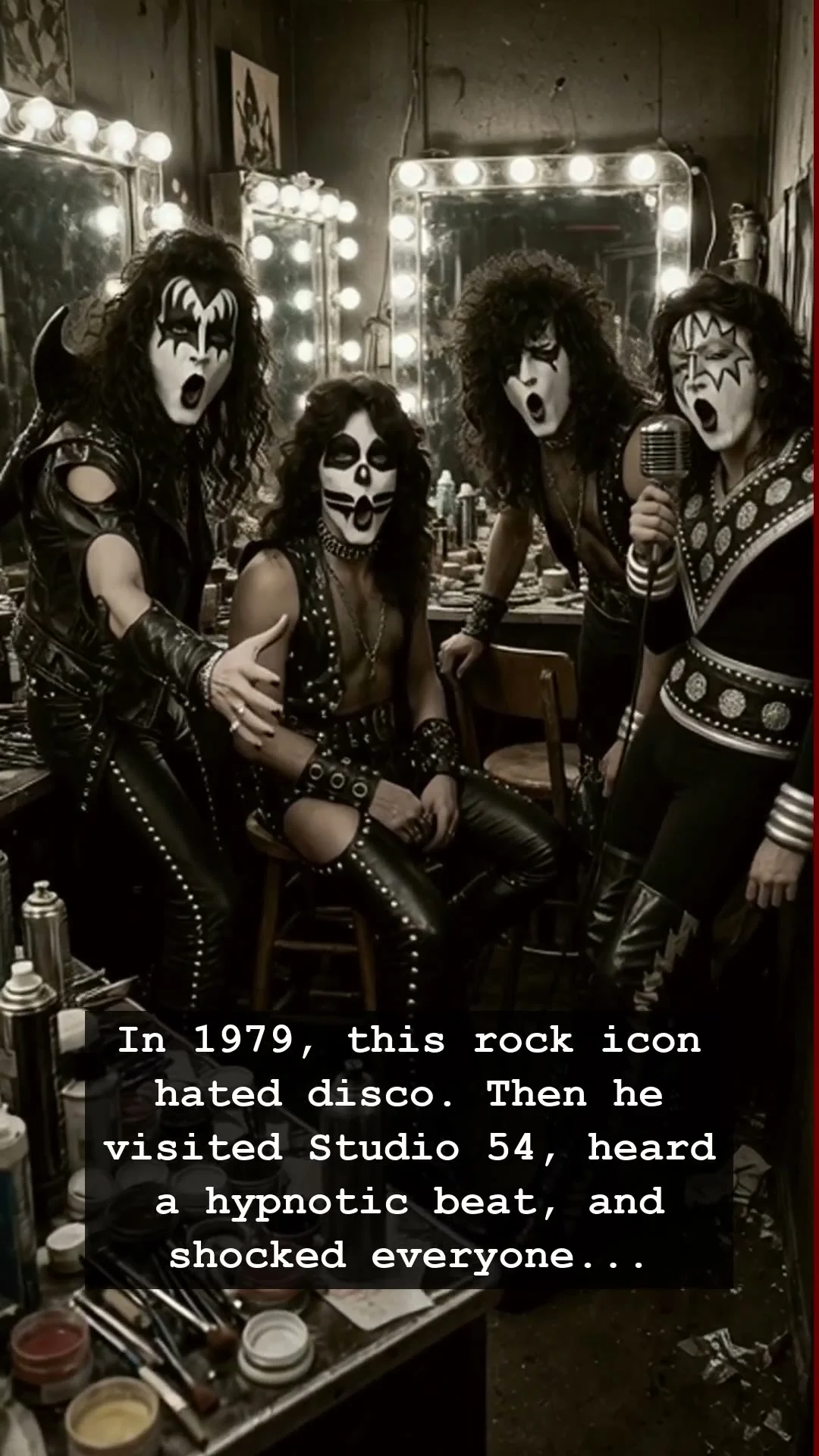
It was 1979, the year when the cultural war between rock purists and disco dancers reached a boiling point. The air was thick with the scent of hairspray and cheap cologne, and the battle lines were drawn. At the center of this storm was Paul Stanley, the flamboyant frontman of KISS, a man whose identity was forged in leather, studs, and the crunching power chords of stadium rock. To Paul Stanley, disco was the ultimate enemy, a plastic, soulless affront to the raw power of electric guitars. He viewed the pulsing, repetitive beats of the dance floor as the antithesis of everything his band represented.
Then came that fateful, neon-drenched night at Studio 54. The epicenter of late-seventies excess, Studio 54 was a place where inhibitions went to die and new rhythms were born. Paul Stanley stepped into the club, his armor of rock bravado firmly in place, fully prepared to despise every second of the experience. But as the hypnotic, pulsating bassline of the night took hold, something clicked. The repetitive, relentless mechanical beat didn’t just annoy him; it crawled under his skin. It was sleek, it was irresistible, and it was undeniably infectious. Paul Stanley suddenly realized that the enemy had a sound that could move the masses like nothing he had ever felt before.
He left the club with a dangerous idea simmering in his mind. He wanted to blend the grit of rock and roll with the unstoppable pulse of the discotheque. The result was I Was Made for Lovin’ You, a song that would forever fracture the loyal fan base of KISS. When the track dropped, the reaction was immediate and visceral. Traditional rock fans were shocked, calling it a betrayal of the band’s heavy-metal soul, while others couldn’t help but surrender to its relentless, danceable energy. Paul Stanley had taken a massive gamble, prioritizing his artistic evolution over the comfort of his established brand.
Today, that song stands as a defiant monument to an era of musical experimentation. It remains a bizarre, brilliant artifact of the late 1970s—a time when Walkmans were beginning to change how we consumed music and the lines between genres were being blurred by sheer ego and ambition. Paul Stanley proved that even the fiercest skeptic could be swayed by the right groove, provided it was executed with the right amount of swagger. It wasn’t just a club anthem; it was a testament to the fact that great music often lives in the friction between clashing worlds.
Reflecting on that moment, we see a snapshot of a man willing to push his boundaries despite the looming threat of public backlash. Paul Stanley didn’t just write a hit; he survived a musical identity crisis and came out the other side with a track that still fills dance floors four decades later. Whether you were there in 1979 or you are just discovering the magic now, it is hard to deny the power of a perfect beat. Tell us, when you hear those opening drums, do you still feel the urge to hit the floor?