
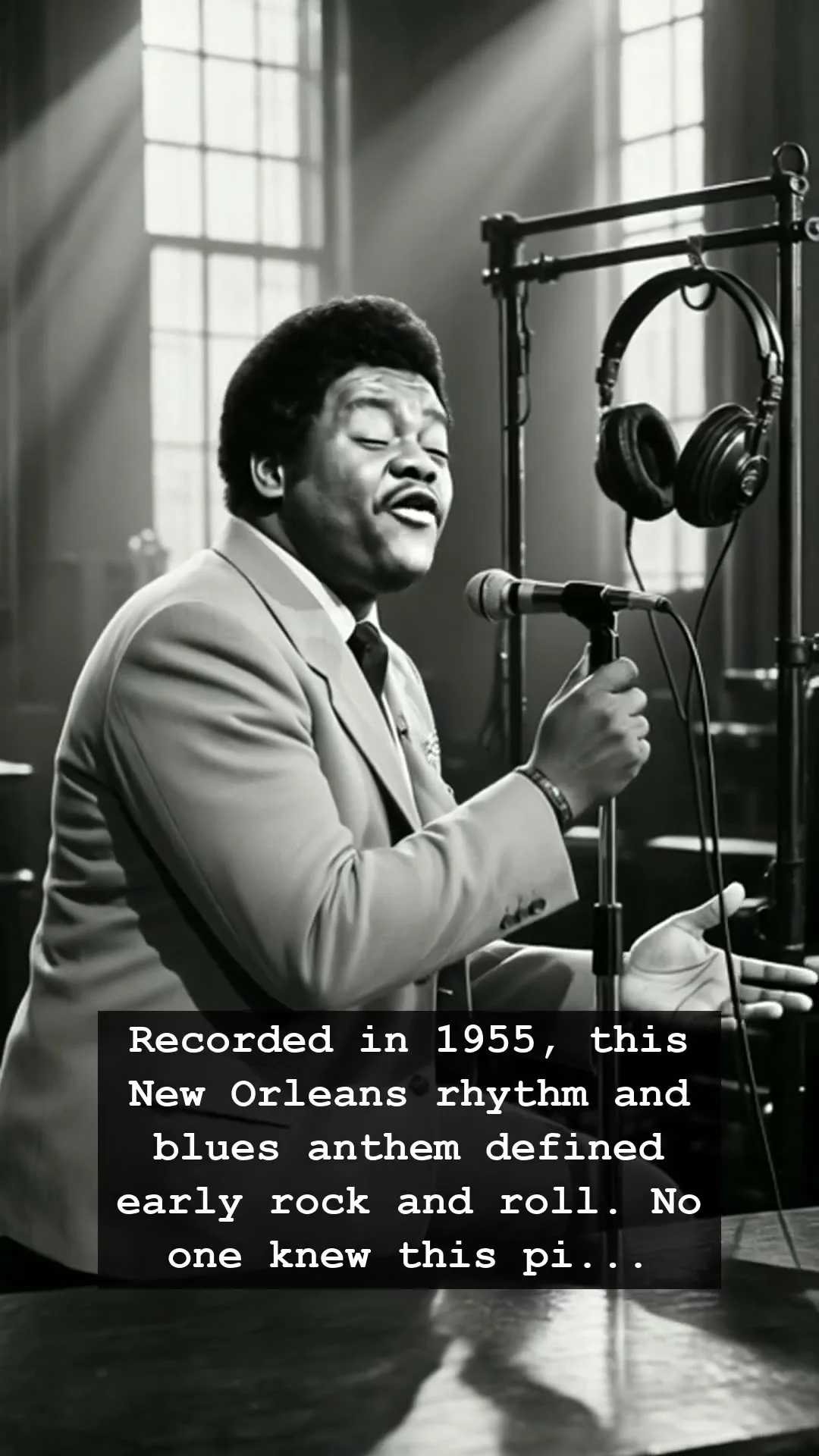
It was 1955, and the air in New Orleans was thick with humidity and the smell of saltwater, but inside the recording studio, something much hotter was brewing. Fats Domino, a man whose gentle smile belied the seismic power of his fingers, sat down at his piano. He didn’t know it then, but the rhythm he was about to unleash would act as the inaugural blast of a cultural revolution. As he pounded out the opening chords, he wasn’t just playing rhythm and blues; he was sketching the blueprint for what the world would soon call rock and roll. It was a sound that defied the rigid borders of the era, a rolling, tumbling boogie-woogie that forced the youth of America to stand up and move.
Fats Domino was not the typical image of a rock star that the television executives of the time were comfortable with. He was soft-spoken, humble, and possessed a quiet grace that stood in stark contrast to the emerging rebellious antics of his contemporaries. Yet, when he touched those ivory keys, the transformation was total. That specific 1955 masterpiece captured a nation that was still tethered to the jukeboxes of mid-century diners. It provided an irresistible, syncopated heartbeat that bridged the gap between traditional R&B and the high-octane energy that would soon define the decade. For millions, that piano riff became the soundtrack of their teenage years, synonymous with late-night drives and the thrill of the new.
The magic of Fats Domino lay in his ability to make complexity feel effortless. While others relied on flashy stage personas or calculated controversy to grab headlines, he relied on the sheer infectious nature of his swing. During an era when the cultural landscape was deeply segregated, his music had a way of cutting through the noise. It reached into living rooms across the country, playing over the early static of radio waves, bringing people together through a shared, undeniable groove. It was the music of the people, grounded in the soulful roots of Louisiana, yet expansive enough to fill the hearts of listeners from coast to coast.
Looking back, it is easy to forget just how dangerous that rhythm felt at the time. To the establishment, it was a volatile noise that signaled the end of a polite era. But to the kids huddled around their record players, it was the sound of liberation. The impact of Fats Domino cannot be overstated; he opened the floodgates for a generation of artists who would eventually fill arenas and command the global stage. He taught us that you didn’t need to shout to be heard if your rhythm could speak directly to the soul.
Even today, that 1955 anthem remains a testament to the power of authentic artistry. Decades later, when the needle drops on a worn vinyl record, the room suddenly feels a little brighter, a little more alive. It is a reminder of a simpler, yet transformative time. We hold onto these songs not just because they are catchy, but because they carry the weight of our memories, preserved in the steady, rhythmic heartbeat of a master pianist who changed everything. As the final notes of that iconic piano solo fade into the ether, take a moment to listen closely; you can still hear the echoes of history moving us all.