
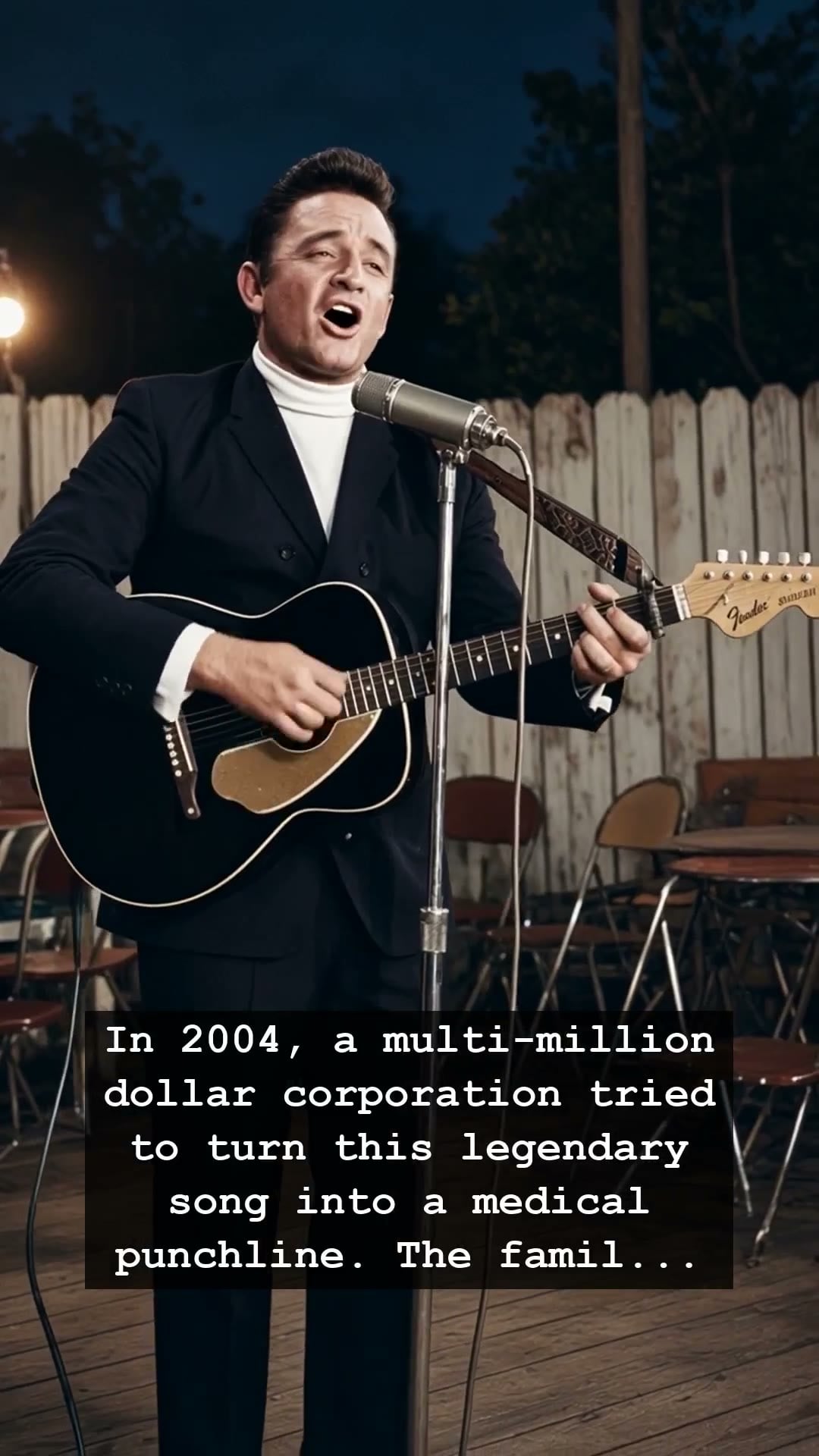
It was 2004, and the world was still reeling from the profound silence left by the passing of the Man in Black. Johnny Cash was not just a singer; he was the raw, beating heart of American roots music. Yet, in the sterile boardroom of a multi-million dollar pharmaceutical corporation, his legacy was seen through a very different lens. They wanted to take his most iconic, soul-stirring anthem, Ring of Fire, and strip it of its burning intensity. They wanted to turn this masterpiece of unrequited love and desperate longing into a tacky, literal medical joke to promote a product for heartburn. The pitch was cold, calculated, and frankly, an insult to the grit that Johnny Cash bled into every recording session.
The song, co-written by June Carter Cash, is a haunting masterpiece of brassy trumpets and deep, resonant vocals that captures the feeling of falling into a love so intense it feels like being consumed by flames. It is a defining track of the 1960s, a time when Jukeboxes in dusty diners across America were the primary heartbeat of the youth. To reduce that complex, visceral emotional fire to a superficial play on words about acid reflux was more than just a marketing blunder; it was an act of cultural vandalism. For those of us who grew up with the static of radio airwaves and the crackle of vinyl, the very thought felt like an affront to the sanctity of the music we held dear.
The Cash family, fiercely protective of their patriarch’s integrity, stepped in with a fury that echoed the man himself. They slammed the door on the corporation, refusing to let the song be cheapened for a commercial punchline. It was a victory for artistic dignity in an era where legendary tracks were increasingly being harvested for quick corporate gains. They knew that Johnny Cash lived by a code—a code that valued authenticity over the hollow glimmer of a paycheck. By blocking the sale, the family didn’t just save a song; they preserved a piece of history that remains sacred to anyone who has ever felt the sting of a broken heart.
Looking back, this moment stands as a testament to why the spirit of Johnny Cash still looms so large in our collective memory. He was the outlaw who played Folsom Prison and the balladeer who found salvation in the arms of his soulmate. His music was never a commodity to be sliced and diced for TV spots; it was a diary of the human experience. In a world saturated with synthetic pop and manufactured trends, the rugged, unfiltered sincerity of the Man in Black serves as a necessary anchor to our past.
Today, when we spin a record and hear those opening horns, we are reminded of the passion that no corporation could ever bottle or sell. We remember a man who walked the line, a man who survived the fire, and a family that stood guard over his flame. The next time you hear those iconic notes, listen closely. You are not just hearing a hit record; you are hearing a legacy that refused to be silenced, saved by the people who knew the real fire behind the music.