
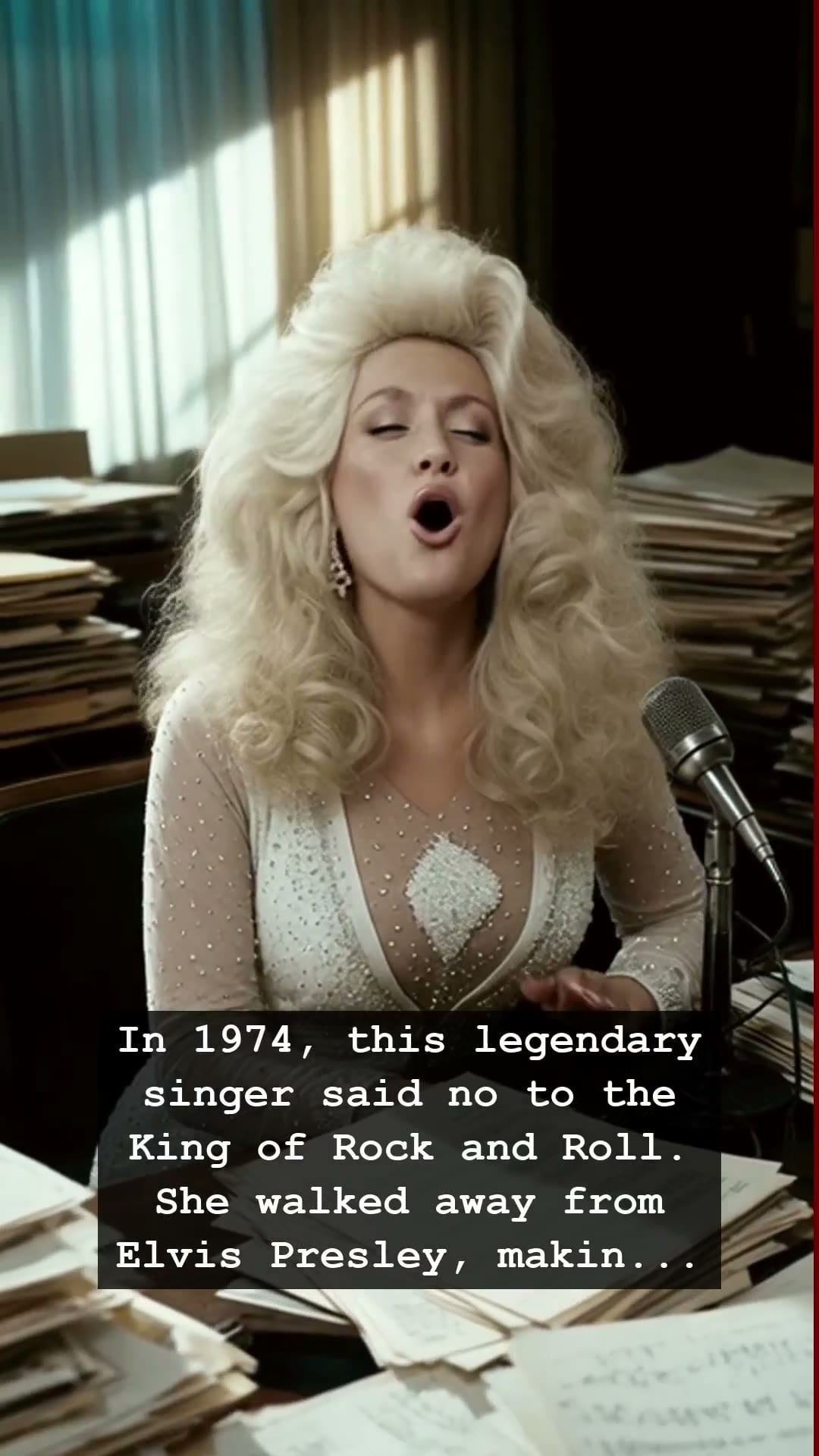
It was 1974, a year when the airwaves were dominated by the soulful echoes of Motown and the rising fever of disco. In the high-stakes world of the music industry, Elvis Presley was the undisputed King, an icon whose influence could make or break a career with a single nod. When Colonel Tom Parker, Elvis’s manager, approached Dolly Parton with a request to record her smash hit I Will Always Love You, it seemed like the opportunity of a lifetime. For any other artist, this was the golden ticket to superstardom. But Dolly Parton, possessing a sharp business acumen that far surpassed her charming country girl persona, looked the King in the eye and walked away from a deal that could have defined her career for all the wrong reasons.
The drama unfolded behind the scenes of a music business that was historically predatory toward songwriters. Elvis wanted to cover the song, but his camp insisted on the standard industry practice of that era: the songwriter had to sign away half of the publishing rights. To Dolly Parton, this was not just a business transaction; it was a violation of her creative soul. She had written the song as a poignant farewell to her long-time partner and mentor, Porter Wagoner, and it was deeply personal. To give up half of the rights would mean losing control of the very heart of her legacy. She famously told the Colonel that she simply could not do it, making what many at the time considered a reckless gamble.
Looking back from our modern perspective, this moment feels like a pivotal turning point in the history of music rights. While Elvis went on to record other hits, Dolly Parton stayed true to her vision. By refusing to compromise, she kept her catalog intact, a decision that would eventually yield immense dividends when Whitney Houston later propelled the song into the global stratosphere. This story serves as a reminder of the grit required to survive in an industry that often treated legends like disposable commodities. It is a testament to how Dolly Parton transformed from a Nashville star into a self-made titan.
Imagine the quiet tension in that office, the heavy silence following a refusal that defied the biggest name in entertainment. It is a moment that echoes the spirit of the seventies, a decade of transition where the old guard of rock and roll was beginning to shift toward a new era of artistic autonomy. The industry was changing, moving from the monolithic control of managers to the power of the artist’s own voice. Dolly Parton stood at the vanguard of this shift, protecting her work with a fierce, quiet intensity that remains inspiring to this day.
Her legacy is not just in the records she sold or the shimmering rhinestones she wore, but in the boundaries she set. Dolly Parton proves that you can be kind, nostalgic, and incredibly successful while refusing to play by the rules that seek to diminish your value. As we look back on the era of the jukebox and the grand arenas of the seventies, her choice remains a brilliant example of integrity. Do you remember where you were when you first heard her voice? Even decades later, that legendary “no” continues to resonate, reminding us all to cherish our own worth above the demands of the status quo.