
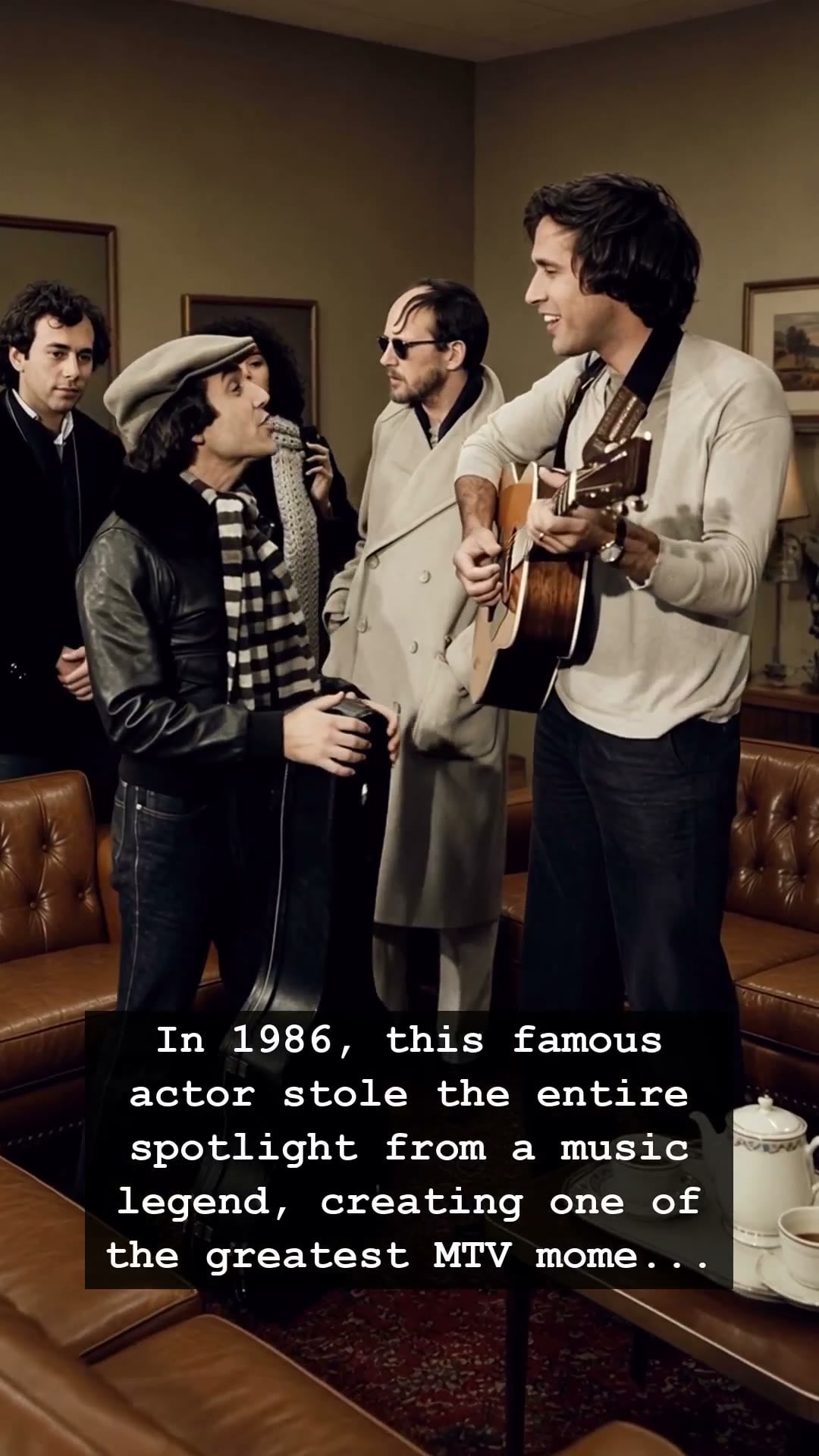
It was 1986, the golden age of MTV, a time when a three-minute music video could redefine a career overnight. Paul Simon, the folk-rock legend who had navigated the tumultuous landscape of the sixties and seventies, was making his grand comeback with the groundbreaking album Graceland. But when it came time to shoot the music video for You Can Call Me Al, nobody expected the most famous comedian of the era to crash the set. Chevy Chase, then at the absolute peak of his Saturday Night Live stardom, didn’t just make a cameo; he hijacked the entire frame, leaving a bewildered Paul Simon to play the background musician in his own song.
Watching the video today feels like stepping into a time capsule. There sits Paul Simon, a man known for his poetic gravitas, playing a tiny pennywhistle and a bass guitar with a look of stoic resignation, while Chevy Chase stands front and center, lip-syncing the lyrics with reckless, hilarious intensity. It was an act of pure comedic alchemy. The irony of the moment was palpable: the master songwriter was reduced to a sideman, while the wisecracking actor commanded the screen. It was a bizarre, brilliant masterclass in self-deprecation that perfectly captured the eccentric spirit of eighties pop culture.
Behind the scenes, the dynamic was one of mutual respect turned into a legendary prank. Paul Simon and Chevy Chase had been close friends, and the idea for the video was born out of a casual, late-night creative whim. The decision to have the tall, imposing Chase tower over the diminutive, serious Simon created a visual contrast that became instantly iconic. It was a stark departure from the polished, over-produced aesthetics that dominated MTV at the time. Instead of pyrotechnics or expensive stage sets, they gave us a simple studio space and a bit of genuine, unscripted-feeling chemistry that resonated with millions of viewers tuned in to the cable channel.
This moment remains a touchstone for why we still hold such affection for that era. It was before the internet age flattened the spontaneity of celebrity, back when a strange, low-budget video could become a watercooler topic for weeks. The success of the You Can Call Me Al video proved that even legendary musicians like Paul Simon could benefit from stepping out of their comfort zone and letting a talent like Chevy Chase disrupt the narrative. It blurred the lines between the serious world of rock music and the irreverent culture of television comedy, a crossover that paved the way for the video trends that followed.
Decades later, the clip serves as a reminder of a simpler, more experimental chapter in music history. It reminds us that behind the epic albums and the stadium tours, there were artists like Paul Simon who were willing to be the punchline for the sake of a great, memorable piece of art. As we look back, the sight of Chevy Chase dancing while Paul Simon keeps the beat remains a beautiful, surreal relic of the eighties, capturing a fleeting instance of pure, unadulterated entertainment that we might never see repeated quite the same way again.