
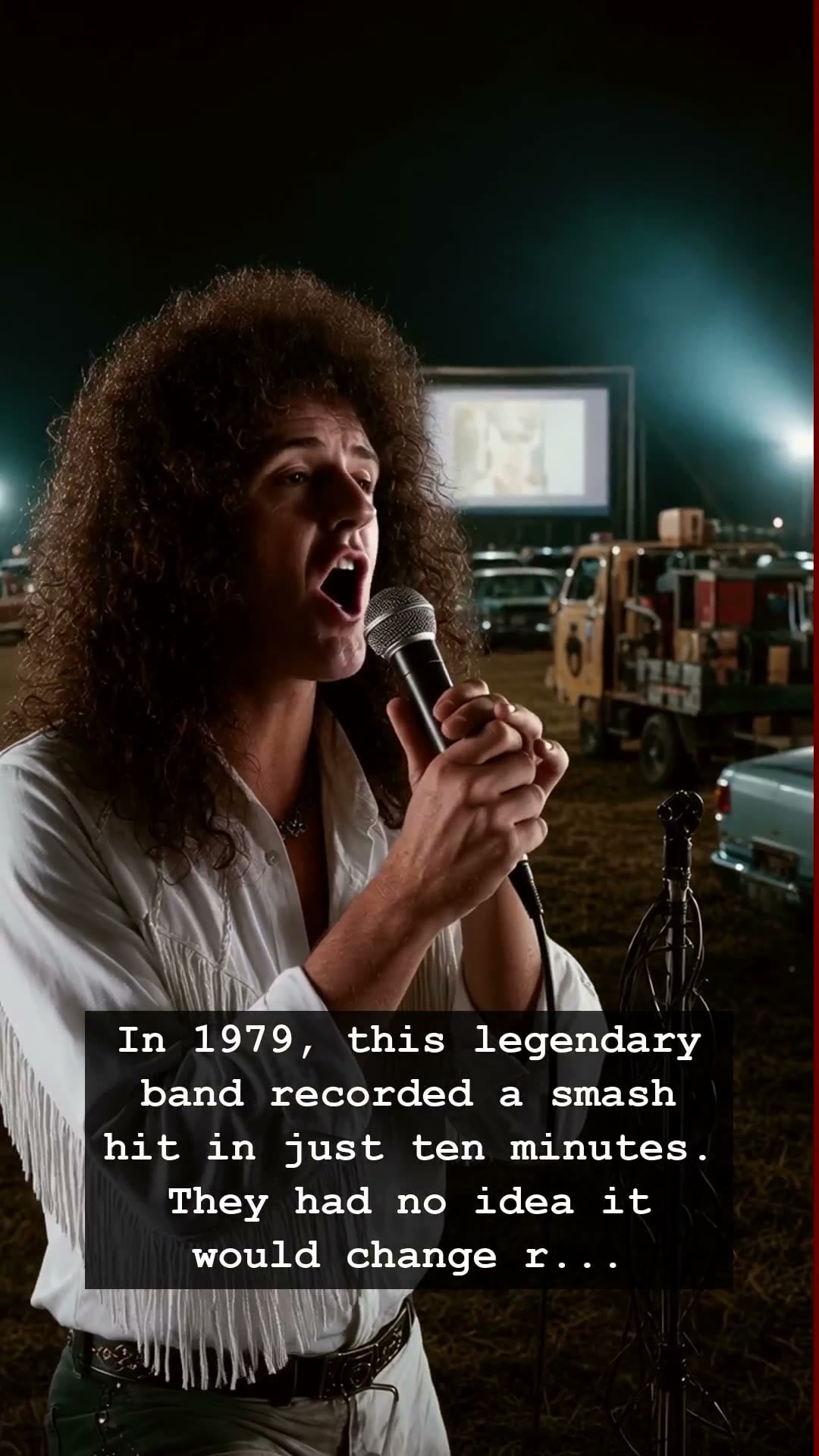
The year was 1979, and the air in Munich felt heavy with the scent of cigarettes and the hum of electric equipment. Inside the claustrophobic confines of a basement studio, Freddie Mercury, the flamboyant heart of Queen, was not looking to craft a complex operatic masterpiece. Instead, he was itching for something raw, something stripped back to the bone of early rock and roll. Legend has it that as he toyed with an acoustic guitar, the rhythm simply took hold of him. In a span of barely ten minutes, he penned Crazy Little Thing Called Love, an impulsive, lightning-in-a-bottle creation that would soon dominate the global airwaves and forever alter the trajectory of rock history.
It is difficult to imagine the sheer audacity of this moment. By 1979, Queen was already a titan of the arena rock era, known for the intricate, multi-layered harmonies of Bohemian Rhapsody and the stadium-shaking grandeur of We Will Rock You. Fans had grown accustomed to the band’s signature thick soundscapes and heavy production. Yet, Freddie Mercury decided to pivot. He was a master of the stage, a performer who could hold hundreds of thousands in the palm of his hand, but here, he was paying tribute to the rockabilly spirit of the fifties, an era he deeply admired. He famously struggled to play the guitar, yet that struggle produced the iconic, crisp rhythm that defines the song.
Recording this hit was a departure from their usual ritual. The rest of the band, Brian May, Roger Taylor, and John Deacon, were caught off guard by Freddie’s sudden inspiration, yet they leaned into the groove immediately. They recorded the track in a blur of creative adrenaline, eschewing their typical weeks-long studio experiments for a spontaneous, live-feel session. It was a refreshing shock to the system, proving that even a global powerhouse could find magic by stripping away the excess of the late disco era. The result was a playful, infectious anthem that transcended generations.
This track serves as a time capsule, transporting us back to a period when the radio was the ultimate gatekeeper of culture and the Walkman was just beginning to change how we consumed music on the go. Queen was at a professional crossroads, navigating the shifting landscape of popular music as disco faded and the grittier sounds of the eighties began to loom. Yet, Crazy Little Thing Called Love proved that Mercury’s songwriting instinct was timeless, effectively bridging the gap between old-school fifties rock and the polished arena anthems of the next decade.
Even today, the song remains a staple, resonating with anyone who has ever fallen under the spell of a simple, perfect melody. It stands as a testament to Mercury’s genius—a man who could paint with the grandest musical brushes one day and sketch a perfect, tiny masterpiece the next. When you hear those first acoustic chords today, it is worth remembering that ten-minute spark in a dark Munich basement. It was not just a song; it was a fleeting moment of pure rock and roll history captured forever. Does the melody take you back to a simpler time?