
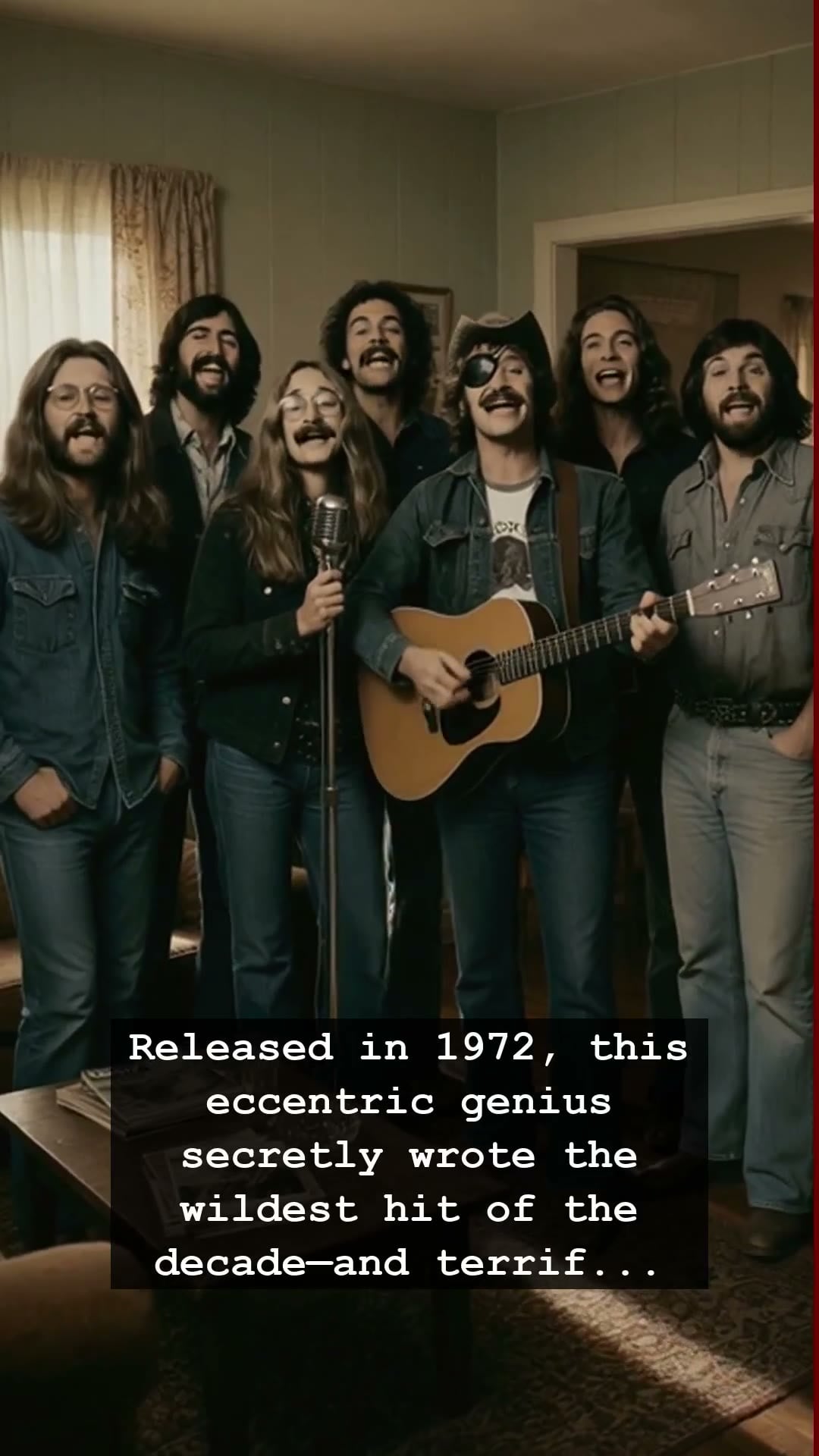
In 1972, the airwaves were crowded with polished radio fodder, yet one song dared to bite the hand that fed it. Titled The Cover of Rolling Stone, this track was not just a hit; it was a mocking, hilarious, and dangerously meta anthem that sent record executives into a frantic tailspin. The song was the brainchild of an unlikely collaborator, a man whose eccentric genius was as sharp as a razor blade: Shel Silverstein. Before he became a household name for his whimsical children’s books, Silverstein was a bohemian poet and songwriter who saw the music industry for exactly what it was—a glitzy, fragile ego trip. He handed this biting satire to a struggling, ragtag band called Dr. Hook and the Medicine Show, forever changing their trajectory and the landscape of rock radio.
Dr. Hook was the antithesis of the polished pop stars of the early seventies. Led by the charismatic, eye-patched Ray Sawyer, they were a band of misfits who looked more like outcasts from a traveling carnival than chart-toppers. When Silverstein approached them with his lyrics, the band was skeptical but hooked. The song mocked the very idea of fame, specifically targeting the ultimate status symbol of the era: being featured on the cover of Rolling Stone magazine. At the time, Jukeboxes across America were playing the song on a loop, and listeners couldn’t help but chuckle at the irony of a band singing about how much they wanted to be stars, while simultaneously making a mockery of the industry that created them.
The music executives of 1972 were terrified. They saw the song as an act of subversion, a direct jab at the high-stakes world of rock journalism and commercial success. Yet, the song resonated deeply with a generation disillusioned by the decline of the Woodstock dream and the rise of corporatized rock. The partnership between the raw, unrefined sound of Dr. Hook and the razor-sharp wit of Shel Silverstein created a chemical reaction that no record label could predict. It was a moment of pure, unfiltered rebellion that managed to find its way onto the Billboard charts, proving that audiences were hungry for something authentic, even if it was cynical.
Reflecting on that era, it is easy to see why the collaboration between Shel Silverstein and Dr. Hook remains a cult favorite today. It captured a specific cultural pivot where music began to take itself too seriously, and the band served as the perfect, chaotic antidote. The song wasn’t just a gimmick; it was a clever performance piece that dared the editors of the music press to pay attention. Eventually, the magazine took the bait, and the band achieved their goal, but the true legacy remains in that 1972 recording—a testament to what happens when you let a genius storyteller loose in the studio with a band that has nothing to lose.
Decades later, when we hear that familiar, gravelly voice singing those iconic lines, it takes us back to a time when music felt dangerous, spontaneous, and wickedly funny. Dr. Hook and Shel Silverstein didn’t just record a song; they staged a coup against the vanity of the rock star myth. As we look back through the lens of nostalgia, that rebellious spirit remains as vital as ever, reminding us that sometimes, the best way to make a mark is to refuse to play by the rules. Do you still remember the first time you heard it playing from a dusty record player?