
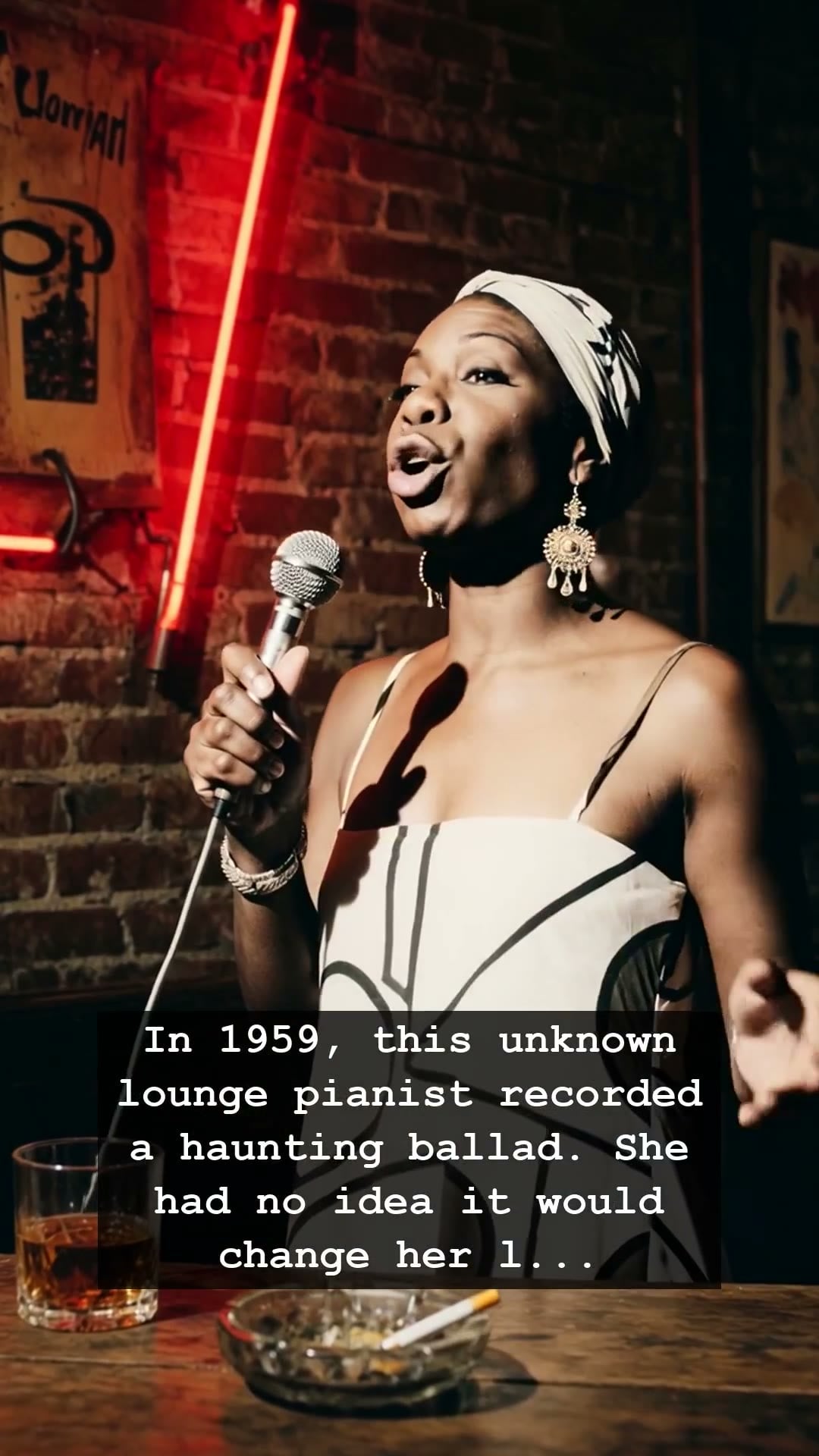
The year was 1959, and the air in the dimly lit bars of Atlantic City was thick with cigarette smoke and the clinking of gin glasses. A young, classically trained pianist named Nina Simone sat at the keys, her fingers moving with a precision that betrayed her conservatory roots, yet her voice carried the weight of a thousand untold stories. She was an unknown lounge pianist, playing for pennies and indifferent patrons, until she decided to record a rendition of Gershwin’s I Loves You, Porgy. In a single, chilling take that captured a raw, unfiltered ache, Nina Simone did not just record a song; she tapped into a universal sorrow that would shatter the Billboard charts and launch her into the stratosphere of American music legends almost overnight.
Back then, the music landscape was transitioning from the innocent, bouncy energy of early Rock ‘n’ Roll and Doo-wop toward something deeper and more introspective. Nina Simone was an anomaly in this era. While the jukeboxes were churning out upbeat hits, her music acted as a spiritual anchor, grounding listeners in a profound, soulful reality. This was not just pop music; it was a revelation. Behind the scenes, the industry was often cold and profit-driven, but the sincerity of Nina Simone’s performance forced the establishment to pause. She didn’t fit into the neatly packaged boxes of radio-friendly artists; she was a force of nature, blending jazz, blues, and classical influences in a way that had never been heard before.
Yet, the road to fame for Nina Simone was never paved with gold. Her rise was shadowed by the internal conflicts of a woman caught between her artistic vision and the racial tensions of mid-century America. As the civil rights movement began to simmer, her music evolved from haunting ballads into a powerful weapon of social change. The same hands that played tender piano chords would soon lead anthems that echoed through the halls of history, reflecting the intense pressure and mental toll that fame exacted on such a brilliant mind. The story of her life is a paradox of transcendent beauty intertwined with the jagged edges of a turbulent era.
Looking back at that pivotal 1959 recording, it is easy to hear why the world stopped to listen. Nina Simone possessed the rare ability to make every listener feel as though she were singing directly to their most private, buried secrets. In an era before the mass connectivity of MTV or the personal intimacy of the Walkman, her voice traveled through the radio waves like a ghost haunting the living room. She captured the solitude of the late-night lounge and elevated it into an eternal statement on human longing.
Even today, decades after her rise, the legend of Nina Simone remains untouchable. Her influence can be heard in the echoes of every soulful singer who dares to be vulnerable on stage. When we listen to her early recordings, we are not just hearing a song; we are peering into the soul of an artist who gave everything to her craft. The haunting ballad of 1959 was merely the beginning of a legacy that continues to resonate with anyone who has ever felt the bittersweet sting of true, unvarnished emotion.