
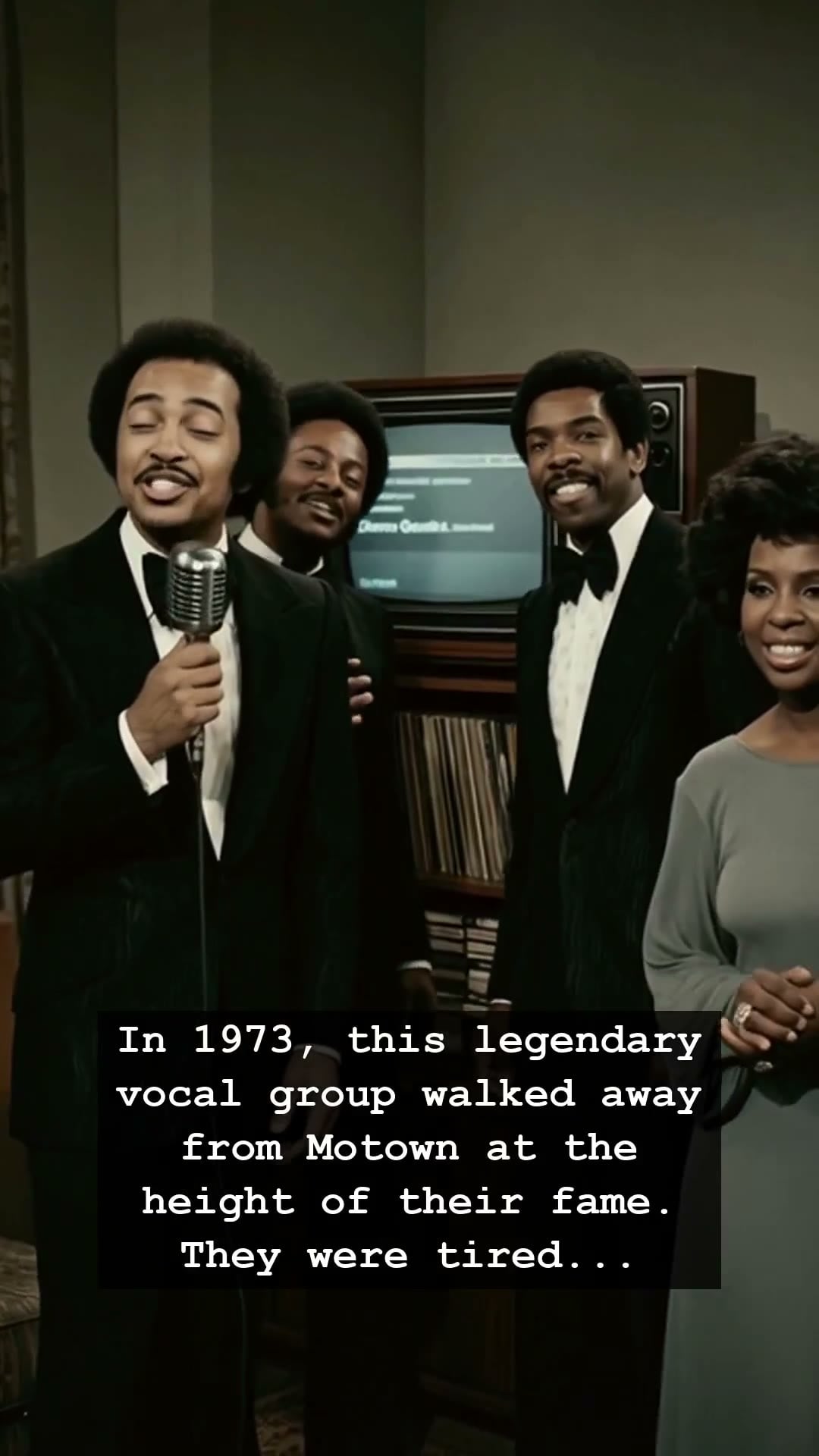
It was 1973, and the music world was shifting beneath the neon glow of a changing America. While the youth were obsessed with the rising tide of disco and the remnants of Woodstock, one powerhouse group was about to make a move that would shock the industry to its core. Gladys Knight and the Pips, a vocal powerhouse that had defined the soulful sound of the decade, decided to walk away from Motown—the greatest hit-making machine the world had ever seen. At the absolute peak of their fame, they chose to step into the unknown rather than continue living in the shadow of the label’s golden child, Diana Ross.
To understand the gravity of this decision, you have to look at the landscape of the early seventies. Motown was a kingdom built on strict control and specific hierarchies, and for Gladys Knight and the Pips, the frustration was palpable. They weren’t just background players; they were vocal titans with an unparalleled stage presence. Yet, in the machinery of Barry Gordy’s empire, they often felt sidelined, waiting for their turn while other artists received the lion’s share of the resources. It was a classic tale of artistic conflict behind the closed doors of a hit factory, a drama that many listeners in the era of Jukeboxes and transistor radios never truly saw.
Leaving the label was a massive gamble. In an industry where major corporate backing meant everything, betting on themselves felt like walking a tightrope without a net. Critics whispered that they were committing commercial suicide. But Gladys Knight and the Pips knew their worth. With a sound rooted in genuine soul and the deep resonance of their Gospel heritage, they didn’t need a corporate pedestal to define their talent. They transitioned to Buddah Records, a move that proved they were not just performers, but masters of their own destiny who refused to be stifled by bureaucracy.
This pivotal moment resonates today because it represents the ultimate fight for creative autonomy. Their departure wasn’t just a business move; it was a defiant statement of self-respect. They had navigated the high-pressure world of Motown, survived the grueling tours, and delivered chart-topping hits, all while battling the internal politics of an era that often minimized black artistry to fit a polished pop narrative. When they finally broke free, they weren’t just launching a new phase of their career; they were reclaiming their narrative and setting a standard for artists who would follow in their footsteps decades later.
The legacy of Gladys Knight and the Pips is far more than a collection of classic records; it is a testament to the power of artistic integrity. Even today, hearing the smooth, melancholic notes of their biggest hits transports us back to a time when music felt visceral, dangerous, and profoundly real. They taught us that while the lights of fame are bright, the fire of one’s own conviction burns much longer. The next time you find yourself listening to their soulful harmonies, remember that beneath the beauty of the song, there lies the story of a group that dared to walk away, choosing their own path in a world that demanded they stay quiet.