
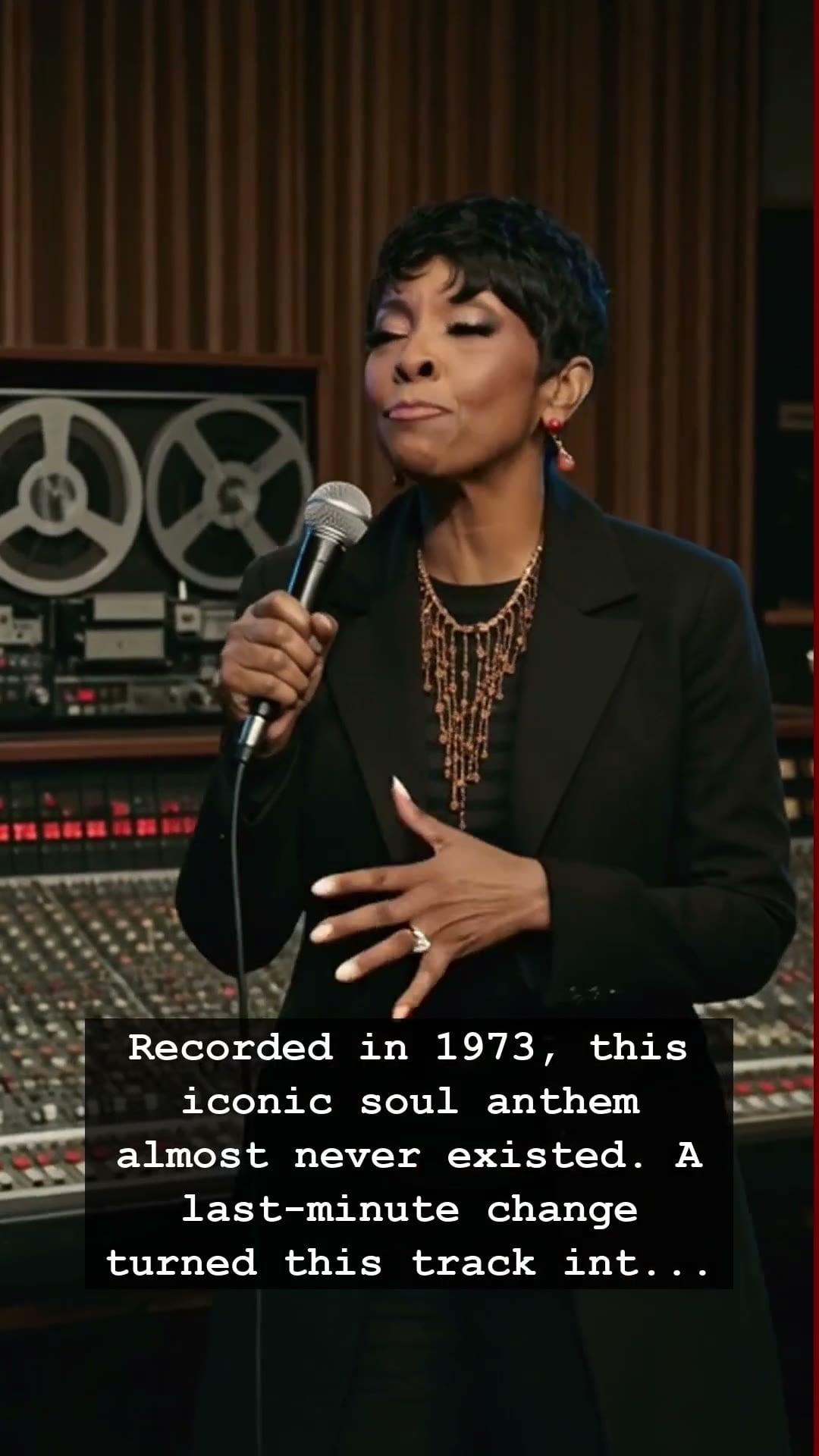
It was 1973, a year defined by the flickering glow of television screens and the crackle of vinyl spinning on turntables in living rooms across America. Gladys Knight and the Pips were already soulful royalty, but they were about to touch the hem of immortality with a song that almost vanished into the shadows of history before it even began. You know the haunting opening notes, the rhythmic chug of the melody, and that unmistakable voice—but few realize that the Midnight Train to Georgia was never supposed to leave for the station it eventually reached.
Songwriter Jim Weatherly had originally penned the track as Midnight Plane to Houston. The narrative was simple, personal, and grounded in the life of a football player friend who was moving back to Texas. When he first recorded it, it was a country-tinged ballad, a fleeting thought captured on tape. However, the song underwent a seismic shift when it reached the hands of Gladys Knight. She sensed a deeper, more universal ache within the lyrics, and she suggested a change that would redefine the soul genre: why not a train to Georgia? That single, intuitive pivot transformed a private anecdote into a sweeping anthem of devotion that resonated with every restless heart in the era of the Walkman and the jukebox.
This was the height of the Motown era, a time when the boundaries between soul, funk, and pop were fluid and electric. When Gladys Knight and the Pips stepped into the studio, the air was thick with the weight of expectation. They didn’t just sing the song; they lived it. The Pips provided that signature, velvet-smooth vocal interplay, acting as the perfect foil to Gladys Knight’s raw, commanding delivery. It wasn’t just a recording session; it was an exorcism of longing. The drama of the song wasn’t in the instruments, but in the way their voices tangled together to capture the bittersweet reality of choosing love over the cold, hard lights of fame.
The industry was cutthroat, and success in the 1970s was often a double-edged sword, fueled by late nights at Studio 54 and the relentless pressure of constant touring. Yet, Gladys Knight and the Pips maintained a sense of authenticity that was rare for the time. They navigated the shifting tides of the music business with grace, despite the internal stresses and the grueling nature of being an A-list act. Midnight Train to Georgia became their signature, a testament to the fact that sometimes, the best art comes from the smallest, last-minute decisions.
Decades later, the song remains a fixture of American culture, its legacy woven into the fabric of our collective memory. It reminds us of a time when music was the bridge between our private sorrows and our public identity. Every time those first chords strike, we are transported back to that 1973 magic, listening to Gladys Knight and the Pips remind us that the destination matters far less than the soul you carry with you on the ride.