
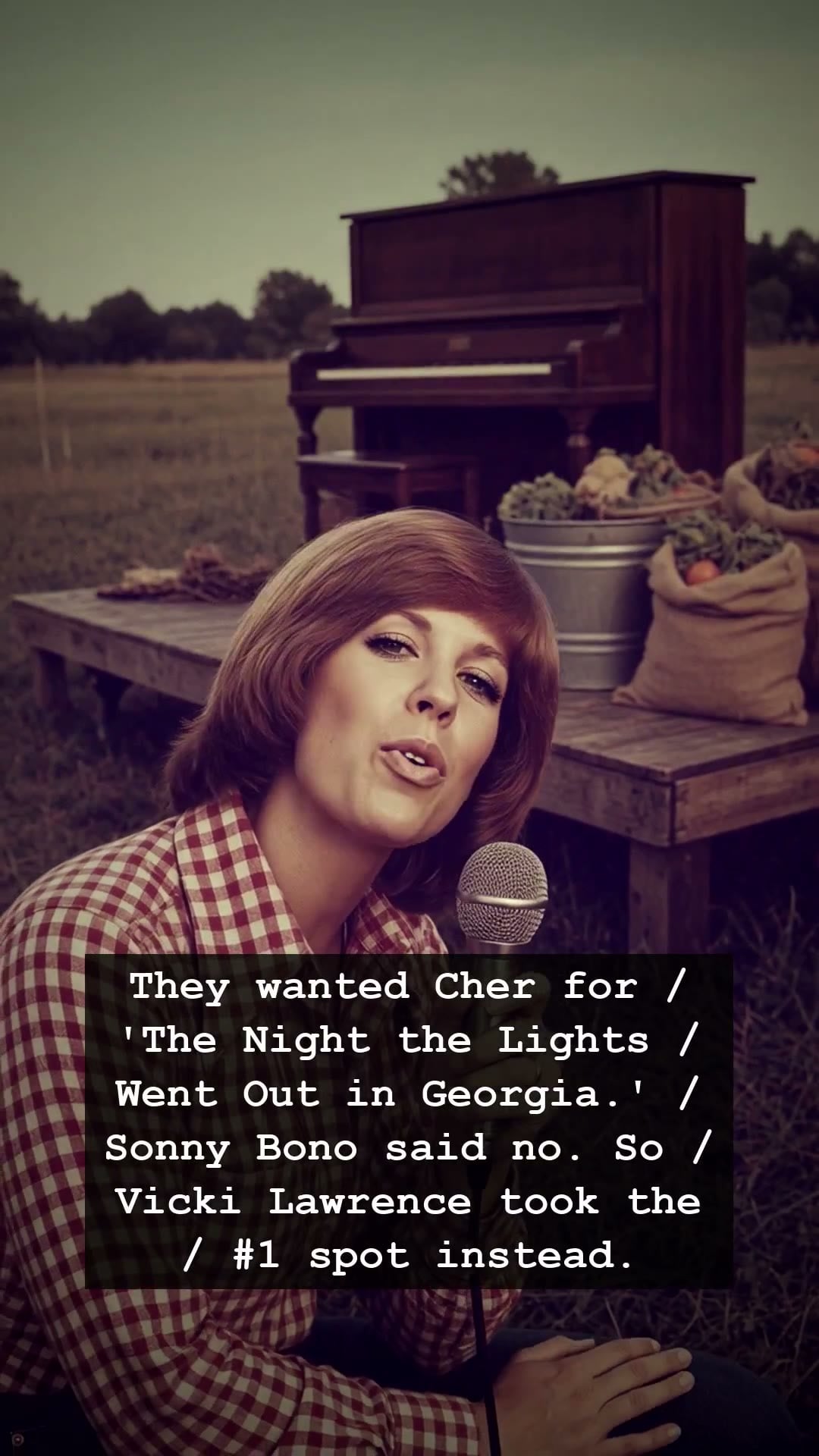
It was 1973, an era defined by the crackle of vinyl records, the neon glow of AM radio, and the sharp, poignant storytelling of the American murder ballad. In the landscape of pop culture, everyone had their eyes set on a singular, gargantuan talent: Cher. The song was titled The Night the Lights Went Out in Georgia, a gritty, Southern-gothic tale of betrayal and accidental tragedy that seemed tailor-made for a superstar’s voice. The music industry executives were practically drooling over the potential, fully convinced that Cher would propel the track to the top of the charts with ease. But fate, as it often does in the music business, had a different plan that involved an abrupt intervention by Sonny Bono.
Sonny Bono, the gatekeeper of Cher’s career at the time, famously killed the deal. He saw no value in the song and refused to let his partner touch it. The executives were left scrambling, but in the halls of television, a different kind of star was waiting in the wings. Vicki Lawrence, best known for her razor-sharp comedic timing as a sidekick on The Carol Burnett Show, was looking for a break in the music industry. She heard the demo, recognized the haunting power of the lyrics, and decided to take a gamble that no one else was willing to make. It was a risky move for a performer known primarily for laughs, but Vicki Lawrence possessed a grit that the song required.
When the recording was released, the world was caught off guard. The contrast was stark: the woman who could make audiences weep with laughter on Saturday nights was now singing a cold-blooded story of jealousy, southern courts, and a hanging tree. The public embraced the eerie atmosphere of the song immediately. It was a refreshing, dark departure from the bubblegum pop dominating the airwaves at the time. Against all expectations, Vicki Lawrence soared past the industry gatekeepers, climbing the charts until she landed firmly in the number one spot on the Billboard Hot 100.
Looking back, the success of the track serves as a testament to the unpredictable nature of fame during the seventies. While the era was famous for the disco glitz that would eventually arrive at Studio 54, there was still a deep, lingering hunger for storytelling ballads. Vicki Lawrence tapped into that primal American fascination with true crime and small-town secrets. Her performance wasn’t just a gimmick; it was a masterclass in tone, delivering the narrative with a chilling, deadpan restraint that Cher might have turned into a theatrical spectacle instead.
Decades later, the song remains a staple of classic radio, a haunting reminder of a time when a comedy sidekick could outmaneuver the biggest power couple in Hollywood. It highlights the often brutal, high-stakes games played behind the curtain of the music industry. Every time those opening piano notes ring out, we are transported back to the vinyl-spinning days of 1973. Vicki Lawrence proved that sometimes the best hits are the ones that industry experts overlook. So, the next time you hear that iconic opening, remember the drama that nearly kept the song from ever reaching your ears.