
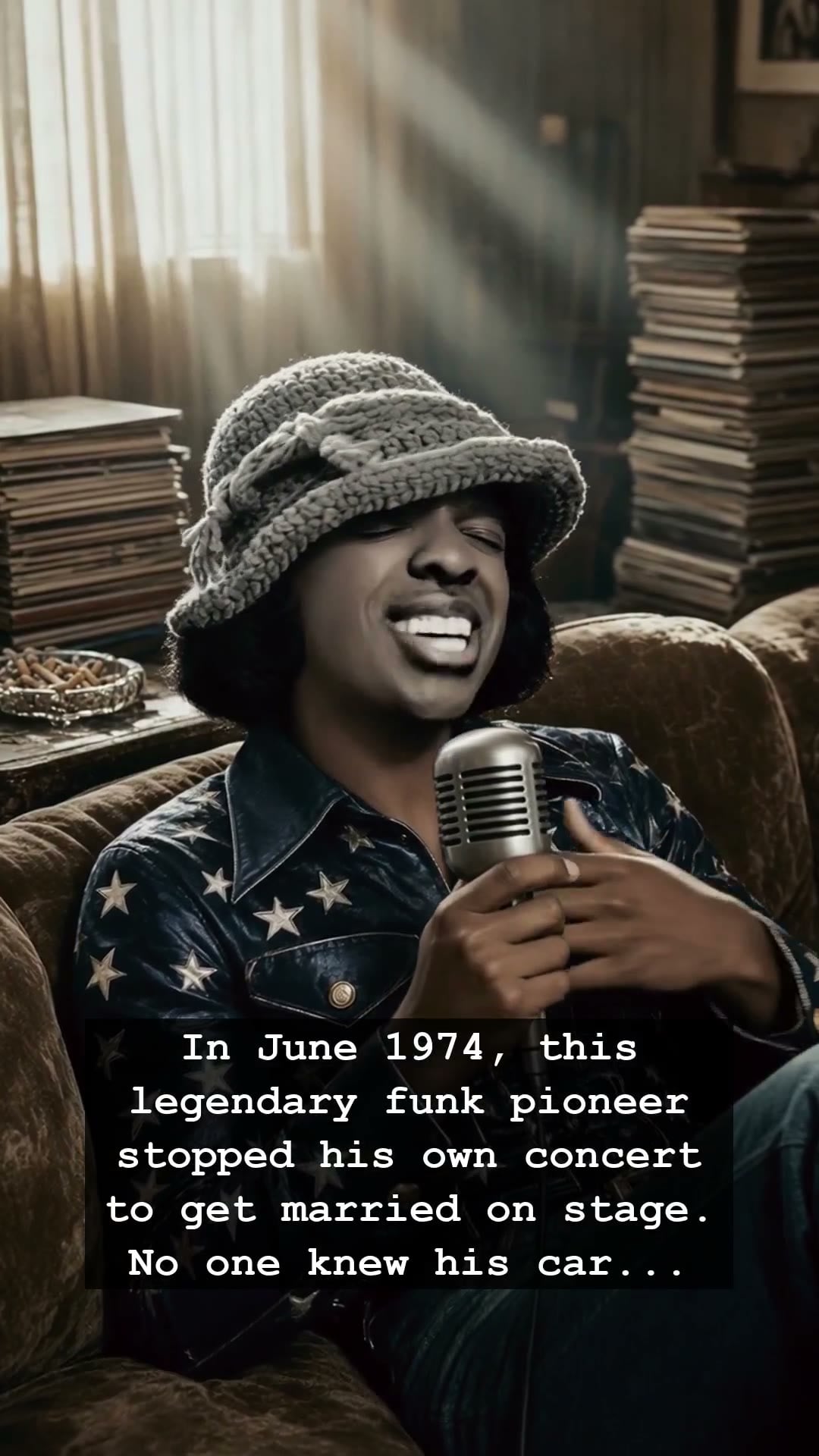
It was June 1974, and Madison Square Garden was vibrating with the electric, sweat-soaked energy of a crowd fueled by pure funk. The air was thick with the scent of cheap cigarettes and the anticipation that only a Sly Stone concert could summon. Sly, the enigmatic visionary behind the revolutionary Sly and the Family Stone, was at the height of his cultural power. But what happened that night did not involve a legendary guitar solo or a transcendental anthem. Instead, the music stopped abruptly. In a move that shocked the industry and left thousands of fans bewildered, Sly Stone decided to marry his partner, Kathy Silva, right there on the concert stage. It was a bizarre, headline-grabbing spectacle that felt like a coronation, but for those who knew the signs, it looked like a funeral for a genius.
To understand the gravity of that night, one must remember the era. This was a time when the Jukebox reigned supreme and the gritty soul of the late 60s was giving way to the polished, hedonistic excess of the mid-70s. Sly Stone had been the bridge between the psychedelic optimism of Woodstock and the hard-hitting reality of funk. He was a pioneer who fused race, gender, and genre into a singular, explosive sound. Yet, behind the glitter of his stage outfits and the success of hits like Family Affair, the cracks were already spreading. The pressure of maintaining his status as a musical deity was beginning to crush him, and the substances that fueled his marathon studio sessions were rapidly becoming his master.
The wedding was the ultimate distraction—a momentary high in a life that was spiraling toward darkness. Many critics later pointed to that June evening as the true beginning of his tragic descent into chaos. The charisma that once captivated the world began to fracture into paranoia and instability. He became infamous for missing concerts, walking out on recording sessions, and disappearing into a labyrinth of chemical dependency. The man who once brought people together through the power of rhythm suddenly found himself isolated, trapped by the very fame he had helped invent.
Decades later, the story of Sly Stone remains a haunting reminder of the high price of creative brilliance. It is a cautionary tale of how the same fire that illuminates the stage can just as easily consume the person standing in its center. The irony of that 1974 wedding is that it serves as a snapshot of a man trying to claim a shred of normalcy while his world was dissolving into dust. He had reached the mountaintop only to find that the air was too thin for him to breathe.
Today, we look back at his music and hear the echoes of a genius who changed the sound of American culture forever. While the shadows of his personal collapse loom large, they cannot erase the legacy of the funk pioneer who refused to follow the rules of anyone but himself. Sly Stone remains a complex, tortured figure, a ghost in the machine of the music industry. Whenever the needle hits the vinyl and the syncopated bassline of a classic track kicks in, we are reminded of the magic he once gifted us—and the heavy, human cost of being a legend.