
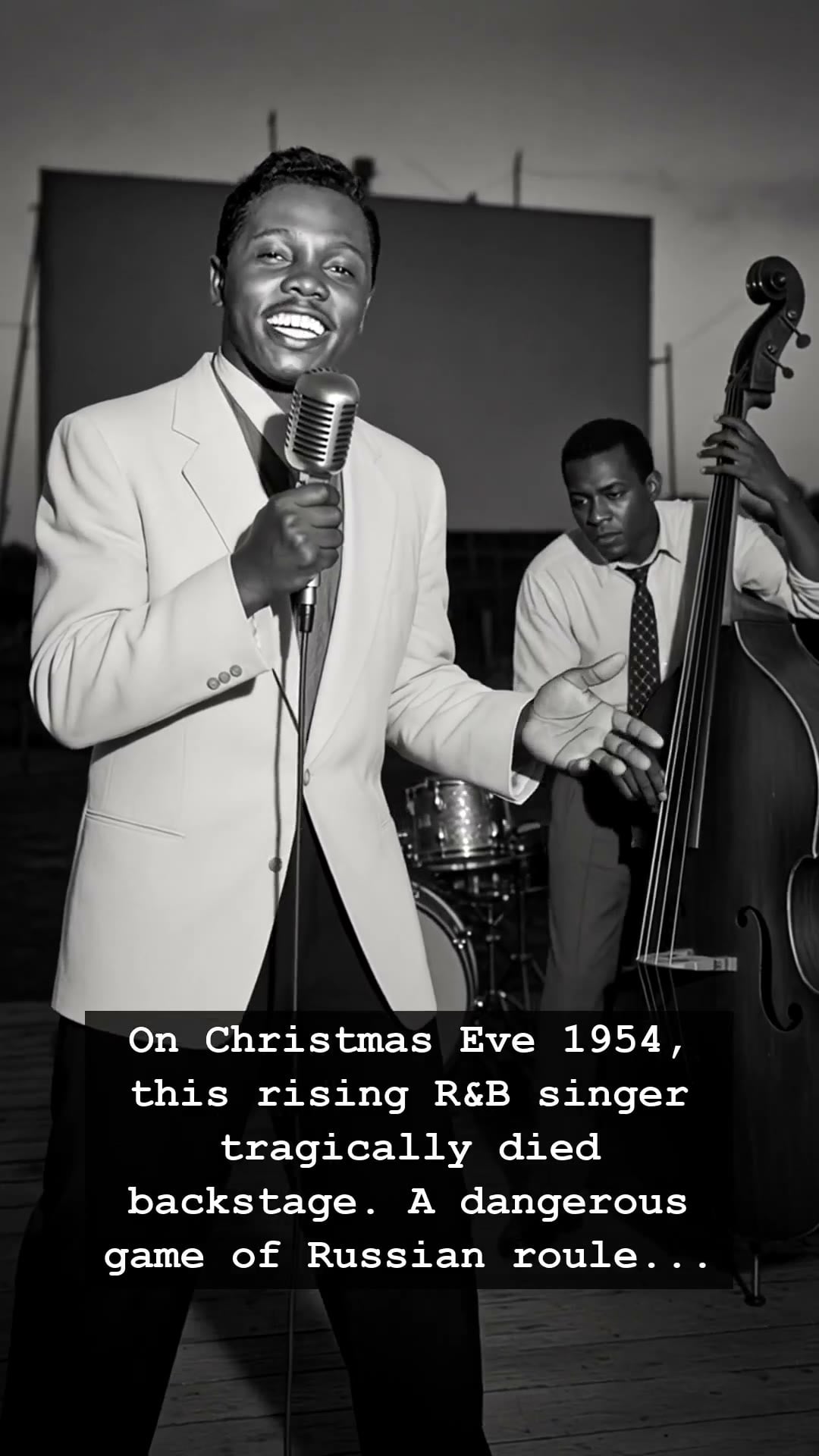
It was Christmas Eve, 1954. Outside the City Auditorium in Houston, the air was thick with the scent of pine and the anticipation of a sold-out holiday show. Inside, the world of rhythm and blues was about to lose its brightest rising star. Johnny Ace, the soulful crooner whose silky voice had captivated the jukebox generation, sat backstage in a moment of reckless bravado that would echo through history. With a single pull of a trigger in a game of Russian roulette, the music stopped. The man who had charmed the nation with his velvet tone was gone at the age of twenty-five, leaving behind a legacy that would forever be shrouded in the smoke of a cold, December tragedy.
Johnny Ace was more than just a performer; he was the voice of a changing America. Before the era of MTV and the global stage, he was a giant of the R&B scene, dominating the charts with hits like My Song and The Clock. He lived in the golden age of the jukebox, where his records provided the soundtrack for lovers in dim-lit diners and restless youth dreaming of something more. His death sent a shockwave through the industry, turning him into a martyr of rock and roll’s volatile infancy. Many fans at the time struggled to comprehend how a star with such a promising trajectory could vanish in the blink of an eye, turning a joyous holiday into a permanent day of mourning for the soul music community.
The circumstances surrounding the death of Johnny Ace remain as haunting today as they were seven decades ago. Some accounts suggest it was a drunken dare, a fatal lapse in judgment fueled by the pressures of fame and the high-octane lifestyle of the touring circuit. Others whisper that it was a tragic accident, a musician playing with a prop that turned deadly. Regardless of the truth, the silence that followed the gunshot in that Houston dressing room was deafening. It stripped away the glamour of the spotlight, revealing the raw, dangerous reality of life for Black artists in the mid-fifties, who often found themselves caught between soaring success and the crushing weight of systemic instability.
Decades later, the legend of Johnny Ace lingers in the dark corners of music history. His story serves as a somber reminder of the fragility of talent in an industry that demands everything from its icons. In an era before modern safety protocols or the protective bubble of superstardom, he was an artist left to navigate his own demons. As we look back on the evolution of American music, from the raw energy of early R&B to the polished spectacles of later years, his name remains an essential, albeit tragic, chapter in the narrative of musical pioneers who left us far too soon.
His songs, characterized by that signature, melancholic warmth, continue to find new listeners who seek out the roots of rhythm and blues. Even now, his music resonates with a ghostly intimacy, inviting us to remember the man behind the myth. Johnny Ace was a voice that helped define a decade, a soul whose final act stole him away from the world just as he was beginning to shine. Whenever a vintage record scratches into life, we are reminded of the price of stardom and the enduring, poignant beauty of a song that refuses to fade away.