
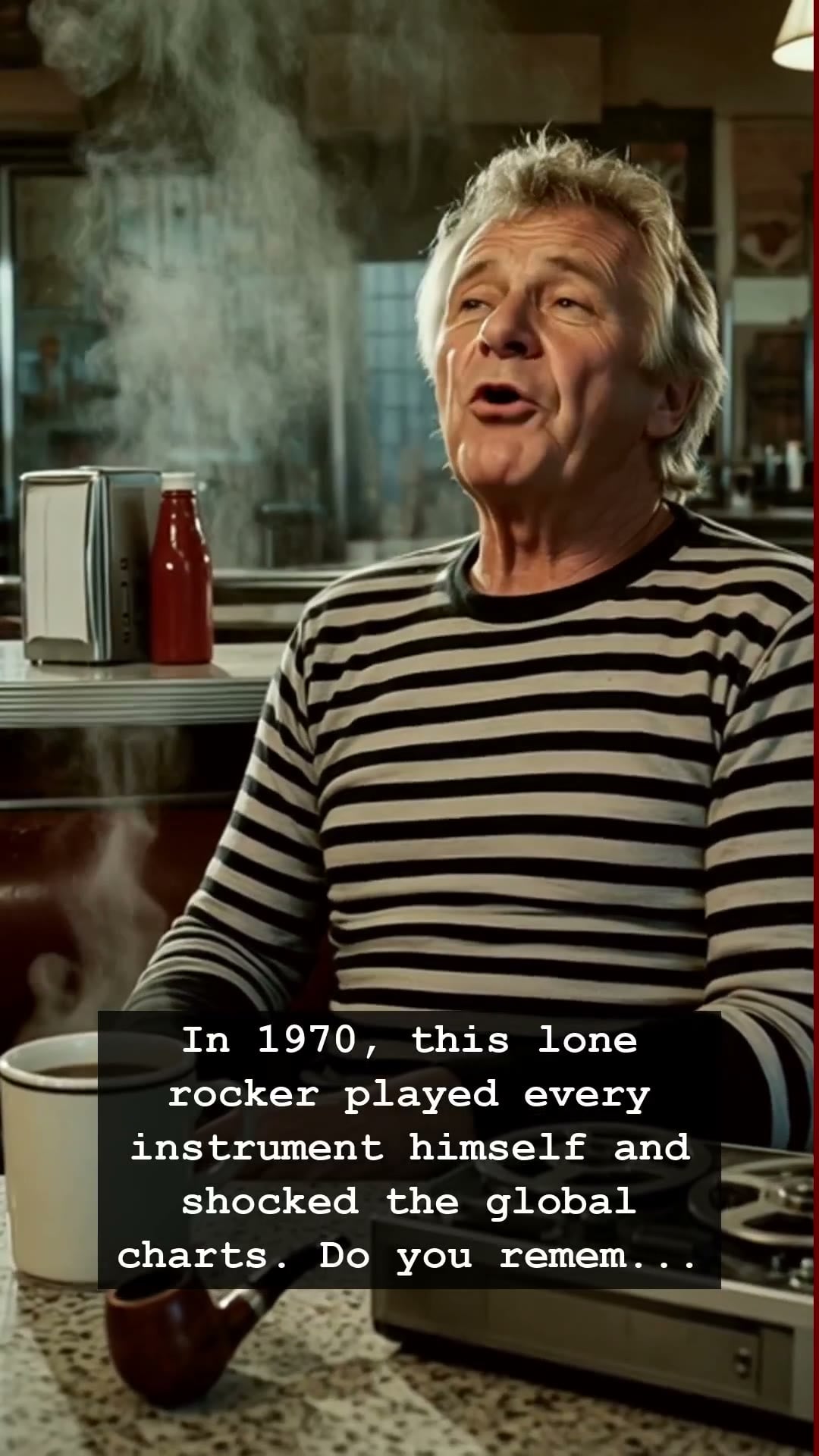
In the golden age of rock and roll, the standard procedure for a hit song was simple: assemble a band, hire a team of seasoned session musicians, and spend weeks polishing a track in a high-end studio. But in 1970, one man dared to shatter the mold. Dave Edmunds, a man with grease on his hands and a vision of rockabilly perfection in his head, locked himself away in a dimly lit studio. He didn’t want a band; he wanted complete control. He played every single instrument on the track himself—from the frantic drums to the searing, overdriven guitar solos. The result was a sonic juggernaut that caught the music industry completely off guard.
The song, I Hear You Knocking, was never meant to be a global phenomenon. It was supposed to be a playful experiment, a tribute to the raw energy of the fifties, an era that felt like a distant memory as the world pivoted toward the heavy psychedelia and progressive rock of the early seventies. When Dave Edmunds pressed play, the executives at the major labels were terrified. It sounded like nothing else on the radio. It was stripped-back, aggressive, and undeniably infectious. It felt like a rebellion against the over-produced excess of the budding arena rock era. It was a million-copy global smash that proved you didn’t need an army to make a revolution; you just needed a Jukebox spirit and a bit of madness.
Looking back, the success of Dave Edmunds in 1970 represents a fascinating turning point in music history. It was a moment where the lines between the artist and the producer blurred, foreshadowing the bedroom pop revolution that would arrive decades later. Dave Edmunds had managed to capture the essence of a bygone era and package it for a generation currently obsessed with Woodstock and the dying embers of the hippie dream. The track resonated because it was authentic, sweaty, and painfully human. It wasn’t polished by a committee; it was the raw, unfiltered output of a man obsessed with his craft.
Even today, the legend of Dave Edmunds remains a point of intrigue for those who love the grit behind the glamour. There is something deeply satisfying about the story of the lone rocker who accidentally changed the charts. It serves as a reminder of a time when the industry was still wild enough for a surprise hit to come from nowhere and conquer the world. The song became a staple in every local pub and on every turntable, a bridge between the nostalgia of the fifties and the hard-hitting reality of the seventies.
We often romanticize the bands of the era, the long-haired rock stars and their entourages, but it is the individual mavericks like Dave Edmunds who truly defined the sound of the twentieth century. He reminded us that at the heart of every great record is the soul of an artist, not the size of their production budget. As we look back on those decades, we don’t just remember the hits; we remember the stories of how they were made. Next time you drop the needle on your favorite vintage record, spare a thought for the solitary genius in the studio, and ask yourself if you can still hear the echo of a revolution that started with one man and a guitar.