
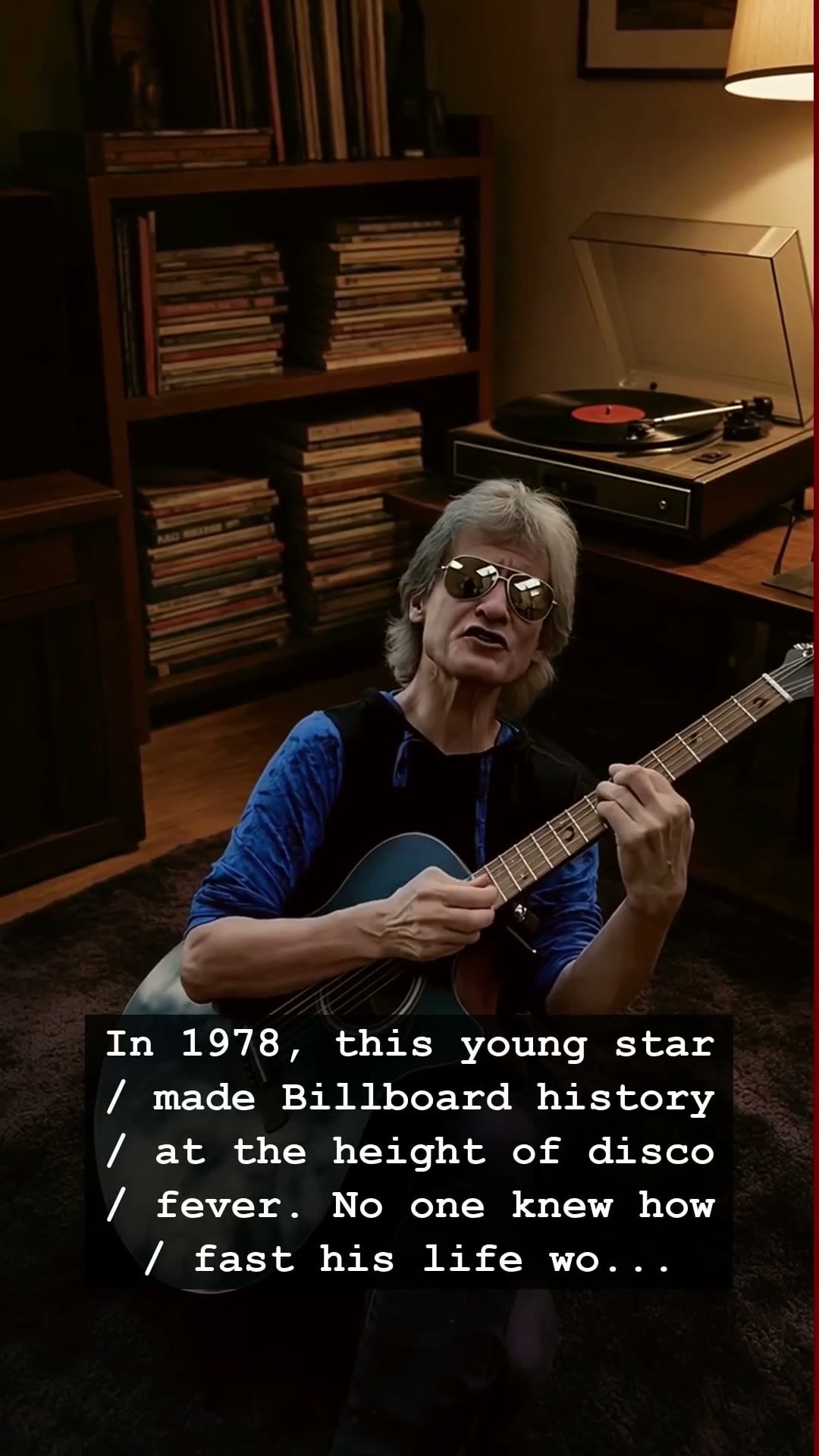
The year was 1978. While the neon lights of Studio 54 pulsed with the hypnotic rhythm of disco, a fresh face arrived on the scene to challenge the giants. At just twenty years old, Andy Gibb was not just another pop singer; he was a phenomenon. With his feathered hair, piercing blue eyes, and a voice that carried the melodic sweetness of the Bee Gees, he did the unthinkable: he became the first male solo artist to have three consecutive number-one singles on the Billboard Hot 100. It felt as though the world was his, and the golden age of pop had finally found its crown prince.
Yet, behind the shimmering suits and the adoration of millions, the air in the music industry was growing thick with unspoken pressure. Andy Gibb was caught in the gravitational pull of his legendary older brothers, Barry, Robin, and Maurice. While the Bee Gees were busy soundtracking the cultural explosion of Saturday Night Fever, Andy was tasked with maintaining a meteoric pace that would have exhausted even the most seasoned rock stars. The late seventies were a whirlwind of non-stop touring, television appearances, and the constant, gnawing hunger of a public that demanded perfection. He was living on borrowed time in a world defined by the transient nature of the charts.
It is haunting to look back at footage of Andy Gibb from that era. There was a vulnerability in his gaze, a stark contrast to the bravado expected of disco royalty. As the decade turned and the cultural landscape shifted from the dance floors of the disco era toward the synthesized edges of the eighties, the cracks began to show. The glamour of the lifestyle masked a growing isolation, and the pressures of global fame became a weight he could no longer shoulder alone. The walkman culture was rising, and the intimacy of music became a private refuge, but for Andy, the public spotlight had become a prison of his own making.
What makes the story of Andy Gibb so devastating is the sheer speed of his decline. He was the quintessential golden boy whose light was extinguished far too soon, leaving behind a legacy of hit records that still define the sound of the late seventies. His struggles with substance abuse, exacerbated by the relentless demands of a fickle industry, turned his bright reality into a cautionary tale. It is a stark reminder of the cost of fame in an age where artists were treated more like commodities than human beings.
Today, when we hear those familiar opening chords of his hits, we are transported back to a time of innocence and excess. We remember not just the charts he conquered, but the young man who stood at the precipice of everything and lost it all in a blink. His music remains a beautiful, bittersweet time capsule. Even as the decades have passed, the voice of Andy Gibb continues to echo, a permanent fixture in the soundtrack of our collective nostalgia, forever frozen in his prime.