
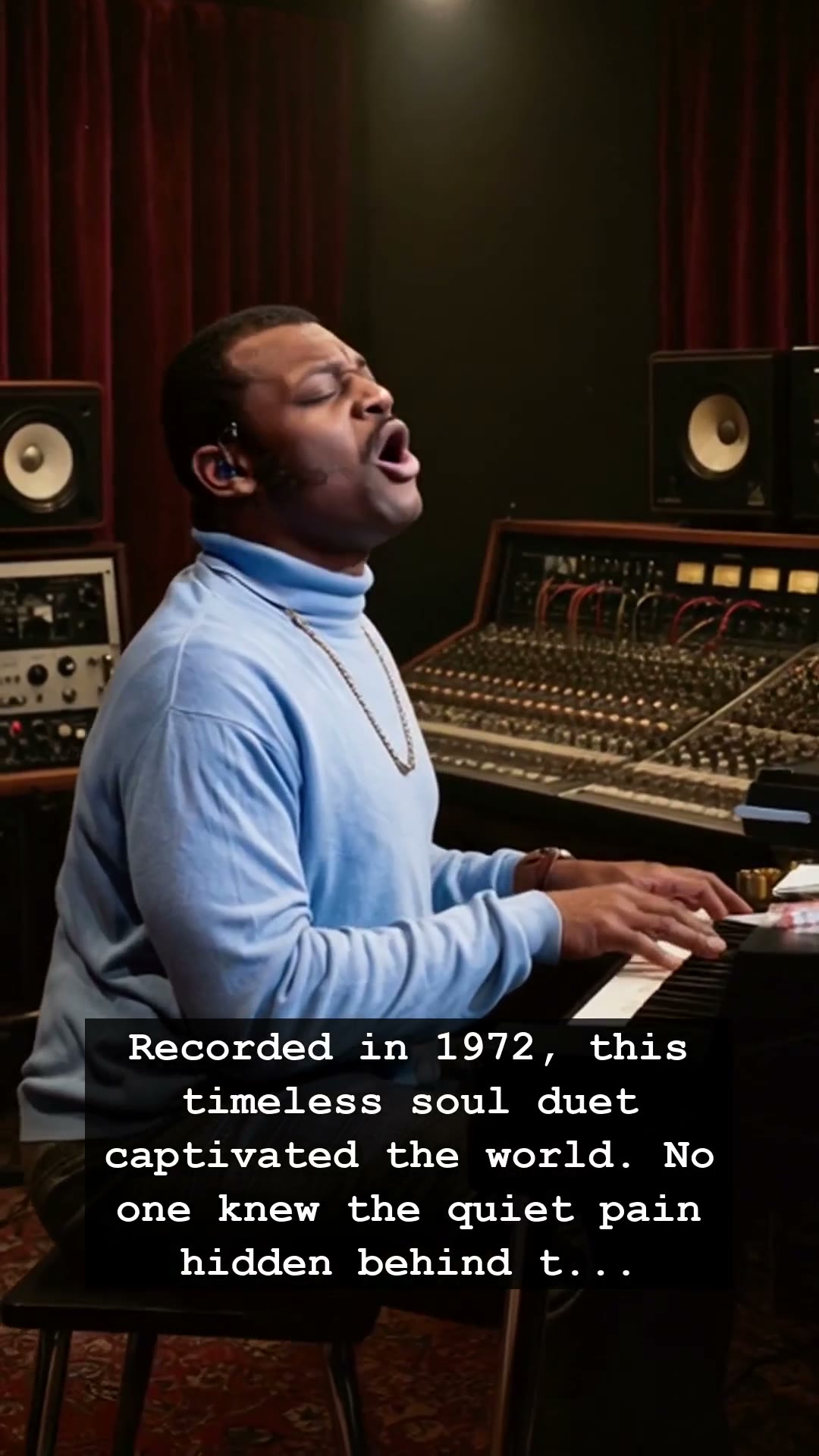
In 1972, a song hit the airwaves that felt like a quiet conversation between two souls. It was the year of the Walkman’s earliest prototypes and the fading echo of Woodstock, yet in the world of R&B, everything stopped for Donny Hathaway and Roberta Flack. Their duet, Where Is the Love, became an instant anthem, a Grammy-winning masterpiece that resonated with anyone who had ever felt the ache of a fading connection. But while the world was falling in love with the velvet harmonies, few knew that one of these voices was fighting a silent, harrowing battle against a darkness that would eventually consume his life.
Donny Hathaway was not just a singer; he was a musical architect, a prodigy from the gospel halls of Chicago who could find the precise emotional frequency of a melody. Beside him, Roberta Flack provided the ethereal grace, but it was Donny’s raw, wounded delivery that gave the song its haunting resonance. During the golden era of the 1970s, as soul music transitioned from the upbeat grooves of Motown to more introspective, socially conscious compositions, Donny Hathaway stood as a giant. Yet, beneath the professional composure required by the industry, he was grappling with severe, undiagnosed clinical depression. The stage, which should have been his sanctuary, often became a place of profound isolation.
Recording sessions with Donny Hathaway were legendary for their perfectionism. He could arrange, compose, and perform with a level of brilliance that left his peers in awe, yet he remained deeply humble, almost fragile. The chemistry between him and Flack was undeniable, a rare artistic partnership that captured the spirit of a generation searching for intimacy in a rapidly changing decade. Listening to their records today brings back the scent of vinyl dust and the warm glow of late-night FM radio, transporting us to a time when music didn’t just play; it spoke directly to the heart.
Tragically, the brilliance of the man was shadowed by the weight of his psyche. As the seventies progressed and disco began to dominate the nightclubs, Donny Hathaway struggled to reconcile his creative integrity with the mounting pressures of fame. He was a man who felt too much, his art a direct reflection of a turbulent inner landscape. His untimely death in 1979 shocked the music world, leaving behind a legacy that is still being unpacked by soul enthusiasts and historians alike. He was a pioneer whose voice remains a benchmark for every soul singer who has followed in his footsteps.
Today, when we spin those old records, we aren’t just hearing a song; we are witnessing the courage of a man who bared his soul despite the invisible chains holding him back. Donny Hathaway turned his pain into a universal language, crafting beauty that outlived the turmoil. As the needle drops and those familiar piano chords start to play, remember that behind every breathtaking note, there is a human story of struggle and genius that deserves to be heard, honored, and never forgotten.