
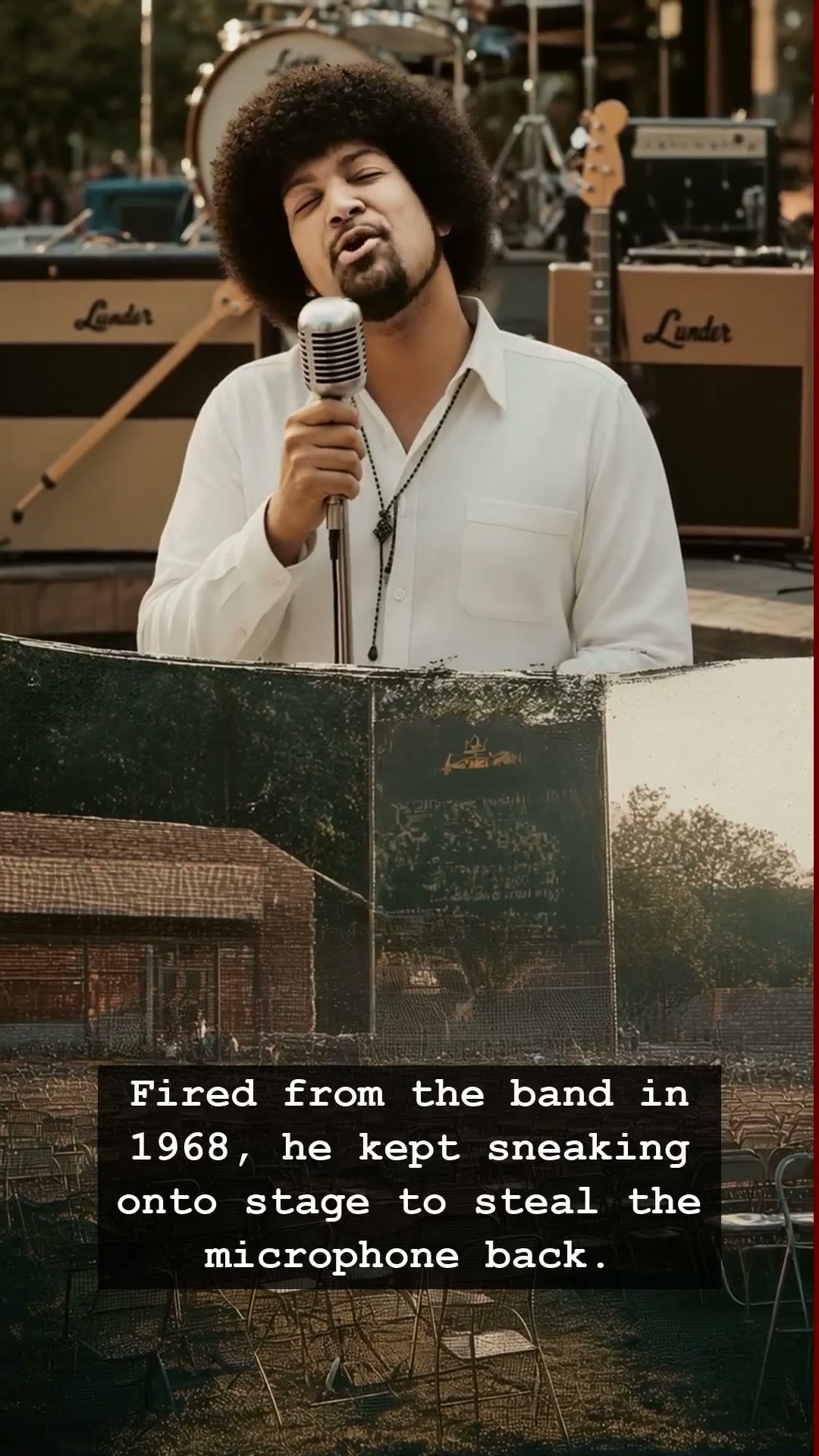
It was 1968, a year defined by societal fracture, yet in the polished halls of Motown, a different kind of war was brewing. David Ruffin, the golden-voiced titan who gave The Temptations their jagged, soulful edge, found himself on the outside looking in. After being brutally fired from the group he helped propel to stardom, Ruffin did something that remains one of the most bizarre and heartbreaking footnotes in rhythm and blues history. He refused to vanish. Night after night, he would lurk in the shadows of the wings, waiting for the precise moment to storm the stage, snatch the microphone from his replacement, and reclaim the spotlight that he felt was rightfully his. It was a desperate act of a man possessed by his own legend.
To understand the madness of that moment, you have to remember the era. The Temptations were not just a vocal group; they were an institution. With their sharp suits, precision choreography, and those silky smooth harmonies, they were the kings of the charts. Yet, behind the velvet curtain, the pressure was suffocating. David Ruffin was the engine, but his ego and personal demons were becoming a destructive force for the band. His departure wasn’t just a personnel change; it was a violent rupture of the soul of the group. Fans who grew up listening to his raspy, yearning baritone on hits like My Girl knew that something fundamental had shifted. The music didn’t just change; it lost its heartbeat.
There is a haunting quality to the story of David Ruffin sneaking onto that stage. It paints a vivid picture of the mid-sixties transition, where the innocence of the early Jukebox days was being cannibalized by the brutal machinery of fame. Ruffin was a man addicted to the rush of the audience, the intoxicating roar of the crowd that validated his existence. When he walked onto those stages uninvited, he wasn’t just trying to sabotage his former brothers-in-arms; he was desperately trying to hold onto a version of himself that was slipping away. It was a raw, unfiltered display of human vulnerability buried beneath the glamour of showbiz.
The tragedy of David Ruffin serves as a sobering reminder of the heavy price paid for artistic greatness during the peak of Motown. While the world remembers the hit records and the polished performances on television, the reality was often a messy, chaotic collision of ambition and addiction. Ruffin’s inability to accept his exit remains one of music history’s most compelling tragedies. He was a man who lived and died by the microphone, and even in his darkest hour, he couldn’t stop reaching for it.
Even decades later, hearing the distinct, emotive power of David Ruffin brings us back to a time when music felt dangerous and vital. His story remains a testament to the fact that behind every iconic melody is a human being struggling to survive the limelight. If you ever find yourself spinning a vintage vinyl, take a moment to listen closely to that voice. It is the sound of a man who gave everything to the stage, even when the stage had already turned its back on him.