
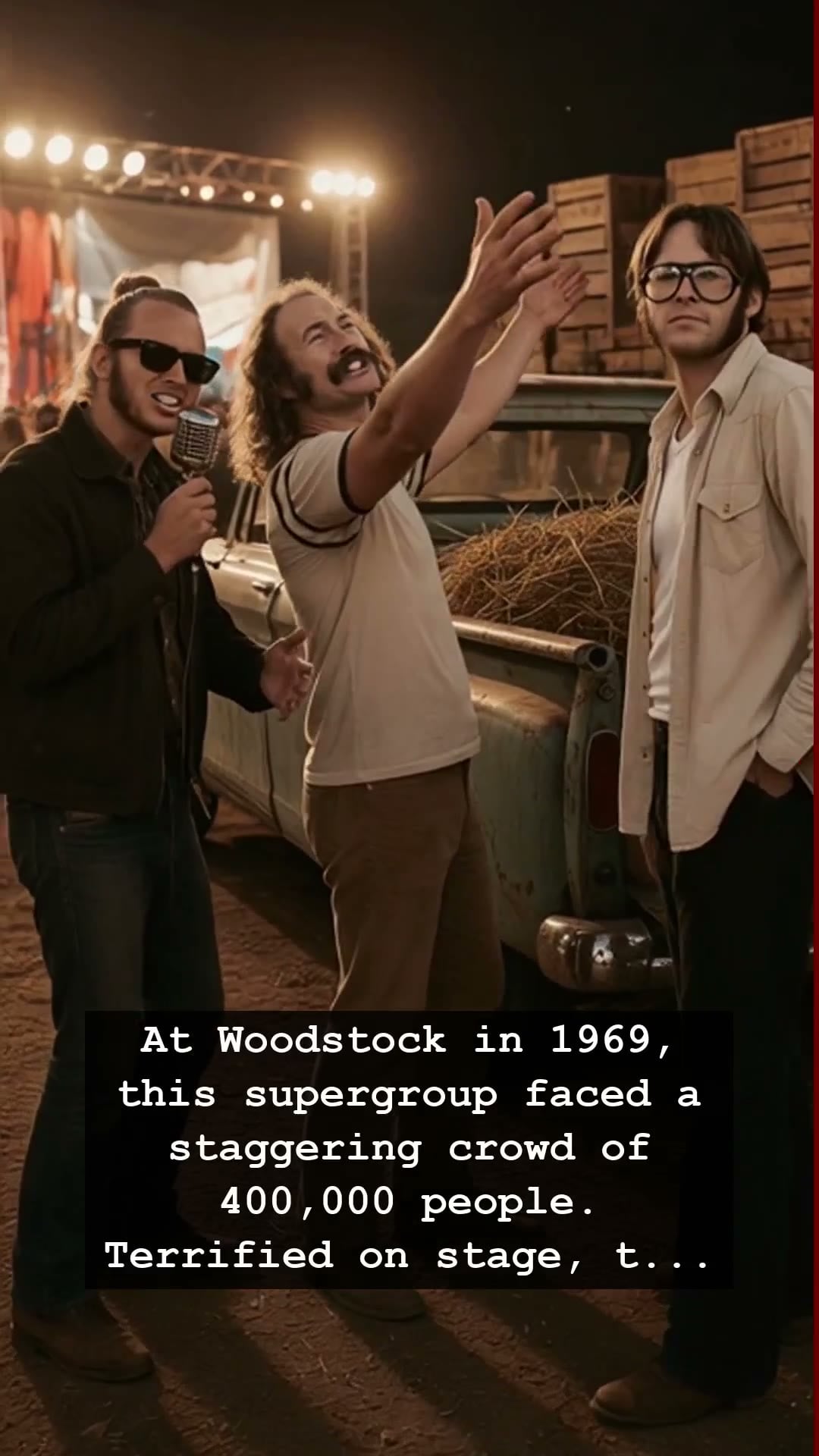
The year was 1969, and the world felt like it was shifting on its axis. In the sweltering heat of Bethel, New York, four hundred thousand people had descended upon a dairy farm to witness a cultural phenomenon. Among the legends set to grace the stage was a brand-new supergroup, Crosby Stills and Nash. They were folk-rock royalty in the making, yet they stood in the shadows of the wings, staring out at an ocean of humanity that stretched further than the eye could see. It was only their second live performance as a trio, and the sheer weight of the moment was enough to paralyze even the most seasoned veterans. The air was thick with the scent of wet grass, cigarette smoke, and the palpable tension of a generation standing at a crossroads.
Stephen Stills later recalled the absolute terror of that night, a stark contrast to the ethereal harmonies that would eventually float across the muddy fields. They were young, their reputations were still being forged, and the technical demands of the Woodstock festival were a logistical nightmare. For Crosby Stills and Nash, the stage wasn’t just a place to play music; it was a trial by fire. When they finally stepped into the blinding glare of the spotlights, the silence before their first note felt deafening. Yet, as David Crosby, Stephen Stills, and Graham Nash opened their mouths to sing, that fear transmuted into something transcendent, anchoring their place in history forever.
That haunting, crystalline vocal blend became the soundtrack to the counterculture revolution. While the era was defined by the grit of electric guitars and the rising influence of psychedelic rock, Crosby Stills and Nash offered something different: a vulnerability that mirrored the anxiety of the late sixties. Their music wasn’t just a performance; it was a mirror reflecting a generation that was simultaneously hopeful and deeply afraid of the future. The trio captured the fleeting spirit of a decade that was rapidly coming to a close, leaving behind a legacy that would ripple through the decades that followed.
Even today, listening to those early recordings, you can still hear the echoes of that fateful Woodstock night. It serves as a reminder of a time when music was the primary language of social change and personal liberation. Beyond the stardom and the later fame, there was a raw, human fragility at the heart of their sound. They weren’t just icons on a pedestal; they were three men caught in the currents of a changing world, trying to make sense of the chaos through chords and lyrics that would eventually stand the test of time.
Decades after the lights faded at Woodstock, the legacy of Crosby Stills and Nash remains a testament to the power of harmony in a fractured world. Whether you experienced the magic of the sixties firsthand or discovered them through the scratchy vinyl of an old record player, their story continues to captivate. As we look back through the lens of history, we find that the most iconic moments are often the ones born from the deepest uncertainty. The next time you find yourself lost in their soaring melodies, take a moment to imagine those three voices rising above the mud and the madness, singing for a world that was desperately trying to find its way home.