
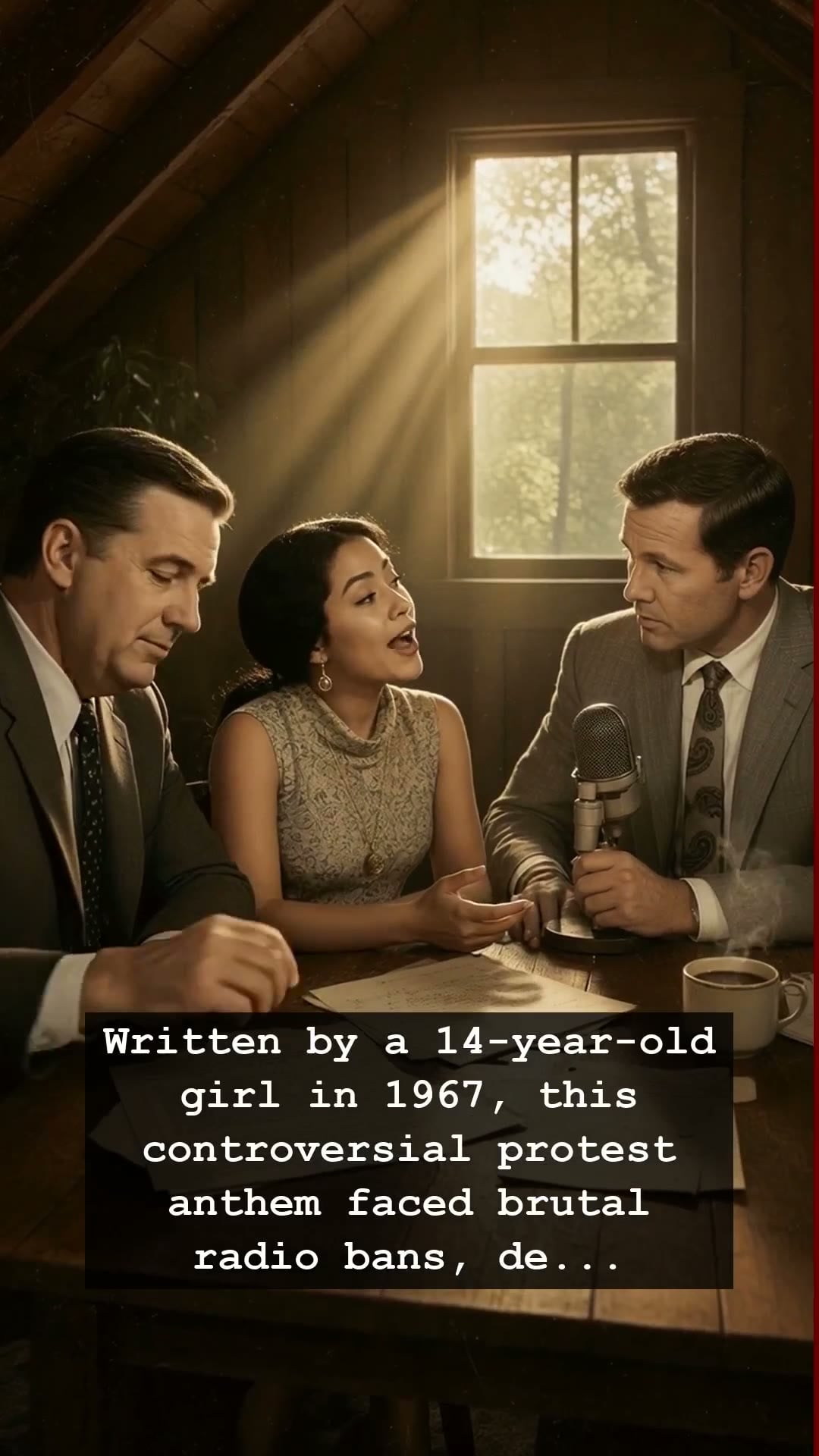
In 1967, the airwaves were dominated by the sunshine pop of the Summer of Love, yet one teenager was busy penning a track so incendiary it felt like an act of war. Janis Ian was only fourteen years old when she wrote Society’s Child, a fragile, haunting protest anthem that dared to confront the raw reality of interracial relationships in a country teetering on the edge of civil unrest. While most girls her age were concerned with high school proms, Janis Ian was holding a mirror to a nation’s deepest prejudices. The result was not just a hit, but a catalyst for one of the most volatile reactions in music history.
Upon its release, the song hit a wall of vitriol that seems unimaginable today. Radio stations across the United States didn’t just refuse to play it; they actively purged it from their libraries. The lyrics, which detailed the crushing societal pressure forcing a young girl to end a relationship with a black boy, were labeled inflammatory and dangerous. Janis Ian faced a barrage of death threats that terrified her family, and in one extreme case of censorship, an outraged radio station was reportedly burned to the ground—a chilling reminder of how music could ignite real-world violence during that turbulent era of the late sixties.
Despite the hostility, Janis Ian refused to retreat into the shadows. She possessed a wisdom far beyond her years, navigating the cold indifference of the music industry with the weary soul of a veteran. The song languished in obscurity for a time, buried under the weight of political pressure and institutional racism. It was a dark period for the budding artist, who found herself caught in the crosshairs of a generational conflict. The isolation she felt mirrors the profound loneliness captured in the grooves of her haunting vocal performance, a sound that defined the folk-rock transition of the late 1960s.
Everything shifted when the legendary Leonard Bernstein featured Janis Ian on his television special, Inside Pop: The Rock Revolution. That singular performance was the lifeline she needed, providing a national platform that transformed the song from a forbidden secret into a cultural touchstone. Suddenly, the song that everyone wanted to silence was being heard in living rooms across America. It was a victory for artistic integrity, proving that even a solitary, fragile voice could pierce through the thickest walls of bigotry and mass censorship.
Looking back, the story of Janis Ian serves as a poignant reminder of music’s power to disrupt the status quo. Her journey from a misunderstood teenager to a folk icon is etched into the history of the 1960s, a time when every chord struck felt like a political statement. Today, Society’s Child remains a vital piece of the American musical tapestry, echoing the bravery required to speak truth when the world demands silence. Though the era of jukebox bans has faded, the soul of her music continues to resonate with anyone who has ever felt like an outsider in their own time.