
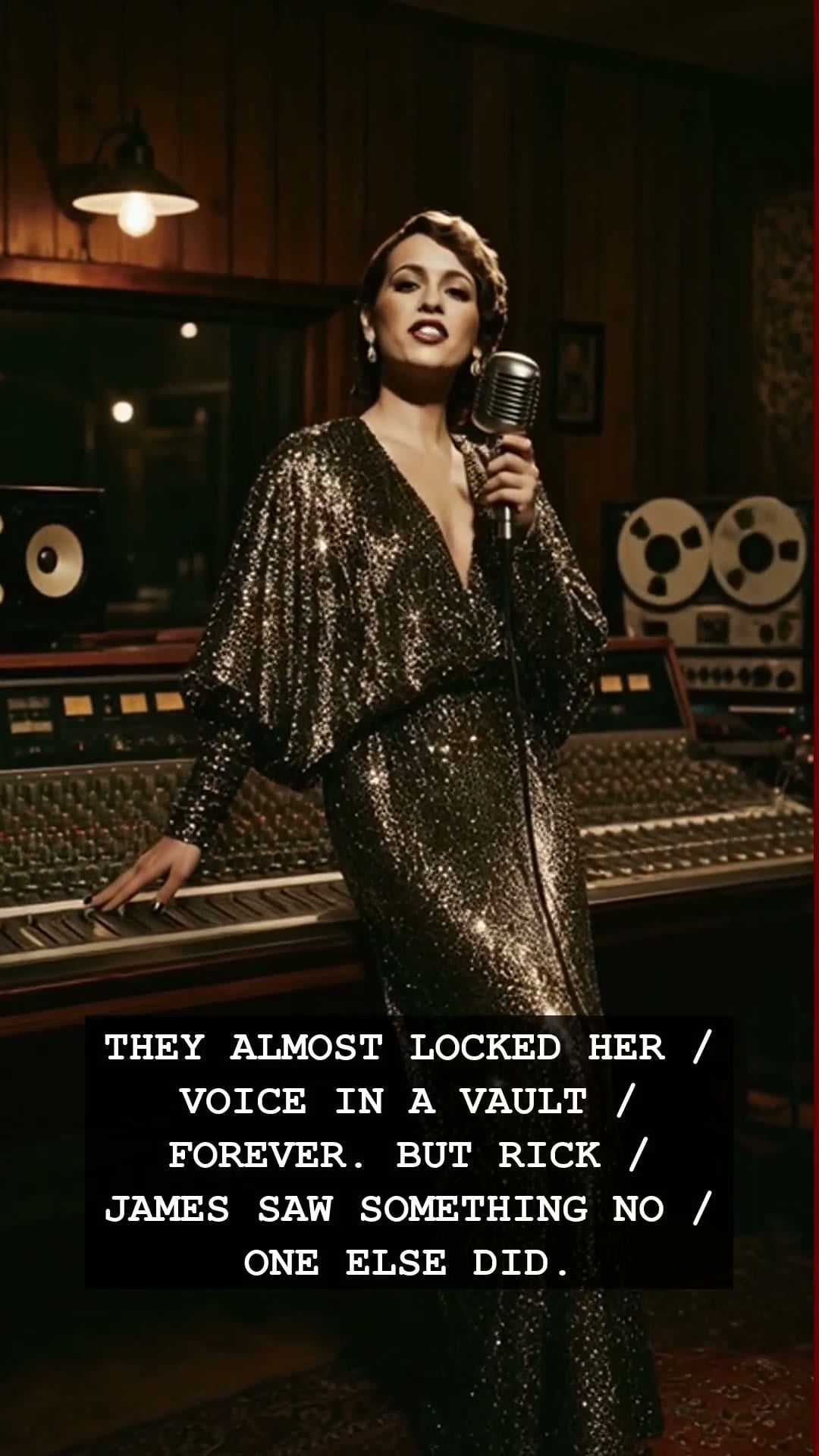
They wanted to keep her voice in a vault, locked away from a world that wasn’t ready to see a white girl singing the blues with the soul of a Motown legend. In the cutthroat, neon-drenched landscape of the late 1970s, the music industry was a fortress guarded by rigid stereotypes. When a young Teena Marie walked into the studio, she was seen as a marketing liability rather than the generational talent she truly was. Executives didn’t know how to package her, so they did the next best thing in their eyes: they sidelined her. Her tapes were shelved, her career was effectively frozen, and she was left in the shadows of an industry that prized optics over raw, unvarnished talent.
But the trajectory of music history changed the moment Rick James stepped into that studio. The king of funk, known for his flamboyant style and uncompromising vision, saw through the corporate noise. Rick James saw something no one else could—or would—admit. He recognized that the soul pulsing through Teena Marie’s vocal cords wasn’t defined by the color of her skin, but by the fire of her spirit. He fought the label, put his own reputation on the line, and pulled her from the obscurity of the vault to the center stage of the funk era.
Their collaboration wasn’t just a business move; it was a revolution. When they finally hit the studio together, the energy was electric, pulsating with the same intensity that defined the dance floors of Studio 54. Teena Marie possessed a vocal range that could shift from a whisper to a roar in a heartbeat, a skill that resonated perfectly with the complex, bass-heavy arrangements Rick James was pioneering. The result was an instant, undeniable smash that defied the radio gatekeepers and proved that true soul is a language felt, not categorized.
Behind the scenes, their bond was intense, tumultuous, and deeply creative. It was the stuff of legends—the kind of artistic partnership that burned bright and threatened to consume everything in its path. They were two outsiders who found a common language in the melodies of the seventies, navigating the pressures of fame, substance, and the crushing weight of public perception. For Teena Marie, Rick James was the mentor who unlocked a door that had been slammed shut by the suits in high-rise offices.
Decades later, the echoes of their time together still vibrate through the soul music landscape. Whenever you drop the needle on a vintage record, you can hear the defiance in her voice and the master-class production of a man who refused to let talent be silenced. Their story serves as a haunting reminder of the gatekeepers who almost stole a piece of musical history, and the visionary who dared to save it. If you have not revisited their classic collaborations lately, listen to the song in the comments and let the rhythm of the seventies remind you of what happens when raw soul triumphs over cold, corporate logic.