
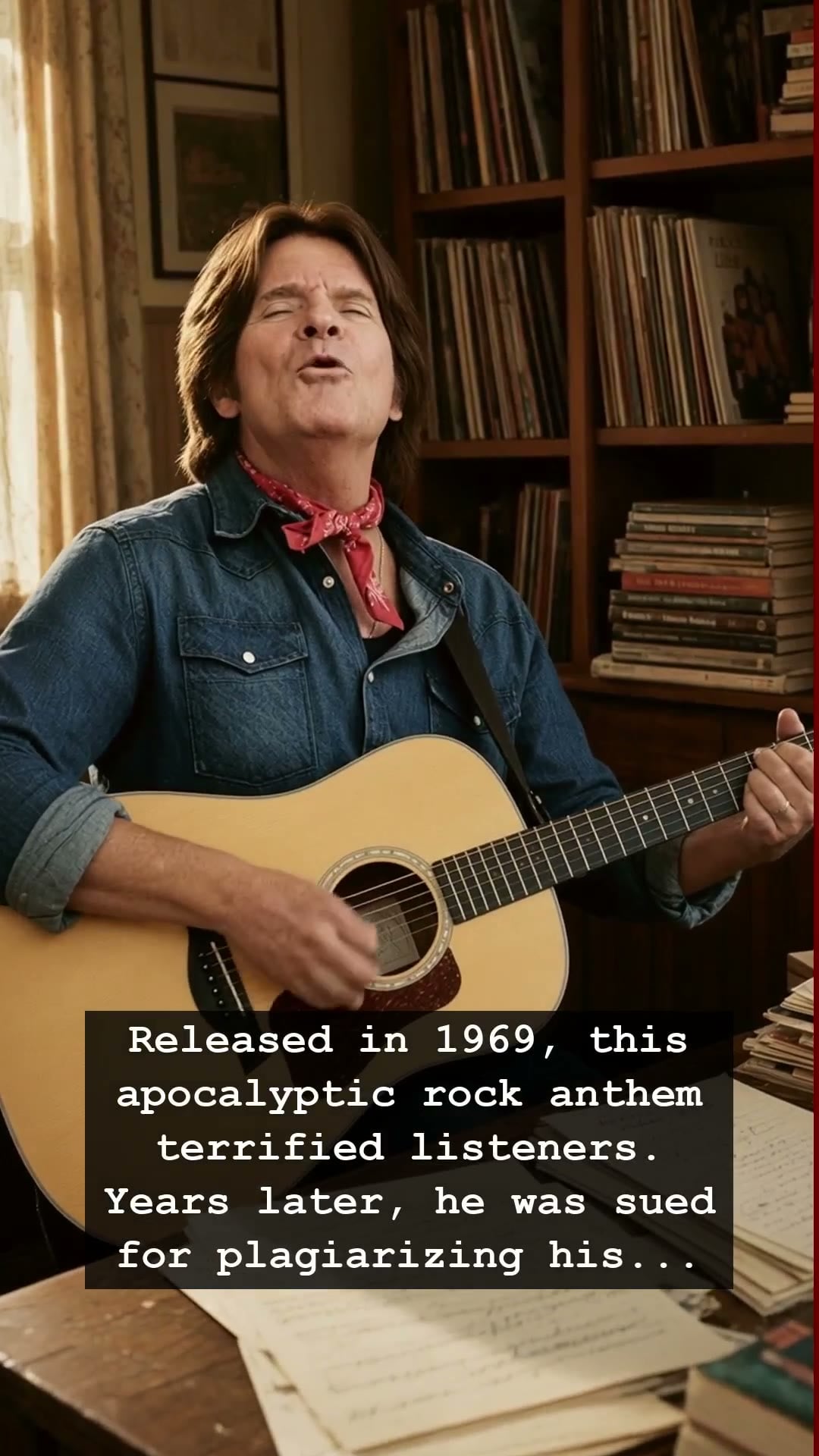
In 1969, as the world watched the shadow of the Vietnam War stretch across the globe and the idealism of the sixties began to fracture, a haunting melody crawled out of the radio. It sounded like an apocalyptic warning, a gritty, swamp-soaked prophecy that felt both ancient and urgent. Creedence Clearwater Revival had captured the anxieties of a generation with the track Bad Moon Rising. For millions of listeners tuning in on their bulky home radios or catching the beat in a crowded jukebox-filled diner, John Fogerty became the voice of a restless era. But little did anyone know that this masterpiece would eventually drag its creator into one of the most bizarre and bitter legal nightmares in rock history.
John Fogerty was the engine of Creedence Clearwater Revival, a songwriter whose work ethic bordered on the obsessive. He didn’t just write songs; he built sonic landscapes that defined the American experience. Yet, the music industry is often a meat grinder for the very artists who sustain it. Years after the initial glory of the late sixties, Fogerty found himself in a courtroom, not for stealing someone else’s art, but for allegedly ripping off himself. His former label owner, Saul Zaentz, sued Fogerty, claiming that the singer’s solo track The Old Man Down the Road was a plagiarism of his own earlier Creedence hit, Run Through the Jungle. It was a staggering irony that left the industry stunned: a man being sued for plagiarizing his own creative soul.
The legal drama reached a point of absurdity when John Fogerty was forced to bring his guitar into the courtroom. In a move that felt like a climactic scene from a cinematic drama, he stood before the judge and jury, plugging in his instrument to play the riffs side-by-side. He had to prove to a group of strangers that his unique creative voice was consistent, not stolen. He was fighting for his own identity in a landscape where corporate suits sought to treat music as nothing more than a ledger of assets. It was a bleak, cold reminder of the dark side of fame, far removed from the neon glow of Studio 54 or the communal spirit of Woodstock.
Today, the memory of John Fogerty’s struggle serves as a poignant reminder of the fragility of artistic ownership during the classic rock explosion. While we look back at the era of the Walkman and the shift toward the polished sounds of the eighties with a sense of warm nostalgia, the shadows under that era were long and sharp. Fogerty eventually won his case, but the scars remained, serving as a cautionary tale for any artist navigating the complex web of copyright and exploitation. The victory was a triumph of authenticity over institutional greed.
When we listen to those timeless Creedence tracks today, we aren’t just hearing the music of a vanished decade; we are hearing the resilience of a man who survived the system that tried to own him. The apocalyptic tension of his greatest hits still vibrates with a raw, honest energy that modern production rarely matches. The next time the opening chords of that famous tune echo through your speakers, remember the man behind the music. John Fogerty proved that while corporations can own the rights, they can never truly own the spirit of the artist. The songs remain, long after the lawyers have left the room.