
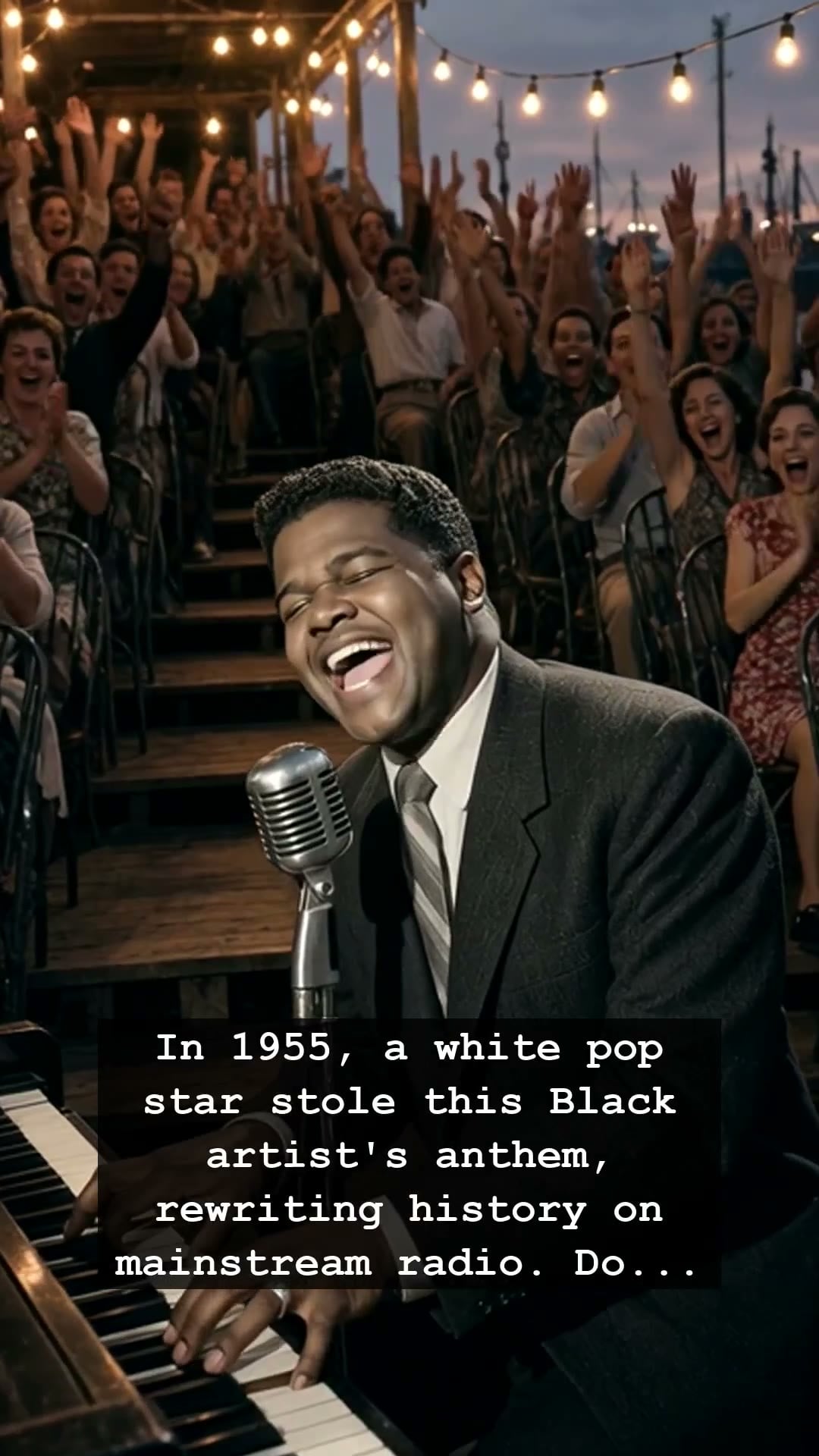
In the golden age of the jukebox, when the airwaves were crackling with the raw, rhythmic electricity of early rock and roll, one man stood as a titan of the piano: Fats Domino. Yet, history has a cruel way of blurring the edges of greatness. Imagine a sweltering 1955 summer, the era of chrome-plated cars and diners, where a song could bridge the divide of a segregated nation. Fats Domino had just crafted a masterpiece that pulsed with the heartbeat of New Orleans. But as his record hit the local shops, the mainstream radio airwaves suddenly erupted with a sanitized, polished version of the exact same track, performed by a white pop crooner. It was a classic case of musical erasure, a moment where the true soul of a song was scrubbed clean to satisfy the comfortable sensibilities of a segregated radio market.
Fats Domino was not just a musician; he was the architect of the rhythm and blues sound that laid the foundation for everything we love about rock and roll. With his signature boogie-woogie piano style and an infectious, warm delivery, he possessed an authenticity that no studio cover could replicate. When the mainstream industry chose to elevate a copycat version of his hit, they weren’t just picking a song; they were reinforcing a system that prioritized the messenger over the creator. While the copycat soared up the charts, Fats Domino remained in the shadows, watching as his hard-won anthem was rewritten for a different audience, effectively burying his contribution beneath layers of pop lacquer.
This wasn’t just a business decision; it was a profound injustice that echoed through the hallways of every studio from New York to Los Angeles. During that time, the gatekeepers of culture often felt that Black music was too dangerous, too loud, or too authentic for the masses. By stripping away the gritty, soulful edges of a Fats Domino track, they hoped to manufacture a more palatable product. The tragedy of this moment is that while the cover version eventually faded into the dusty annals of trivia, the original masterpiece by Fats Domino remained a testament to a man who refused to be silenced by the prejudices of his era.
Looking back from our modern perspective, we can see the deep scars that these industry practices left on the landscape of music history. The 1950s was a decade of massive change, but it was also a decade of hidden histories. Every time a Fats Domino record spun on a home turntable, it told a story of resilience that the radio stations of the time were too afraid to acknowledge. His influence didn’t just survive; it thrived, eventually paving the way for the legends of the sixties and beyond.
Today, we hold the power to reclaim these stories. When we listen to the original recordings of Fats Domino, we aren’t just hearing a song; we are witnessing an act of rebellion. We are honoring the man who stood against the tide of segregation, one piano note at a time. So, the next time you drop the needle on a vintage record, remember the voice behind the rhythm. It is a voice that history tried to steal, but a legacy that could never be erased.