
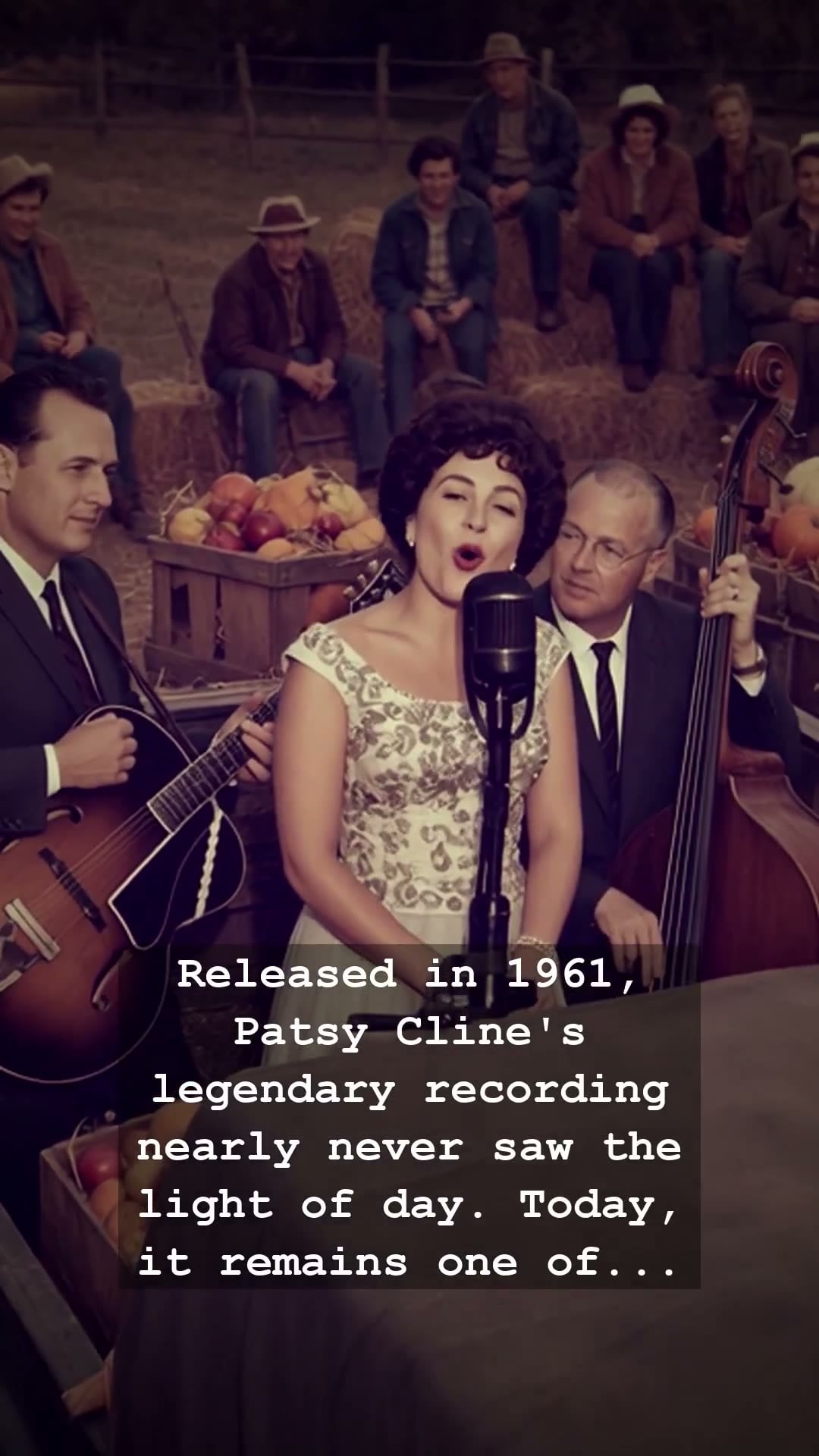
It was 1961, and the airwaves were dominated by the polished, upbeat sounds of the early pop era. Yet, nestled within the catalog of a legendary country crooner sat a song so fragile, so saturated with genuine heartache, that the suits at the record label nearly buried it for good. The song was I Fall to Pieces, and the woman who breathed life into its sorrowful notes was none other than the incomparable Patsy Cline. It is a recording that almost never saw the light of day, yet today, it stands as a towering monolith in the history of American music, a haunting reminder of the quiet weight of first loves and the unforgettable ache of a broken heart.
Back in the smoky, dimly lit corners of early 1960s Nashville, the studio atmosphere was intense and often unforgiving. When Patsy Cline first stepped into the recording booth to lay down the tracks for I Fall to Pieces, she was reportedly far from comfortable. She struggled with the song initially, feeling that the melody and the pop-leaning production didn’t quite fit her natural, bluesy country vocal style. There were disagreements, tension behind the glass, and moments where the track seemed doomed to be relegated to a B-side shelf. Yet, there was something in the way Patsy Cline held the notes—a raw, trembling vulnerability—that eventually won over the skeptics. She poured every ounce of her personal history into those lyrics, capturing a feeling that everyone has known but few have ever dared to voice so nakedly.
As the song finally hit the jukeboxes across America, it didn’t just climb the charts; it redefined the emotional landscape of country and pop crossover hits. Listening to it now, played perhaps on a well-worn vinyl disc or crackling over a nostalgic radio frequency, you can still feel the palpable pain in her voice. The production, with its soft, shimmering strings and the steady, melancholic pulse of the rhythm, perfectly frames the narrative of a woman desperately trying to keep it together while her world is crumbling. It is the hallmark of Patsy Cline at the absolute zenith of her artistry, a performance so authentic that it transcends the era in which it was produced.
To understand the significance of Patsy Cline, one must look at the culture of the early 1960s—a time of transition, where the rigid boundaries between music genres were beginning to blur. She wasn’t just a singer; she was a conduit for a specific kind of American loneliness. While the world outside was changing, moving toward the turbulence of the later decade, her music remained a steady, heartbreaking anchor. Her tragic death just two years after the success of this song only served to cement her status as a haunting, eternal figure of the mid-century music scene.
Today, I Fall to Pieces remains more than just a nostalgic hit. It is a masterclass in vocal restraint and emotional honesty. Whenever those opening notes drift through the speakers, they transport us back to an era of drive-ins, transistor radios, and the kind of deep, personal longing that never quite fades. Do you remember the first time you heard it? For many, the voice of Patsy Cline isn’t just a sound from the past; it is a companion that walks beside us, reminding us that even in our darkest moments of falling apart, we are never truly alone.