
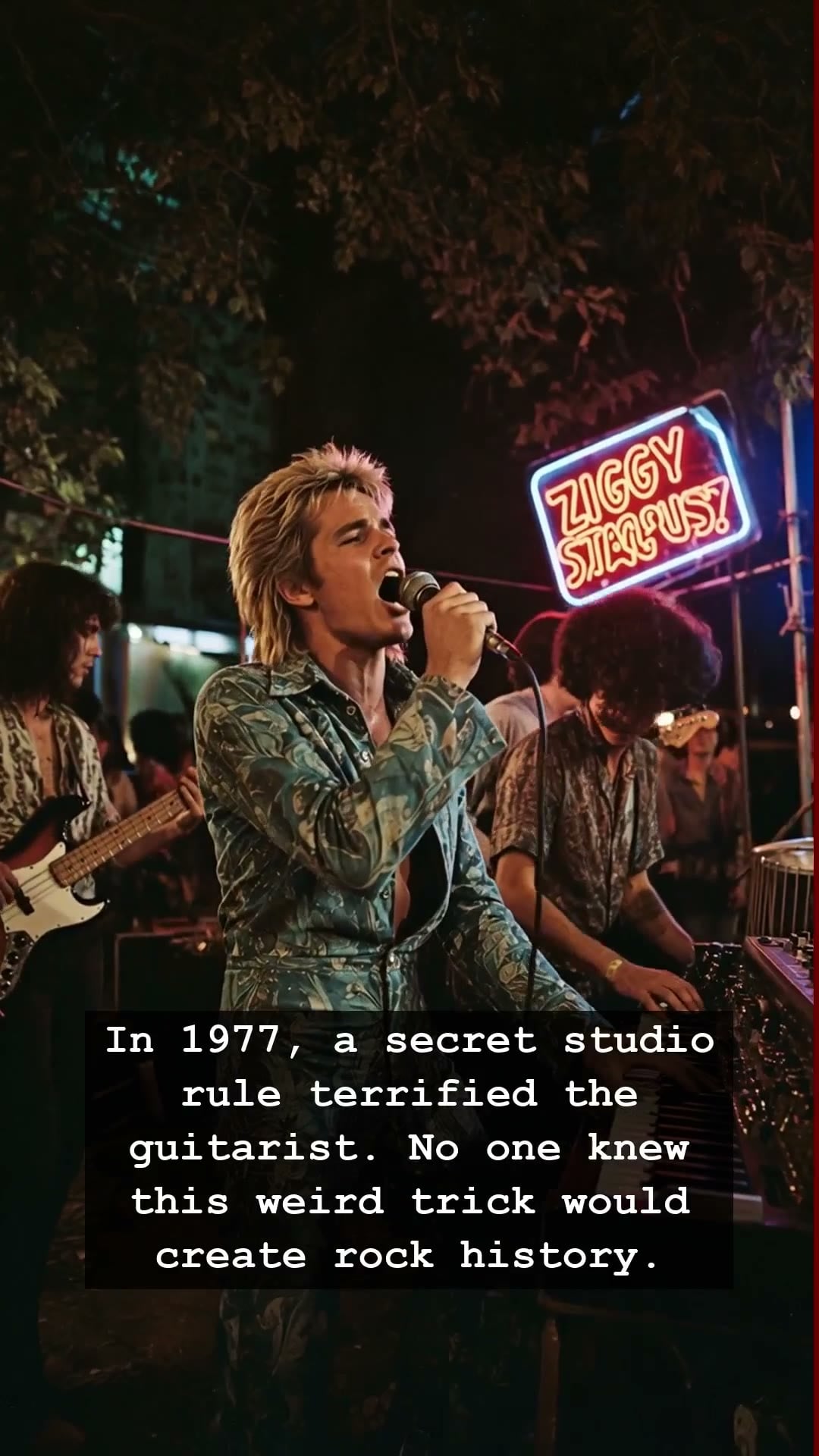
The year was 1977, and the music world was shifting under the weight of flickering neon lights and the rising hum of synthesizers. Deep inside a Berlin studio, David Bowie was obsessed with reinventing himself once again. Alongside him sat Robert Fripp, the legendary guitarist known for his precise, intellectual approach to music. What happened next would baffle the industry, terrifying the guitarist into a corner and pushing him to the absolute limits of his technical sanity. The air in the room was thick with the scent of old tobacco and magnetic tape, a sanctuary where rules existed only to be broken.
Bowie did not want a traditional solo. He wanted something that sounded like it had been dragged through the wreckage of a fading empire. He gave Robert Fripp a strange, almost sadistic set of instructions: play without hearing the music. It was a bizarre studio trick that would haunt the session. Fripp was forced to lay down guitar tracks for the track Heroes without knowing the context of the song, guided only by his instincts and a sheer, nervous energy. He was effectively playing in the dark, stripped of the usual comforts of rhythm and melody that define a rock legend.
As the tape began to roll, Robert Fripp felt a cold surge of dread. He couldn’t hear the song, and he couldn’t hear his fellow musicians. He was essentially wrestling with a ghost in the machine. To the engineers present, it sounded like an absolute disaster in the making. The initial takes were jagged and raw, discordant enough to shatter the pristine polish expected of the era. Yet, David Bowie stood behind the glass, his eyes bright with a manic excitement. He knew that this discomfort, this genuine fear of failure, was exactly what the song required to achieve immortality.
When the final mix was assembled, the result was nothing short of miraculous. The chaotic, feedback-drenched layers of the guitar merged perfectly with the cold, atmospheric synthesizers of the late seventies. It was the sound of a generation trapped between the dying embers of post-punk gloom and the bright, artificial future of the upcoming decade. That singular creative choice by David Bowie transformed a simple melody into a towering monument of modern art. It serves as a reminder of an era when artists were willing to risk everything for the sake of sonic exploration.
Decades later, the legacy of that session still resonates. We often look back at the glory days of the Walkman and the grainy aesthetic of the late seventies, but we rarely acknowledge the sheer psychological torment that fueled those hits. Robert Fripp eventually embraced the madness, realizing that his frustration had been channeled into one of the most recognizable guitar textures in history. It remains a testament to the power of artistic friction and the relentless pursuit of something truly unique.
Next time you listen to those iconic opening notes, remember the man in the corner, denied his hearing but guided by a visionary. It is a story of music as a living, breathing entity that thrives on the unexpected. Do you have a favorite moment where a classic track surprised you, or perhaps a secret history that still keeps you up at night?