
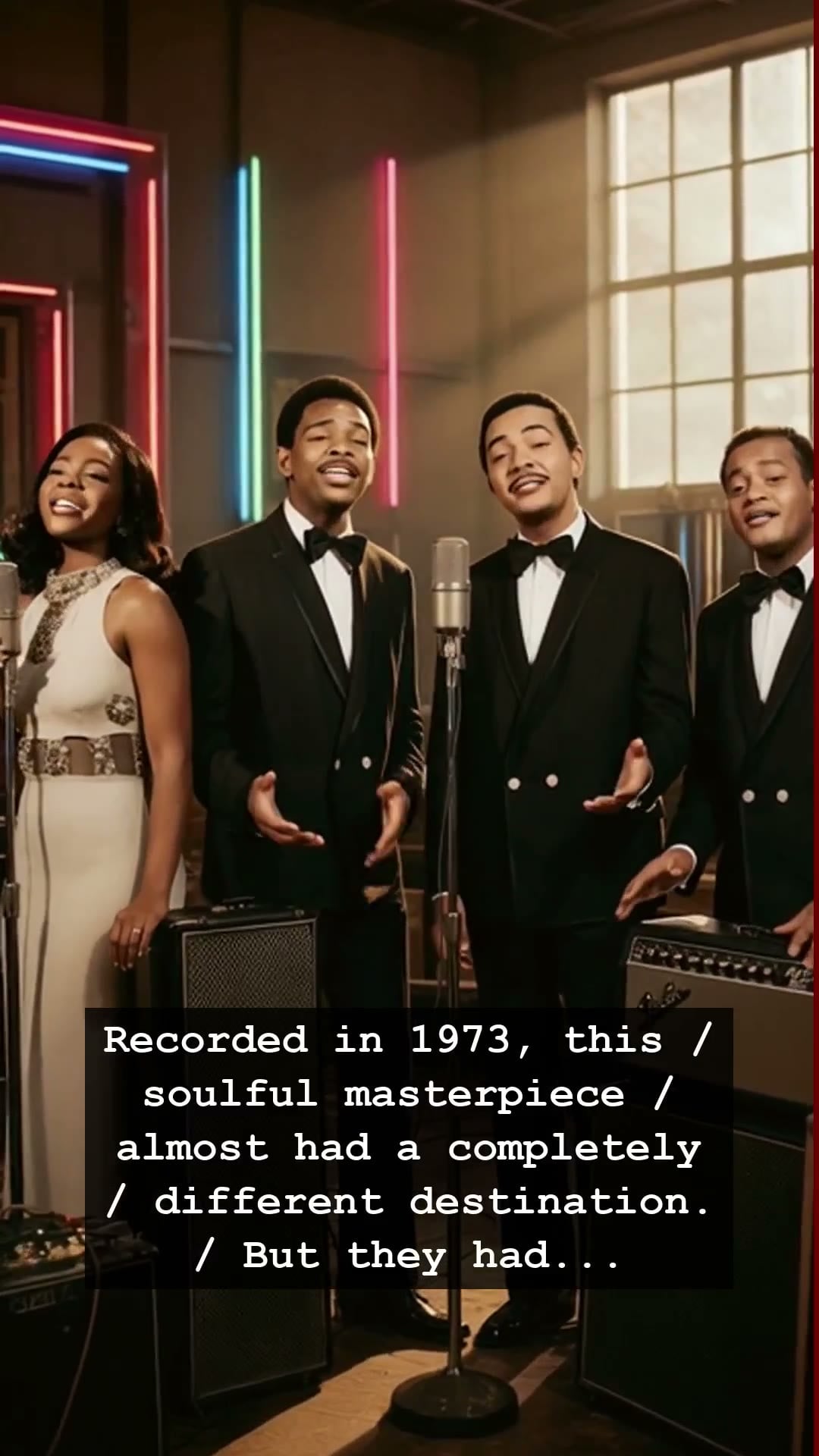
It was 1973, a time when the soulful airwaves were dominated by the smooth, evocative sounds of Motown and the grit of urban life. Amidst the rise of the iconic Jukebox culture that defined the decade, one song stood out not just for its melody, but for a hidden history that listeners never suspected. Gladys Knight and the Pips, the epitome of vocal perfection and family harmony, were about to release a track that would change their legacy forever. Yet, the story of Midnight Train to Georgia almost never happened the way we know it today, thanks to a simple, last-minute creative spark that altered the song’s entire destination.
The original demo of the track, written by Jim Weatherly, was actually titled Midnight Plane to Houston. It was a humble, country-tinged song that lacked the magnetic, soulful urgency that Gladys Knight and the Pips ultimately brought to the recording booth. When Gladys Knight first heard the melody, she saw something more profound—a narrative of love, sacrifice, and the raw pursuit of dreams. She insisted on a change that would resonate with millions of hearts: she transformed that lonely plane ride to Texas into a metaphorical midnight train to Georgia. This clever, evocative adjustment turned a standard country ballad into a definitive soul masterpiece that would sweep the Grammys.
Stepping into the recording studio during this golden era was an experience of pure electricity. Gladys Knight and the Pips possessed a chemistry that felt almost cinematic, a blend of deep empathy and rhythmic precision. As the needle dropped on the vinyl, listeners were transported to a world of suitcases, city lights, and the painful choice between a glittering career and the warmth of home. The song became more than just a hit; it became a cultural anchor for a generation navigating the shifting landscapes of the early seventies, proving that true artistry lies in the ability to reshape a narrative into something universally felt.
The impact of this 1973 classic ripple through time, echoing in every radio station and late-night lounge long after the disco craze faded. Gladys Knight and the Pips gave the song its heartbeat, layering their voices in a way that captured the bittersweet reality of leaving everything behind for the person you love. It remains a poignant reminder of the power of a single lyrical shift, a testament to how even the smallest decisions can propel a track toward immortality.
Even today, when those opening chords play, there is a collective pause. We are taken back to a time when music was the most intimate form of storytelling. As we look back on the legacy of Gladys Knight and the Pips, we are reminded that some trains never truly stop; they just keep traveling through the hearts of those who still value the soul of American music. Next time you listen to this legendary anthem, think of the plane that never left for Houston and the train that changed history forever.