
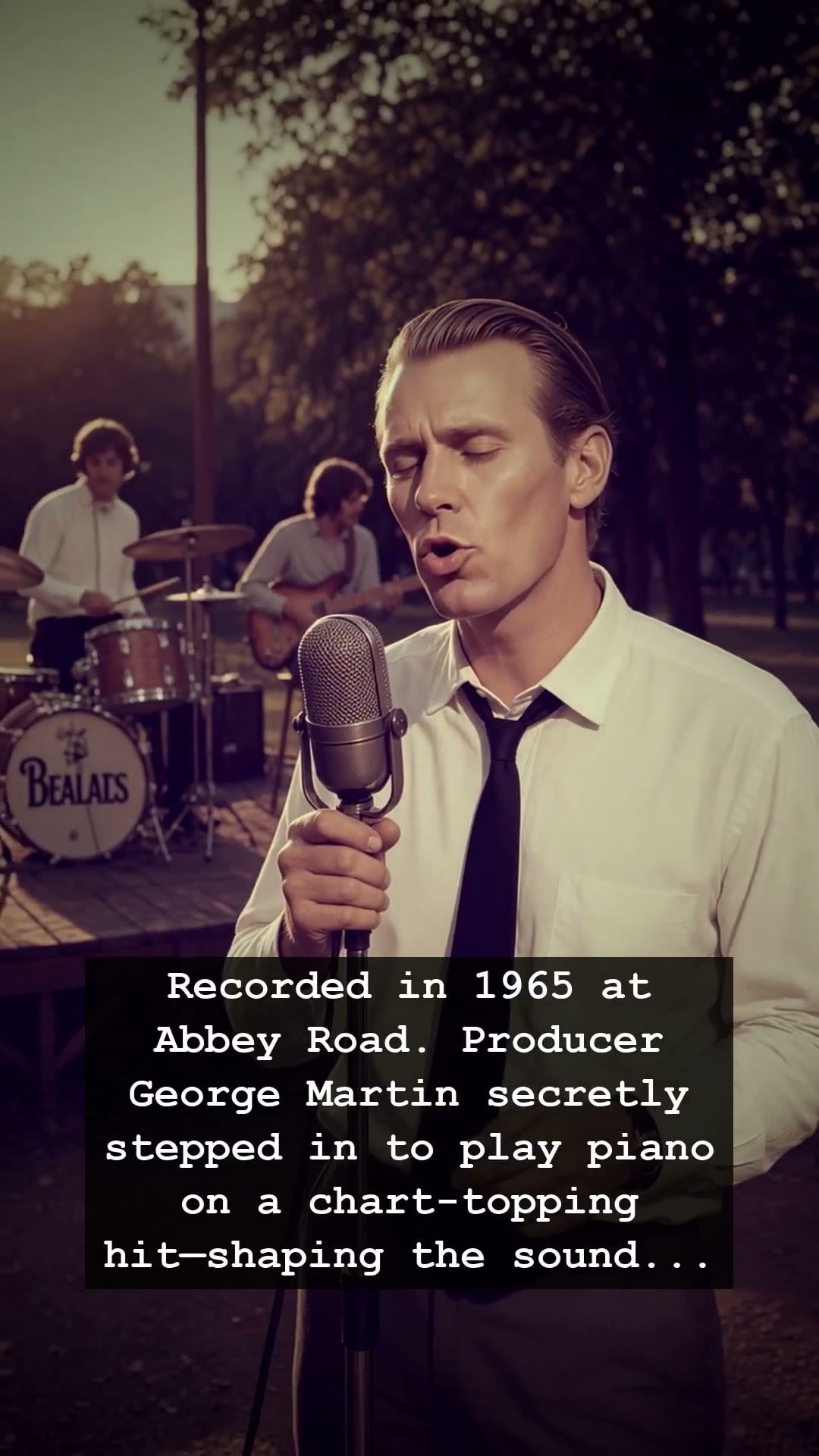
It was 1965, the air inside Abbey Road Studios was thick with the scent of stale cigarette smoke and the restless energy of four young men from Liverpool who were about to change the world. While the world focused on the charismatic frontmen of The Beatles, a quiet, bespectacled man named George Martin was busy orchestrating the sonic revolution from behind the mixing desk. Most fans know him as the producer who guided their transformation, but few realize that George Martin was often more than just a curator of sound—he was a secret collaborator who occasionally had to step into the limelight to bridge the gap between rock and roll ambition and musical perfection.
During those intense recording sessions, when the technical limitations of the band met their soaring creative visions, George Martin would often slide onto the piano bench. With his classical training and a calm, professorial demeanor, he brought a level of sophistication that elevated simple pop melodies into timeless anthems. On tracks where the band needed a touch of baroque elegance or a complex bridge that required more than just guitar chords, the invisible hands of George Martin were at work. He was the secret ingredient in the studio, a man who possessed the rare ability to translate raw, explosive talent into the polished, legendary sound that defined the mid-sixties.
This was the era of the Jukebox and the rise of the transistor radio, a time when every teenager in America was tethered to their favorite local station, waiting for that next life-changing chord change. George Martin understood this cultural landscape better than anyone. He treated the studio as an instrument itself, pushing the boundaries of what was possible in the pre-digital age. His contributions were not just about playing notes; they were about the architecture of a hit record. When he sat at that piano, he wasn’t just performing; he was conducting the spirit of an entire generation, proving that the most powerful figures in music often operate in the shadows.
What makes the story of George Martin so compelling today is the humility he displayed in a business known for its towering egos. In an age of manufactured rock stars and high-octane drama, he remained a steady, creative anchor. He understood that the magic of music lies not in who gets the credit on the album sleeve, but in the goosebumps raised by a perfect piano melody. Even decades later, when we listen to those pristine recordings, we are hearing the subtle, disciplined heartbeat of a man who loved music enough to hide his own ego for the sake of the song.
His legacy remains etched into the history of rock and roll, a testament to the fact that greatness is often a collaborative, invisible act. George Martin taught us that behind every monumental sound, there is usually someone ensuring that the art survives the chaos of the studio. As we look back on the golden age of the sixties, it is clear that his influence was the glue holding the heartbeat of the decade together. The next time you find yourself lost in the melodies of that era, listen closely for the piano—you might just hear the quiet, steady hand of the man who helped the world turn.