
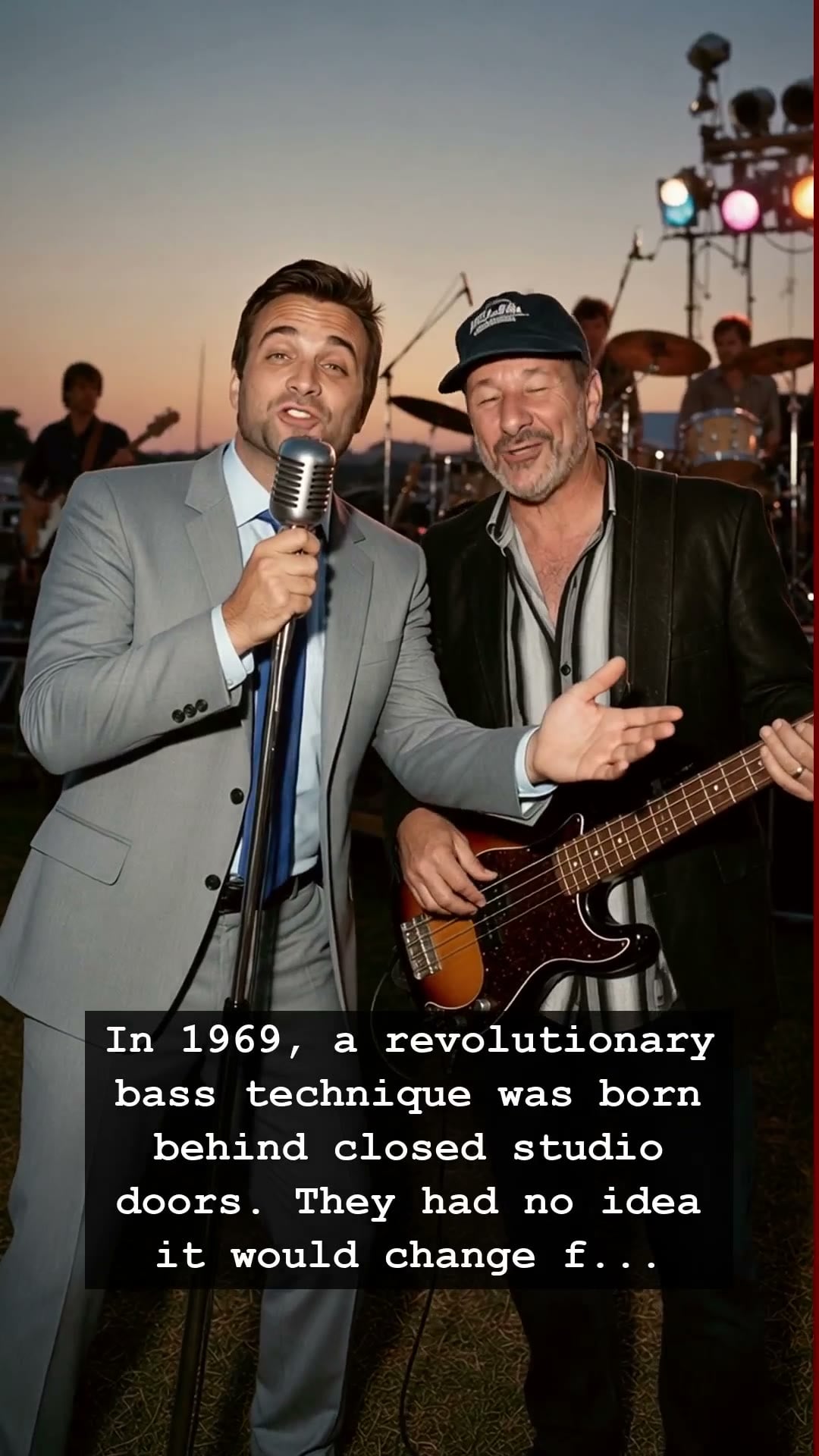
In 1969, while the world was distracted by the lunar landing and the psychedelic haze of Woodstock, something seismic was stirring behind the closed studio doors of Los Angeles. A revolutionary bass technique was being forged, a rhythmic pulse that would soon bleed into every stereo and Jukebox across America. This wasn’t just another track; it was the birth of a sonic identity that would define the next decade of funk. Sly and the Family Stone, led by the enigmatic visionary Sly Stone, were about to dismantle the boundaries of R&B and soul, replacing smooth melodies with a gritty, percussive heartbeat that demanded you get up and dance.
At the center of this metamorphosis was the thumb. With a simple, sharp slap against the strings, a new vocabulary for the bass guitar was created. Larry Graham, the band’s bassist, had been experimenting with percussive sounds to compensate for the lack of a drummer in his previous groups. When he brought this style into the fold of Sly and the Family Stone, it became the anchor of their sound. It was raw, urgent, and undeniably cool. This technique, which we now recognize as the foundational slap-bass style, turned the bass guitar from a background hum into the absolute protagonist of the song.
Sly and the Family Stone were not just musicians; they were a social experiment. As one of the first major American rock bands to be integrated in both race and gender, they challenged the status quo in every possible way. Their music mirrored the turbulence and hope of the late sixties. However, the brilliance of the music often masked the fragile reality of the band’s inner life. The same intensity that fueled their studio genius also acted as a slow-burning fuse. The pressure of fame, the weight of their cultural impact, and the exhaustion of touring began to fray the threads of their musical family long before the decade closed.
Their hit tracks resonated across the airwaves, from the electric atmosphere of the Fillmore to the living rooms of suburban America. You could hear the influence of Sly and the Family Stone on every block, eventually paving the way for the disco craze at Studio 54 and the funk-infused grooves of the seventies. It was a time when music felt dangerous and vital, a period where the barrier between the performer and the listener felt paper-thin. When you dropped the needle on a record back then, you weren’t just listening to a song; you were participating in a cultural shift.
Decades later, the echo of that 1969 thumb-slap still vibrates through modern music. From the grooves of Prince to the complex basslines of contemporary hip-hop, the DNA of Sly and the Family Stone remains intact. They reminded us that rhythm isn’t just something you hear; it is something you survive. Do you remember the first time that groove caught you? Even today, that rhythm remains a timeless testament to the power of a single, revolutionary idea.