
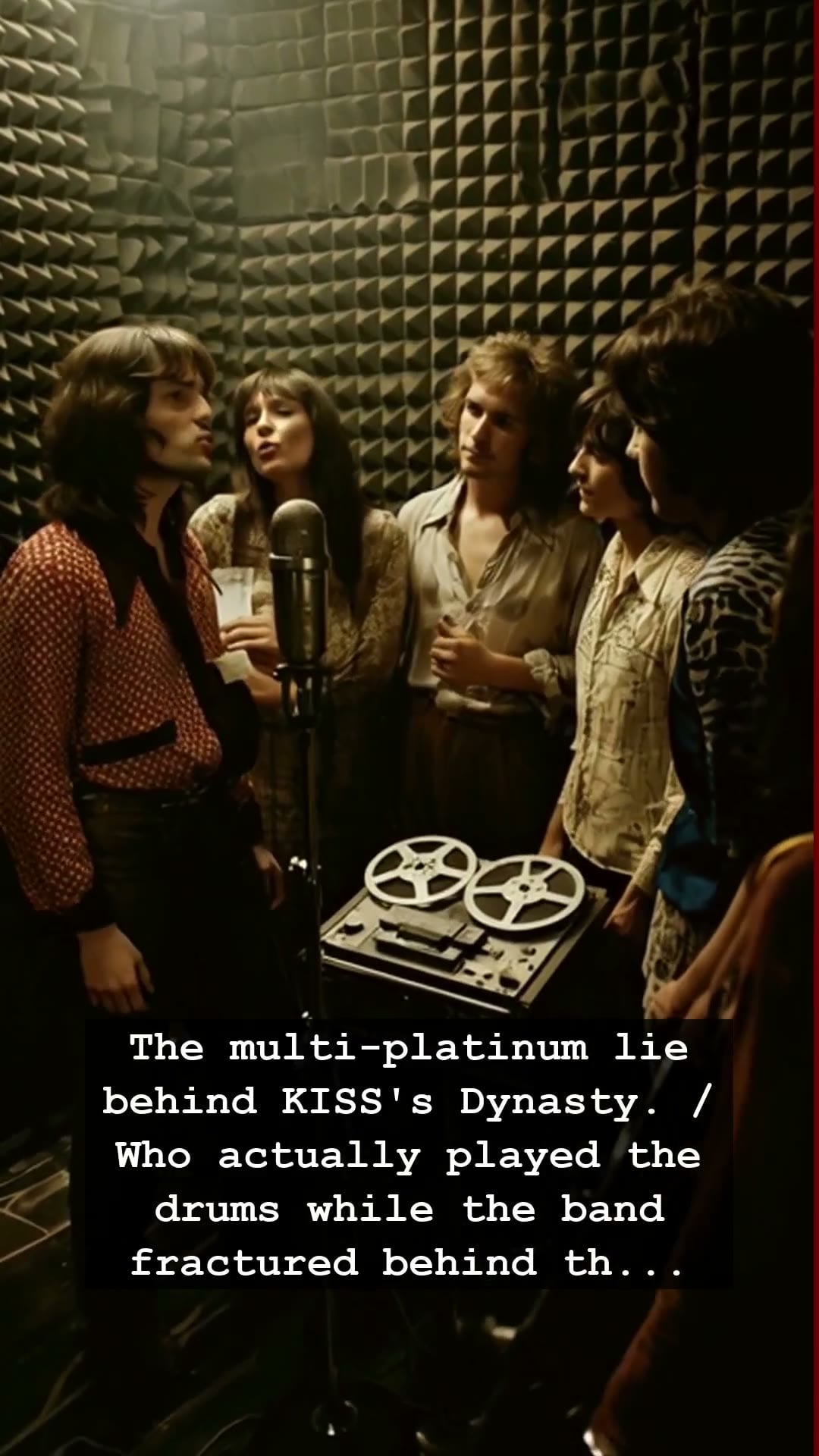
In the sweltering summer of 1979, the world was obsessed with disco, and the KISS Army was bracing for the release of Dynasty. To the casual fan, the record was another triumph for the larger-than-life superheroes of rock, a multi-platinum masterpiece that seemed to prove the band was invincible. But beneath the iconic makeup, the glitter, and the polished production, the internal structure of KISS was crumbling into dust. The face on the album cover told one story, but the truth recorded on the vinyl was a bitter tale of betrayal and silence that remains one of rock history’s most fascinating deceptions.
At the heart of this fractured reality was the band’s drummer, Peter Criss, known to the world as the Catman. As KISS ascended to global superstardom, the pressure of fame, combined with the grueling cycle of tours and recording sessions, pushed the members to their absolute limits. By the time they entered the studio to track Dynasty, the brotherhood that had once fueled their rise in the early seventies had been replaced by cold, professional resentment. The tension in the air was thick enough to choke on, a stark contrast to the arena-rock anthems that would soon echo through stadiums across the globe.
While Peter Criss was credited as the drummer on the album, the reality was a guarded secret that would haunt the band for decades. Behind the scenes, the truth was far more clinical. Famed session musician Anton Fig was brought in to do the heavy lifting, replacing Criss on nearly every track of the album. The official narrative maintained the illusion of the original quartet’s chemistry, but the reality was that a ghost drummer was laying down the rhythm while the official drummer struggled to hold his place in the band. It was a calculated business move, a necessary lie to keep the KISS machine profitable as the disco era threatened to pull the rug out from under traditional hard rock acts.
This period marked the beginning of the end for the original KISS lineup. The cracks were visible not just in the studio, but on the stage, where the pyrotechnics often masked the lack of cohesion between the musicians. Fans at the time were busy trading their vinyl records and obsessing over the band’s merchandise, unaware that the band they idolized was effectively operating as a shell of its former self. It was a time when image was everything, and for a short, frantic moment, the illusion was enough to keep the records selling and the crowds cheering in the dark.
Looking back at 1979, the Dynasty era serves as a haunting reminder of the high price of fame and the fragility of rock and roll legends. It was a time when the spectacle outweighed the substance, a precursor to the excess of the eighties that would follow. The story of Peter Criss and his hidden replacement is more than just a piece of industry gossip; it is a testament to the heavy burden of the makeup. As we look back on those days, we are reminded that even the greatest heroes of our youth were just people struggling to find their rhythm in a world that demanded perfection at any cost.