
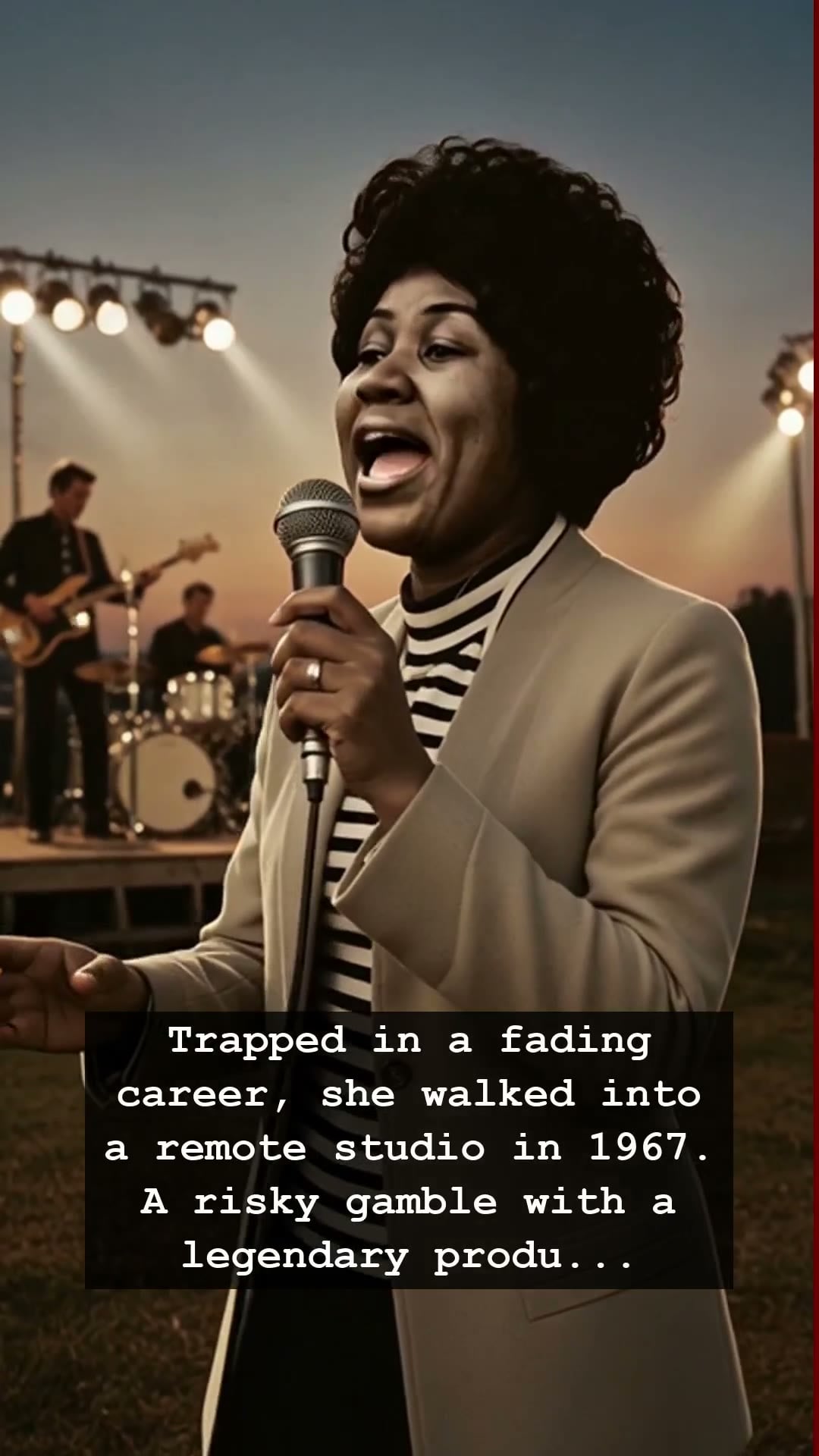
In 1967, the music industry was a rapidly shifting landscape of transistor radios and changing tastes, and Aretha Franklin was drifting toward the edge of irrelevance. After years of struggling as a polished, middle-of-the-road pop singer under Columbia Records, her career was essentially on life support. She was a powerhouse voice without a home, a talent trapped in a box of velvet suits and orchestral arrangements that lacked the raw, pulsing heartbeat of the emerging soul movement. She needed a miracle, and that miracle arrived in the form of a risky gamble that took her far away from the glamour of New York City.
Jerry Wexler, the legendary producer at Atlantic Records, saw what everyone else had missed. He believed that Aretha Franklin possessed a gospel fire that had been dampened by corporate polish. Together, they made a desperate pilgrimage to FAME Studios in Muscle Shoals, Alabama. It was a dusty, remote corner of the world that stood in stark contrast to the glitzy halls of the hit-making establishment. Surrounded by white, southern session musicians who were just as hungry for musical honesty as she was, Aretha stepped behind the piano. The air was thick with the scent of cheap cigarettes and old wood, a world away from the high-production shine of television specials.
The atmosphere was tense, fueled by the racial friction of the Deep South and the sheer pressure of a final shot at stardom. When they began recording, there were no charts to follow, only the raw instinct of the musicians playing off one another. The energy in that room transformed Aretha Franklin from a fading pop act into the undisputed Queen of Soul. Her voice became an instrument of liberation, cutting through the silence of the studio with a force that felt like a seismic shift in American music. It was here that she found the grit and the gospel-infused defiance that would define her legacy for the next several decades.
This wasn’t just a recording session; it was a revolution forged in sweat and sound. Tracks like I Never Loved a Man (The Way I Love You) emerged from this tension, capturing a profound emotional authenticity that the era of bubblegum pop had completely forgotten. The collaboration between Aretha Franklin and Jerry Wexler proved that the best art often arrives when the stakes are at their absolute highest. It was a reminder that in the shadow of the Vietnam War and the rising tide of the civil rights movement, the world was craving music that felt real, aching, and unapologetically human.
Even today, those Muscle Shoals recordings hum with a life that transcends the decade of their birth. They stand as a testament to the fact that talent, when paired with the right soul, can rewrite history. Aretha Franklin didn’t just save her career in that Alabama studio; she gave a voice to a generation. When you listen to these tracks now, you aren’t just hearing a song; you are hearing the exact moment a legend found herself. Do you remember the first time those opening piano chords changed your world?