
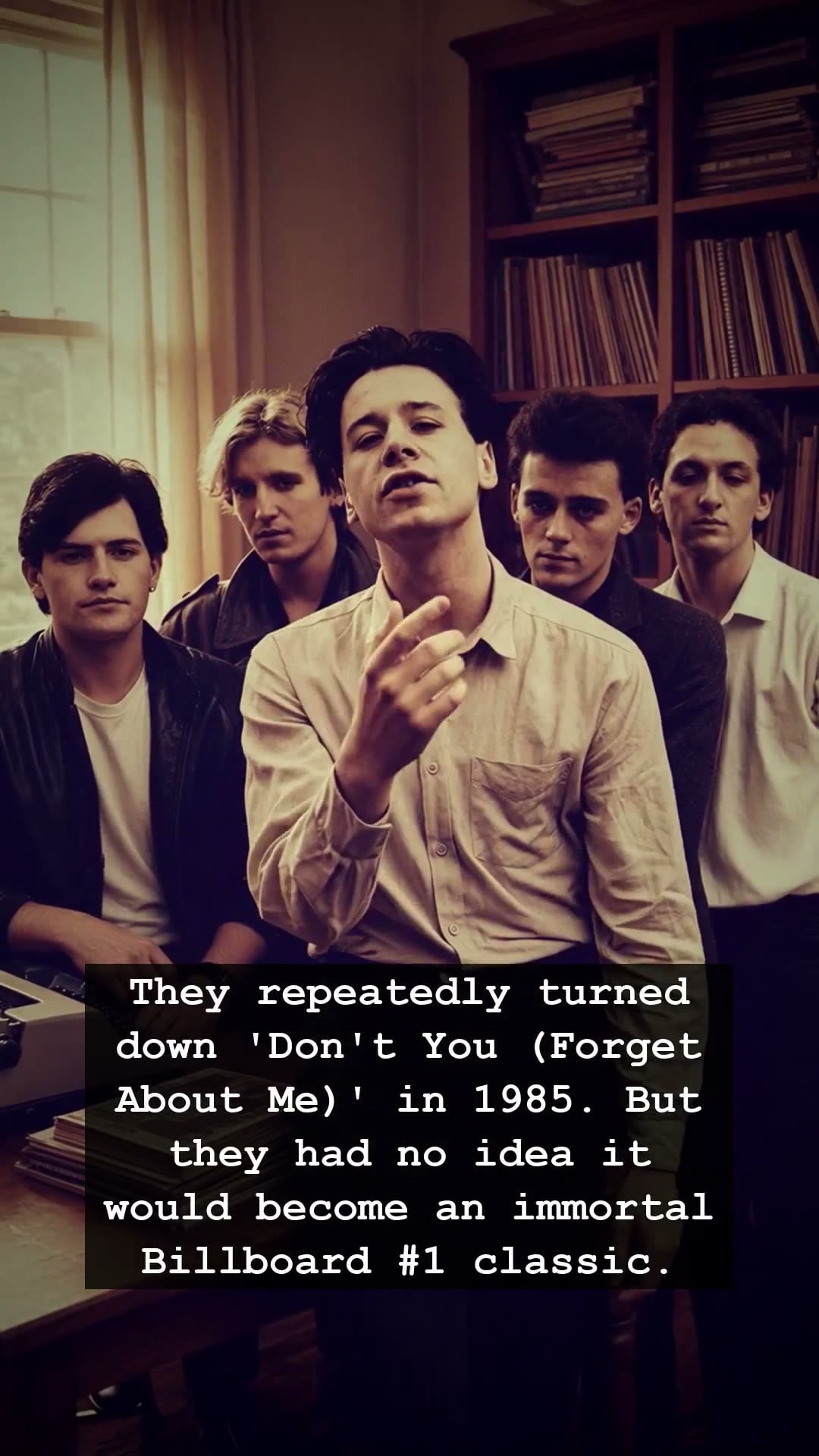
It is the quintessential sound of 1985—a shimmering, atmospheric synth-pop masterpiece that defined a generation. When the opening chords of Don’t You (Forget About Me) play, you are instantly transported back to the golden age of Walkmans, neon lights, and the angsty spirit of the Brat Pack. Yet, the story behind this immortal Billboard number one hit is one of stubborn resistance. Simple Minds, the Scottish post-punk band who were riding a wave of critical acclaim, famously turned down the song not once, but repeatedly. They were artists who preferred their own brooding, avant-garde sound, and the idea of singing a track written by outsiders felt like a betrayal of their creative integrity.
At the time, Simple Minds were busy carving out a niche in the dark, atmospheric corridors of rock music. The song, written by Keith Forsey and Steve Schiff for the iconic film The Breakfast Club, was initially pitched to several other artists before arriving at the band’s doorstep. To lead singer Jim Kerr, it was too polished, too mainstream, and far too pop-oriented for a band that took pride in their cerebral, evolving aesthetic. They viewed the song as a disposable piece of movie soundtrack fodder. For several weeks, the negotiations were tense, reflecting the common conflict between authentic artistry and the suffocating demands of the music industry in the mid-eighties.
It is fascinating to imagine an alternative history where Simple Minds successfully refused the offer. The label persisted, however, and eventually, the band relented for a few hours of studio time. They recorded the track with a sense of detachment, viewing it as a minor professional obligation rather than a potential career-defining moment. When they walked out of the studio, they honestly believed they had just fulfilled a contract rather than creating a piece of cultural history. They had no idea that this reluctant anthem would soon become the definitive soundtrack to a cinematic movement, catapulting them into the global stratosphere of superstardom.
When the film hit theaters, the impact was immediate and seismic. The song didn’t just top the charts; it became a portal for teenagers across America to express their hidden longings and social frustrations. The synth-pop arrangement, layered with Kerr’s soulful, soaring vocals, captured the exact essence of longing that defined the mid-eighties zeitgeist. Even as the band achieved massive commercial success, they remained somewhat ambivalent about the track that would eventually become their most recognizable legacy, a bittersweet paradox of fame that still haunts many artists from that era.
Today, Don’t You (Forget About Me) remains far more than just a relic of the neon decade. It serves as a haunting reminder of the tension between an artist’s vision and the enduring power of a perfect pop song. Simple Minds eventually grew to embrace the track, acknowledging its unique ability to unite audiences across decades. As we listen to those familiar synths today, we aren’t just hearing a chart-topping hit; we are hearing the beautiful, unintended consequences of an era where movies and music collided to create magic. Perhaps some songs, like the best memories, are simply destined to be remembered, regardless of whether their creators were ready for the spotlight.