
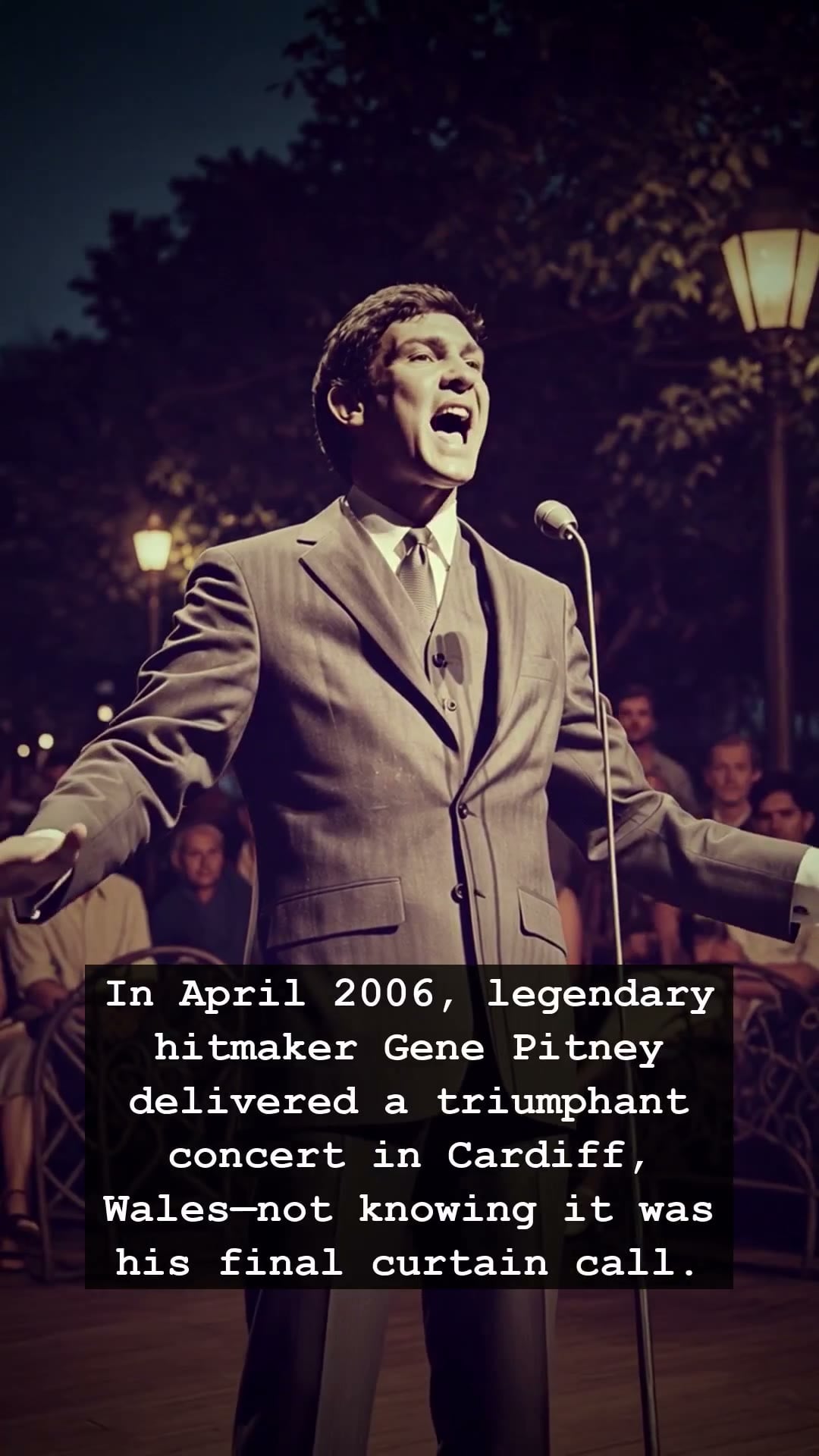
The roar of the crowd in Cardiff, Wales, on April 5, 2006, was everything a seasoned performer could hope for. Gene Pitney, the velvet-voiced architect of mid-century heartbreak, had just delivered a performance that defied the passage of time. For a man who had soundtracked the lives of millions throughout the 1960s with hits like Town Without Pity and Twenty Four Hours from Tulsa, the standing ovation was a familiar, comforting embrace. He walked off that stage with the grace of a veteran, unaware that the final curtain had already fallen on his storied life. Just hours later, the man who gave soul to the jukebox era was found in his hotel room, his legendary voice silenced forever.
To understand the magnitude of the loss, one must travel back to the golden age of American pop, a time when Gene Pitney was far more than just a singer. He was a master craftsman of song, a songwriter who understood the jagged edges of love long before he stood in the spotlight. In an era dominated by the evolving sounds of Motown and the rising tide of the British Invasion, Gene Pitney stood firm with a theatrical intensity that few could replicate. Whether he was pouring his soul into the dramatic orchestral arrangements of his peak years or navigating the shifting tastes of the 70s and 80s, his voice remained a constant—a soaring, operatic instrument that captured the ache of longing with terrifying precision.
His career was a masterclass in artistic evolution. He was the one who famously wrote hits for others—such as Hello Mary Lou for Rick Nelson—before claiming his own throne at the top of the charts. Behind the polished exterior of his radio hits lay a man who lived and breathed music, surviving the tumultuous shifts of the industry through sheer talent and an unshakeable connection to his audience. He lived through the transition from vinyl records crackling on a home turntable to the high-fidelity clarity of the late 20th century, always maintaining that signature, haunting vibrato that defined his persona.
Yet, the tragedy of that April night in Cardiff adds a somber, cinematic layer to his legacy. It was not a slow fade into obscurity but a sudden, shocking exit while he was still at the height of his powers, commanding a stage just as he had done for decades. For fans who grew up clutching their Walkmans or crowding around the radio, his sudden passing felt like the end of an era. It was a reminder of how fragile these icons truly are, even those who seem immortalized by their own evergreen melodies.
Today, the legacy of Gene Pitney lives on in every song that dares to wear its heart on its sleeve. He remains a pillar of the 1960s musical landscape, a craftsman who never compromised his dramatic flair. When we listen to his records now, we aren’t just hearing a song; we are hearing the echo of a man who gave everything to his craft until his very last breath. Though the lights in Cardiff went out years ago, the music of Gene Pitney continues to play on, forever echoing in the halls of our fondest memories.