
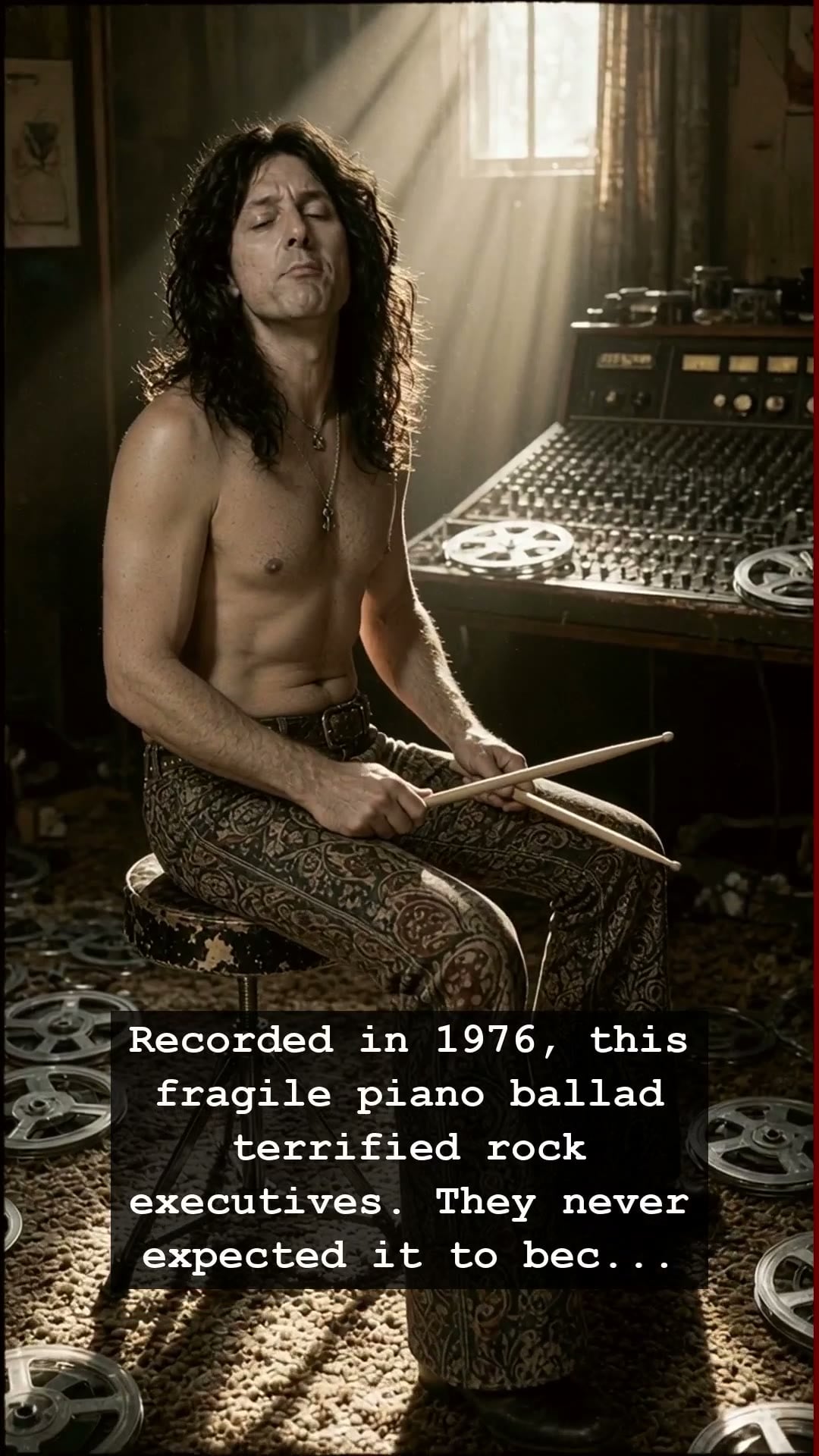
In the smoke-filled, leather-clad world of 1970s hard rock, image was everything. By 1976, the band Kiss was a monolith of fire-breathing, face-painted chaos, marketed as the most dangerous act in America. Yet, tucked away in the sessions for their album Destroyer, a quiet, vulnerable piano melody was taking shape. It was a song that terrified label executives who feared it would destroy the band’s hard-edged mystique. This wasn’t a track about demons or stage pyrotechnics; it was a deeply personal, fragile confession from their drummer, Peter Criss. They were convinced that releasing a soft ballad would be commercial suicide, a betrayal of the brand that had captivated teenagers from Detroit to New York City.
Peter Criss, known behind the kit as the Catman, brought a raw, soulful sensibility that often clashed with the more calculated, industrial aesthetic of his bandmates. When he sat down at the piano to record Beth, he wasn’t trying to write an anthem; he was channeling the exhaustion of a touring musician constantly separated from his wife. The song felt like a whisper in a hurricane of distorted guitars and heavy drums. Behind the scenes, the studio tension was palpable. The band had built a reputation on being larger than life, but Peter Criss had delivered something painfully human. The record label executives were sweating, convinced that the juxtaposition of their painted, snarling faces against such a tender, melodic piano piece would confuse their fanbase and kill their momentum.
Yet, the power of music often defies the logic of the boardroom. When the track was eventually released, it did the unthinkable. It didn’t break their career; it catapulted them to the top of the charts. Beth became the highest-charting single in the band’s history, a defining moment that proved even the loudest rock gods needed a heartbeat to survive. It shifted the cultural landscape, showing a generation of fans that the men behind the masks were just as flawed and lonely as they were. It was a moment of vulnerability that resonated with millions, turning a B-side gamble into a timeless staple of the era.
Looking back, the story of Peter Criss and this song is a masterclass in the risks of artistic authenticity. In an era dominated by the glitz of Studio 54 and the raw rebellion of the arena rock explosion, this quiet ballad stood out like a beacon of reality. It bridged the gap between the theatrical spectacle of 1976 and the emotional core of the listener. It transformed the band from mere cartoon characters into something deeply relatable, proving that the most successful risks are often the ones that scare us the most.
Today, when you hear those opening piano chords, it brings you right back to the golden age of analog radio and the crackle of a vinyl record playing in a dimly lit bedroom. It remains a testament to the fact that rock and roll is not just about the volume, but the story behind the mask. Do you still remember where you were the first time those notes hit the airwaves?