
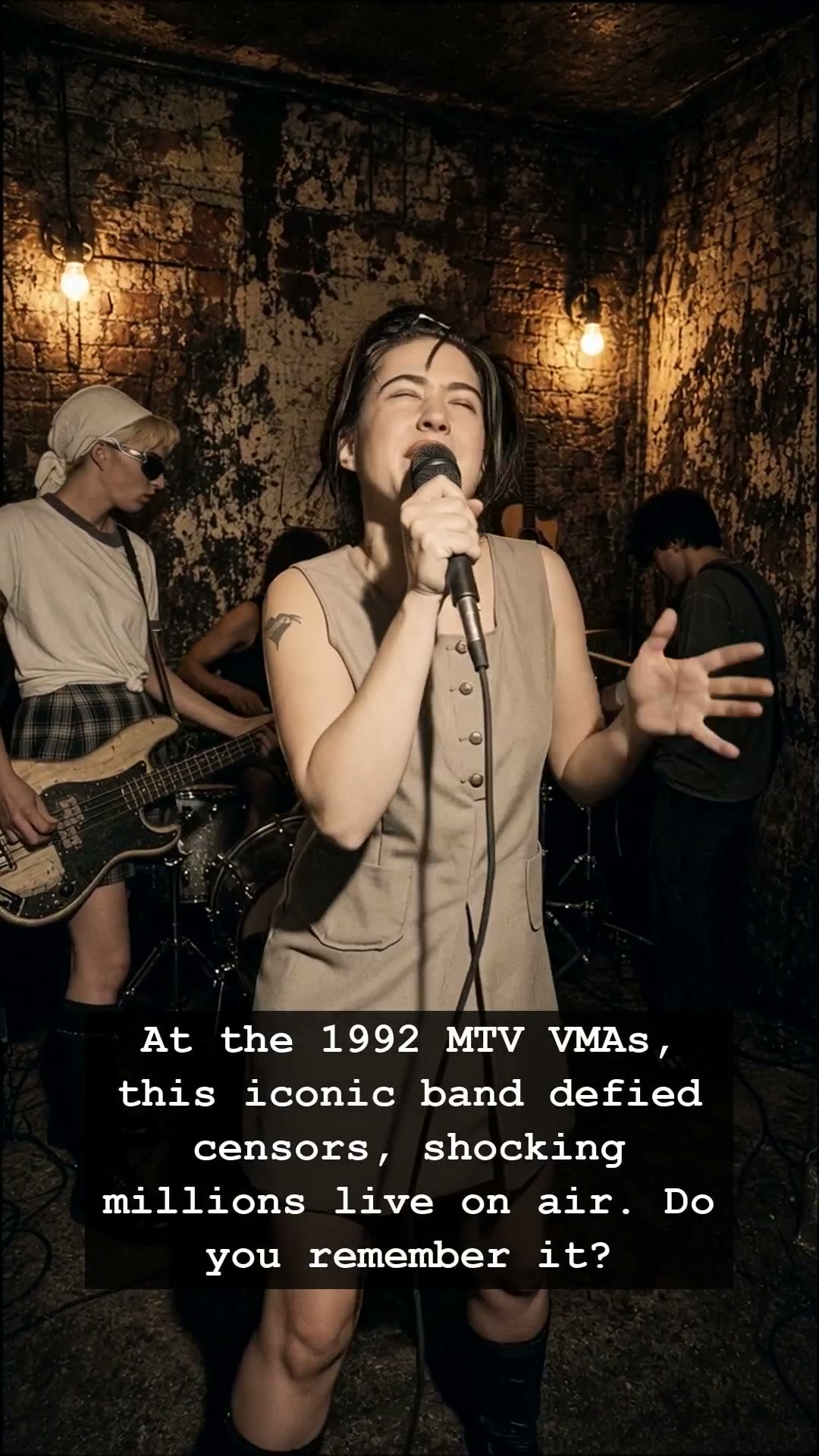
The year was 1992, and the world was tuning into the MTV Video Music Awards with bated breath. It was the peak of the grunge era, a time when the polished, synthetic sheen of the eighties was being violently dismantled by the raw, unwashed fury of Seattle. At the center of this cultural earthquake stood Nirvana, the band that had accidentally become the voice of a generation. As millions watched from their living rooms, clutching their remote controls, tension backstage was reaching a boiling point that would eventually go down as one of the most legendary acts of rebellion in televised history.
MTV executives had one clear, non-negotiable demand: Nirvana was absolutely banned from playing their hit song, Rape Me. The network feared the backlash and the censors, but Kurt Cobain was not a man known for following the rules of corporate media. Backstage, the atmosphere was thick with anxiety and defiance. For those of us who grew up in the era of the Walkman and the slow crawl of music videos on cable TV, this moment felt like a shift in the tectonic plates of the music industry. It was a clash between the sanitized standards of the establishment and the unapologetic, often dark, honesty that Nirvana brought to the stage.
When Nirvana finally stepped into the lights, the air in the arena felt electric. They began their set with the moody, ominous chords of Lithium, teasing the audience with a performance that felt like a quiet storm before the collapse. Just as the millions watching at home began to feel a sense of security, Cobain struck the opening notes of the forbidden song, Rape Me. The shock rippled through the MTV production crew, who were reportedly terrified that the broadcast would be derailed. It was a quintessential Nirvana moment—raw, risky, and fundamentally honest to their creative vision.
This incident wasn’t just about a song choice; it was a microcosm of the conflict between the grunge revolution and the commercial machine that sought to contain it. Nirvana represented a departure from the stadium-filling artifice of the eighties. They were the anti-heroes, the guys in thrift store sweaters who didn’t want the fame they were suddenly gifted. The 1992 VMAs proved that no matter how much money or influence a network possessed, they could not fully suppress the raw, visceral spirit of a band that was genuinely trying to break the status quo.
Today, we look back at this night with a sense of bittersweet nostalgia. It was a time when music still felt like it had the power to shock, to offend, and to change the cultural conversation on live television. Nirvana, and specifically that iconic defiance at the MTV VMAs, remains a vivid reminder of a time when rock music was the most dangerous and exciting thing on the planet. Do you remember the moment you watched it happen, the sheer disbelief in the room, and the realization that the world of music had changed forever?