
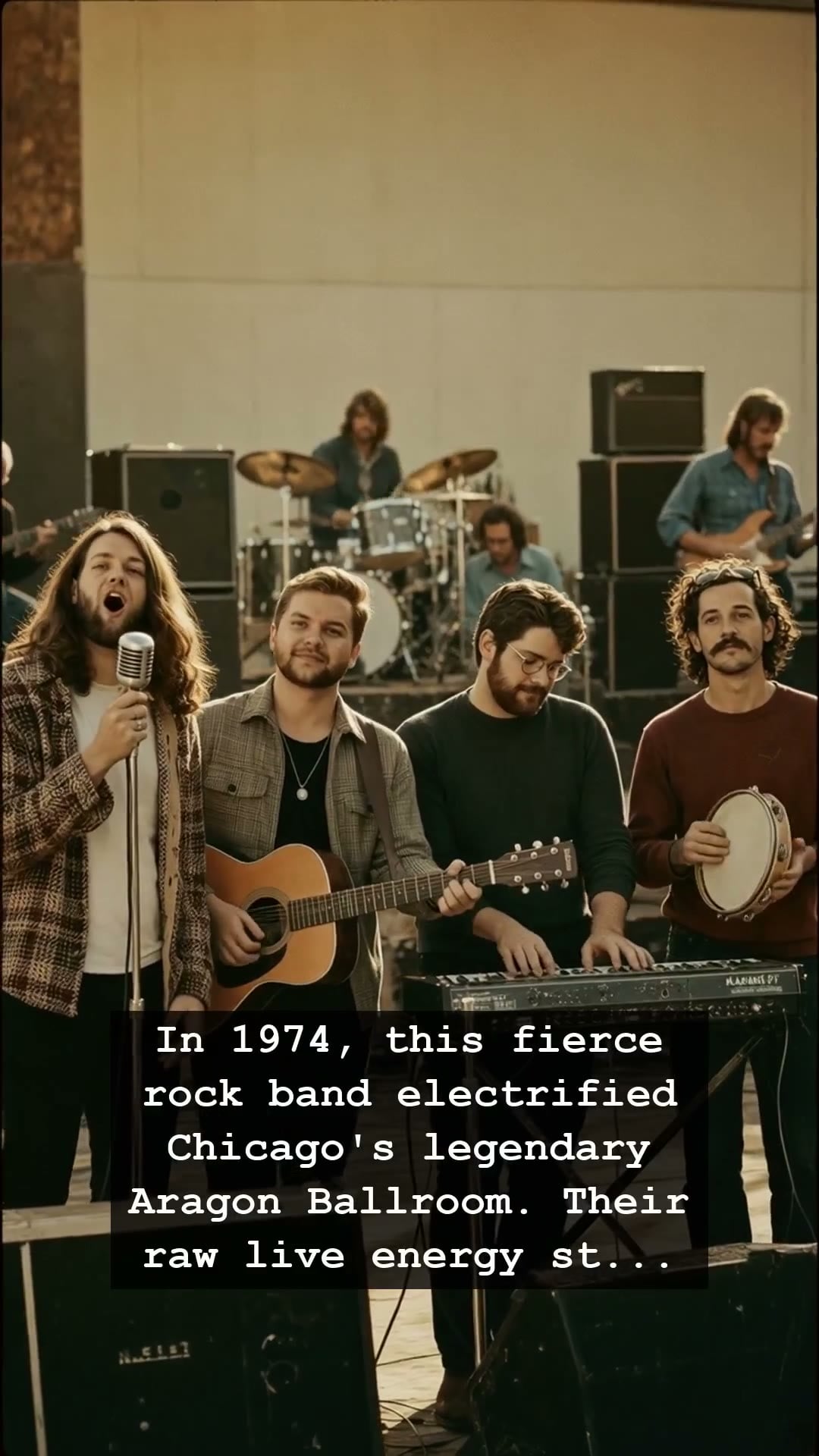
The year was 1974, and the air inside Chicago’s legendary Aragon Ballroom was thick with the scent of cheap cigarettes, spilled beer, and the electric tension that only a live rock show could produce. While the touring headliners of the era were expected to dominate the night with their rehearsed glitz, a fierce, hungry band known as The Hounds had other plans. When they stepped onto that hallowed stage, they didn’t just perform; they ignited a sonic riot. Their raw, unfiltered energy was a visceral punch to the gut that left the audience—and the seasoned rock royalty sharing the bill—absolutely stunned. It was the kind of performance that reminded everyone that rock and roll wasn’t meant to be polished; it was meant to be dangerous.
To understand why The Hounds caused such a stir, you have to look at the landscape of the mid-seventies. This was a time when the Jukebox was the heartbeat of every dive bar, and the battle for airtime was fought between disco’s rising synthetic pulse and the gritty, soul-searching rock that defined the American blue-collar experience. The Hounds emerged from this cauldron as a band that refused to compromise. They weren’t just playing music; they were channeling the frantic, beautiful chaos of a generation that felt ignored by the mainstream pop charts. When they hit those power chords at the Aragon, it felt like the floorboards themselves were ready to splinter under the weight of their intensity.
Backstage, the rumors spread like wildfire. The Hounds were known for a volatile chemistry that was as destructive as it was creative. For those of us who lived through the era of the cassette tape and the midnight FM radio broadcast, the legend of The Hounds serves as a bittersweet reminder of a time when band members weren’t just employees of a label, but brothers-in-arms battling ego, addiction, and the crushing pressure of the road. Their brief, meteoric surge remains a cult fascination for those who crave the unfiltered authenticity of 70s rock.
Why does this story still resonate fifty years later? Perhaps because in an age of over-produced digital tracks, we are starving for that jagged, unpredictable human element. The Hounds represented the pinnacle of that lost art. They were a band that lived hard and played harder, leaving everything they had on stage before disappearing into the annals of music history. They were the ultimate ‘what could have been’ story of the decade, a flash of lightning that illuminated the Chicago rock scene before vanishing into the shadows of industry politics.
If you were there at the Aragon, you know exactly what that sound felt like—a physical force that rattled your bones. If you weren’t, you can still hear the echoes of their rebellion in the gritty records of the time. The Hounds may have been a temporary fire, but they burned bright enough to change the direction of the wind. They remind us that sometimes, the most legendary moments in music aren’t the ones that top the charts, but the ones that stole the show from the giants. Tell us, do you still have one of their original pressings tucked away in your vinyl collection?