
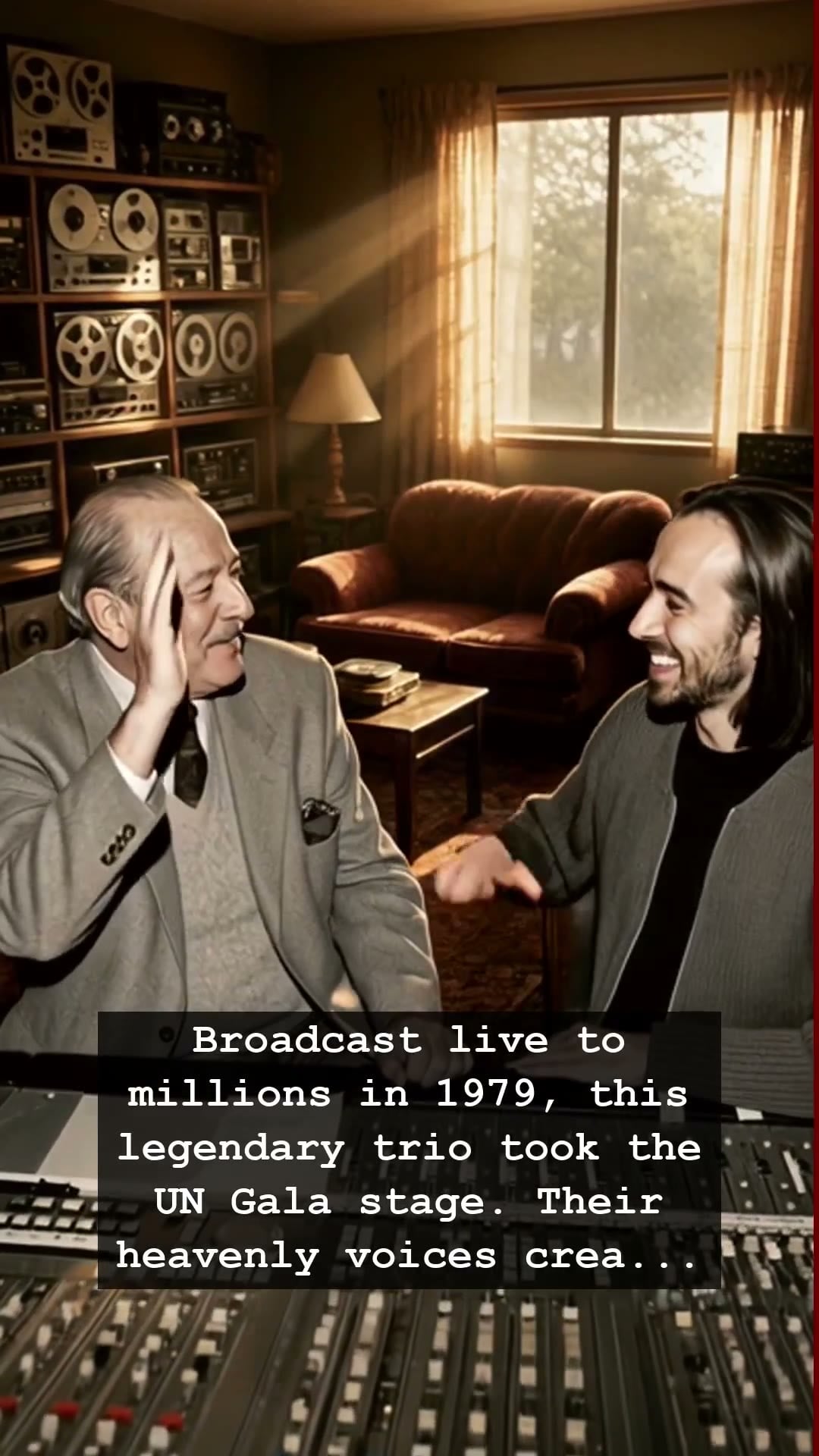
It was 1979, a time when the mirror ball at Studio 54 was the sun around which the musical universe revolved and the Bee Gees were its undisputed, falsetto-voiced deities. Millions tuned in as the brothers Barry, Robin, and Maurice Gibb stepped onto the stage for the UNICEF Concert for the World. What was intended as a routine humanitarian broadcast transformed into something ethereal; as the opening chords struck, the atmosphere shifted, turning a cold, televised gala into a rare moment of global intimacy. For those who remember the crackle of the television screen and the hum of the era, that night remains a definitive snapshot of a band at the absolute zenith of their cultural power.
To understand the magnitude of that performance, one must remember the peculiar tension of the late 1970s. The Bee Gees were not just musicians; they were a cultural phenomenon, forever immortalized by the white suit and the Saturday Night Fever soundtrack that had turned the world into a massive, shimmering dance floor. Yet, beneath the glitter and the glossy production of the disco era, the brothers were master songwriters, carrying the weight of a decade of artistic evolution. The UN Gala was a pivotal moment, a chance to strip away the disco excess and remind the world that their harmonies were not just products of studio trickery but divine, raw talent that could bridge political divides.
Behind the scenes, the pressure was suffocating. By 1979, the backlash against disco was beginning to simmer, a brewing fire that would soon lead to the infamous Disco Demolition Night. The Gibb brothers felt the weight of their own ubiquity, walking a thin line between pop royalty and being labeled as artifacts of a fading trend. Yet, when they opened their mouths at the UN, all that noise disappeared. Their voices, blending with a precision that bordered on the supernatural, silenced any doubters. It was a stark contrast to the emerging punk grit and the coming synthetic coldness of the 80s; it was the last, golden exhale of the 70s soul.
Even now, watching the archival footage of that night brings back a specific, aching nostalgia. It was a time when the Walkman was just beginning to change how we consumed intimacy, and the world felt smaller, connected by these grand, televised spectacles. The Bee Gees stood there, illuminated by the harsh stage lights, delivering a performance that felt both public and intensely private. They were not just singing for the United Nations; they were singing for a generation that was about to lose its innocence to the neon lights and the rapid technological shift of the coming decade.
Decades later, the resonance of that 1979 performance hasn’t faded. It remains a testament to the enduring craft of the Bee Gees, a group whose legacy extends far beyond the high-pitched dance tracks they are most famous for. In an era of fractured digital consumption, we find ourselves yearning for these communal experiences, these moments where a single song could hold the attention of the entire world. Does that night still linger in your memory? As we look back, it stands as a glowing, amber-colored reminder of when music held the power to truly bring us together.